Calystegia soldanella – 29th August 2022 – Sea Bindweed
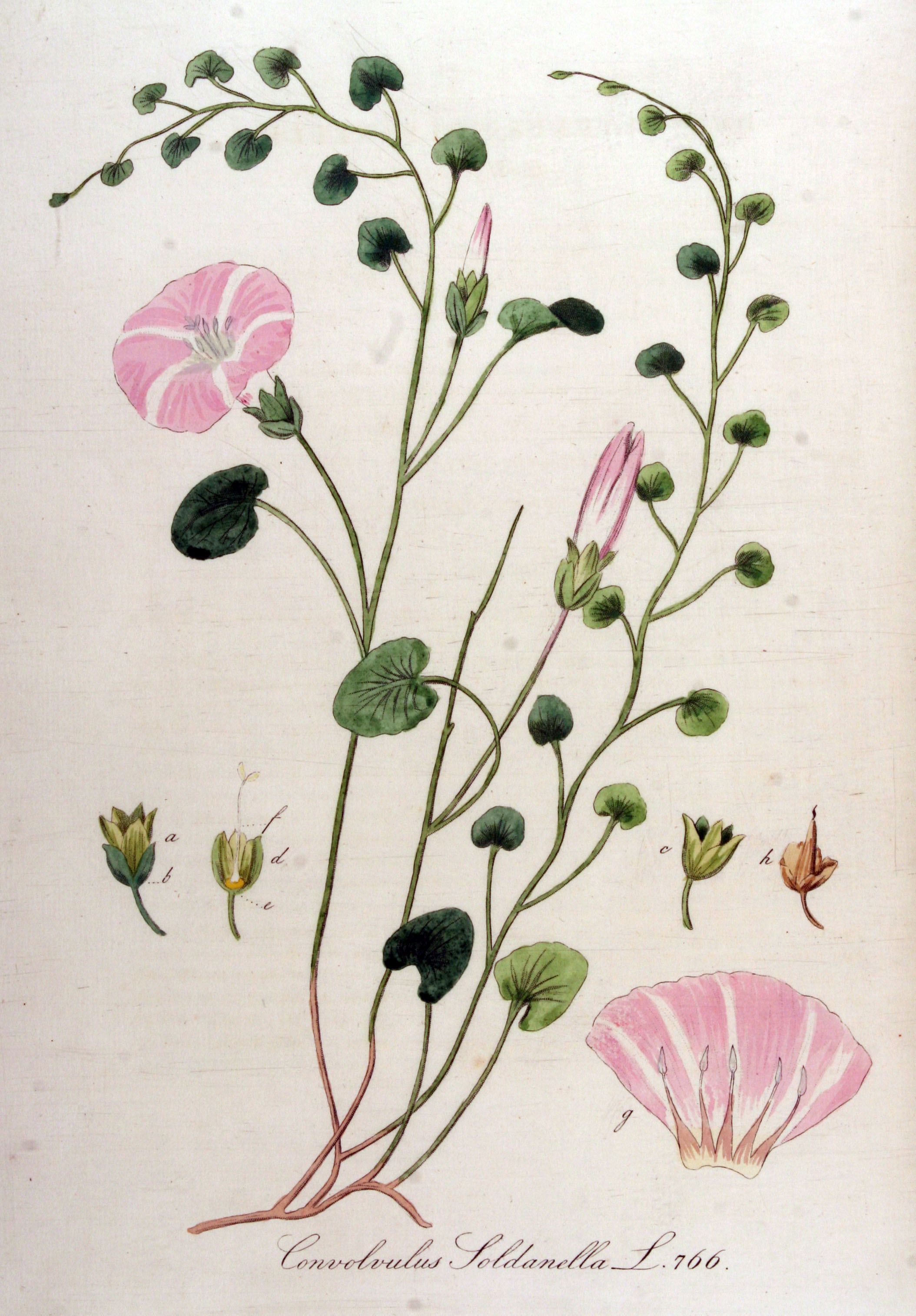
Calystegia soldanella by Jan Kops (1765-1849). Public domain, via Wikimedia Commons. Kops was a Dutch preacher, agronomist and botanist. He founded a botanical journal Flora Batava in 1800. He explored the possibilities of turning dunes into productive farmland. Kops became professor of botany and agricultural economics at the University of Utrecht in 1815.
This week’s plant is a bindweed that grows by the sea, often forming part of the dune system. Last year (October) we considered its close relative, the notorious and very frequent weed, Calystegia sepium. Both are native plants. The two bindweeds have much in common, but C. soldanella is strictly a sea-side specialist, and rather ‘shy’ in Scotland, never straying into gardens. It does not twist and climb like its relatives, it merely creeps and scrambles.
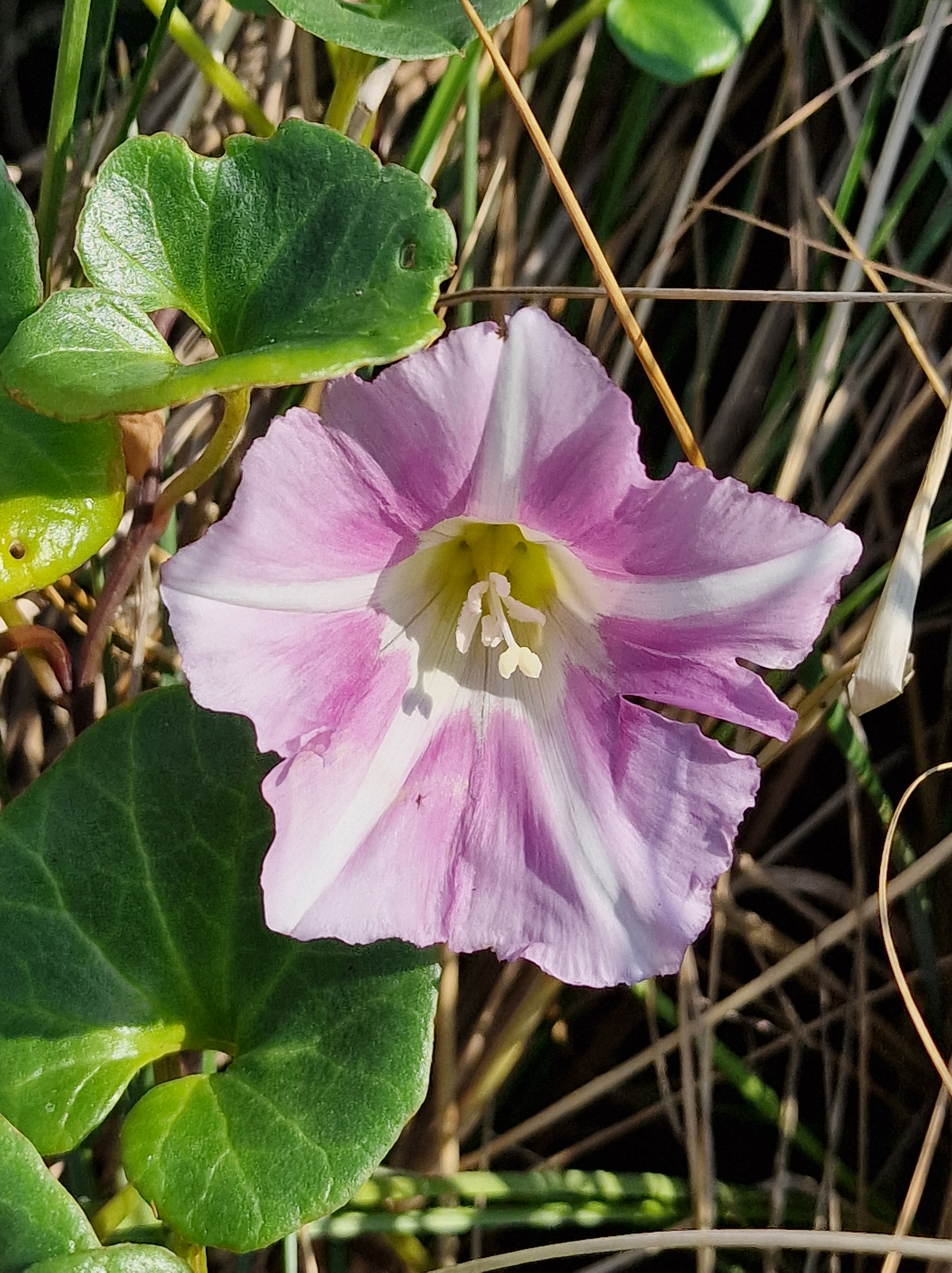
Calystegia soldanella growing with Marram Grass, on the Ayrshire coast, SW Scotland. The flowers are 3-5 cm across and attract pollinating insects including bees. Photo: John Grace.
I see it every summer on the Ayrshire coast, growing with the dune grasses. The dunes are very often disturbed, by storms and humans. In Scotland, these habitats, rich in species, continue to be ‘developed’ to make holiday centres and golf courses. This plant hangs on, but for how long? It lives amongst the dune grasses, venturing onto the beach in the summer (sand and shingle). It is never very common in Scotland although it may be somewhat under-recorded because it is easily overlooked unless in flower (June-August). The flowers are large and ‘showy’, offering pollen and nectar to attract many kinds of insects such as bees and hover-flies.
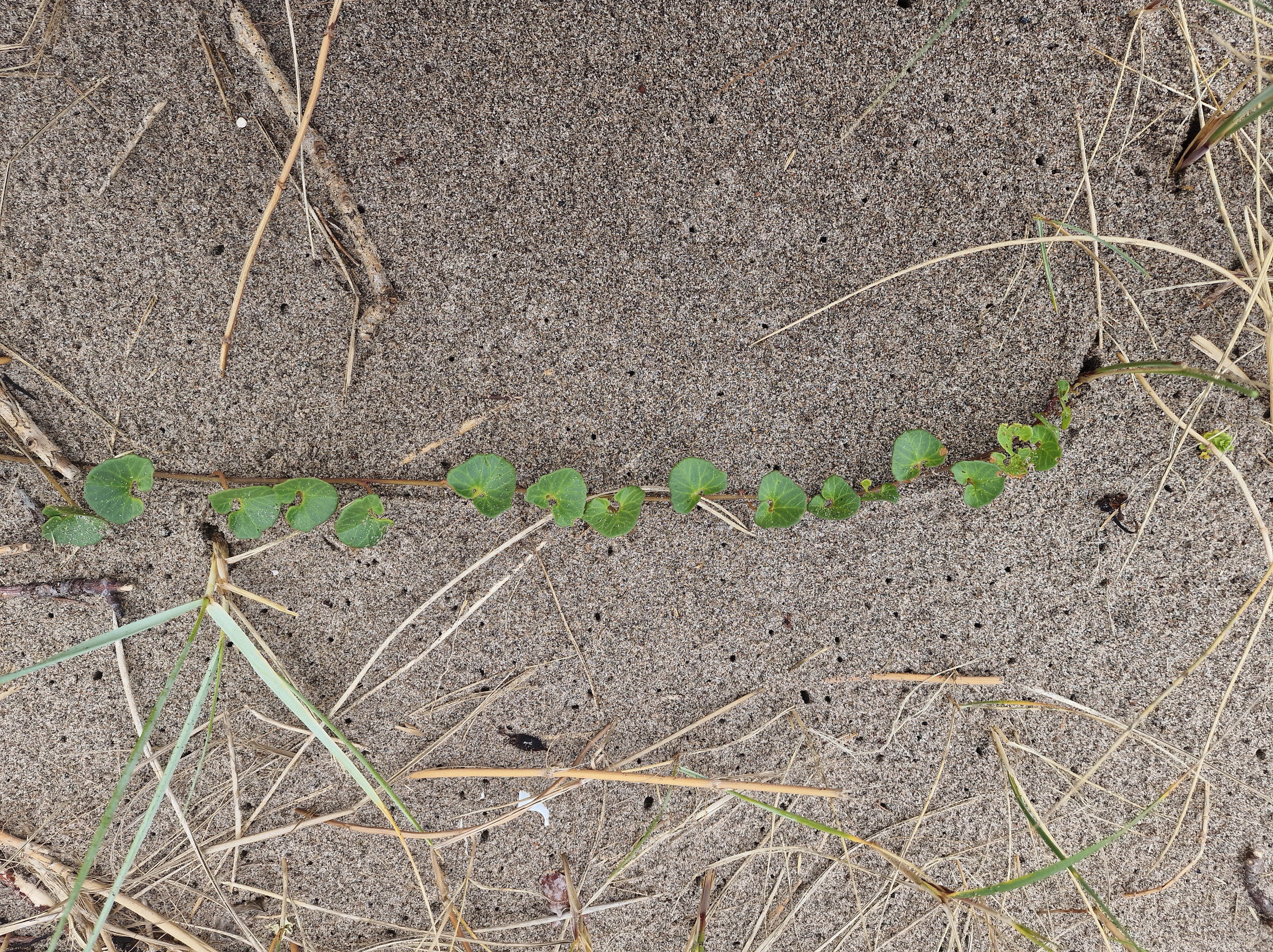
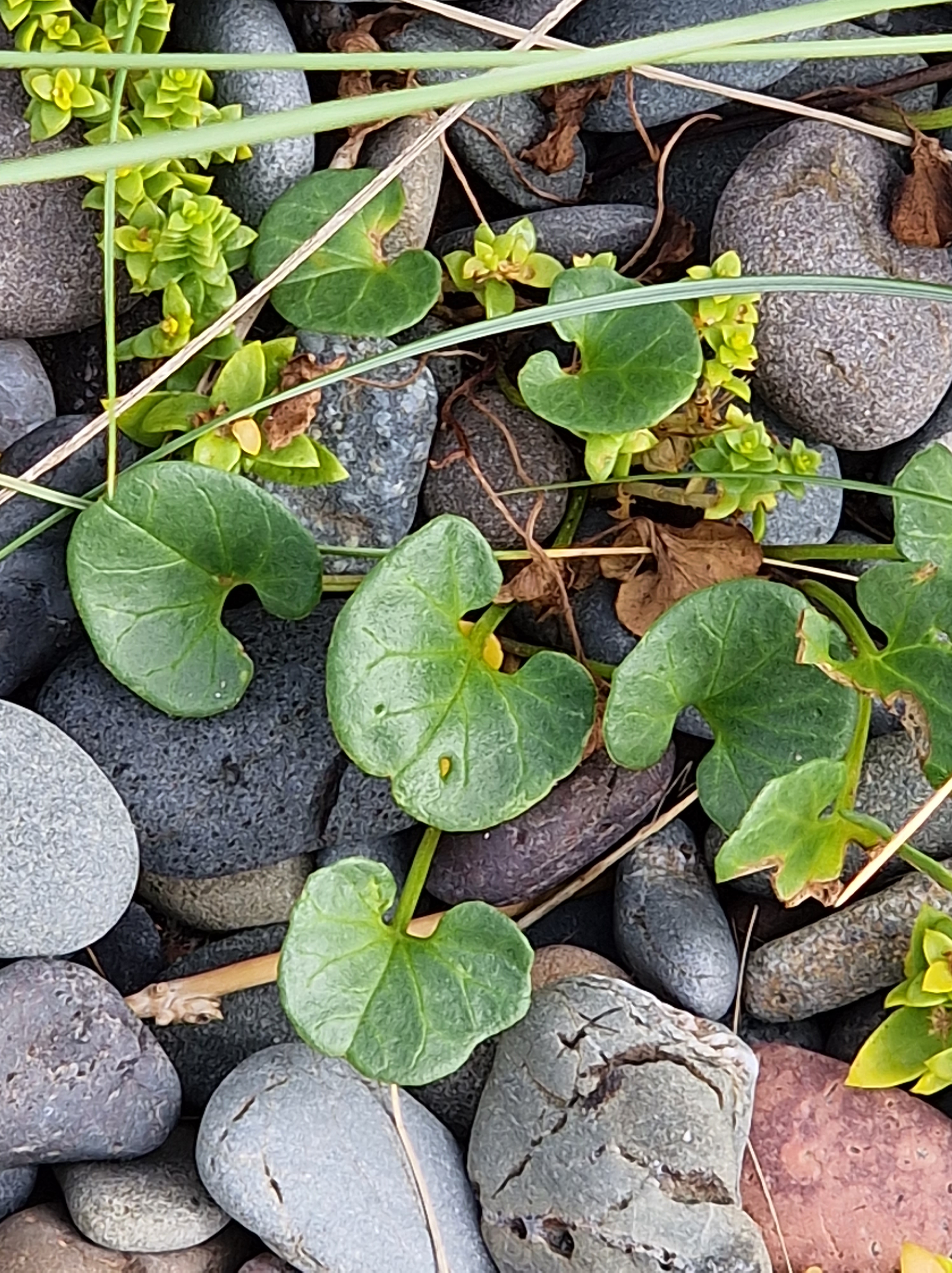
Left: new shoot of C. soldanella creeping across the shore, but only for a short distance. Right: young shoot emerging from the shingle next to Honkenya peploides. Photos: John Grace.
The leaves are kidney-shaped, somewhat succulent and glossy, dark-green turning yellow and withering at the end of summer. Like other bindweeds, they arise from the advancing shoot (as shown nicely in the Kops painting at the top of this text). What we can’t see is the rhizome system which is reported to be deep and extensive. It presumably serves as a store of carbohydrates, minerals and water. The plant may well have more biomass as rhizome than it does in its above-ground parts (I didn’t want to excavate the dune to confirm this but I have seen an image of rhizomes in an online dissertation, Arafeh 2005).
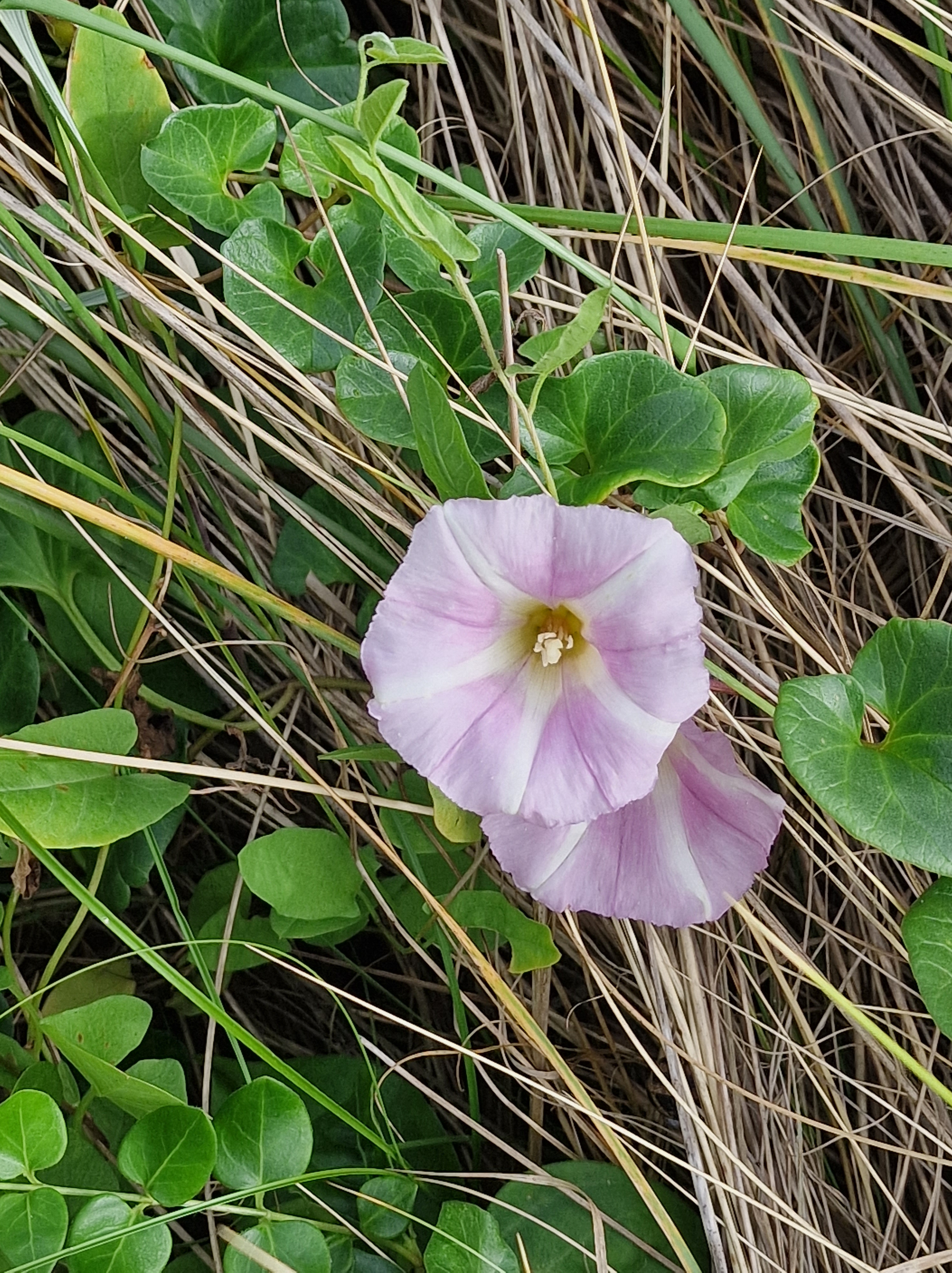
C. soldanella scrambling on Marram Grass. Photo: John Grace.
Trumpet-shaped flowers have evolved separately in many plant families, but it is in the family of the bindweeds, the Convolvulaceae, that they exist in their ‘purest’ form. Many years ago we found that the ‘trumpet’ is not merely an advertisement to attract insects but also a parasol or radiation shield to maintain the reproductive parts at their proper working temperature (Patino and Grace 2002). The trumpets in this family have sepals and bracts at their base which provide mechanical support but also contribute to thermal regulation by transpiring water, whilst the flowers adjust their positions to avoid over-heating in bright sunlight. The axis of the flower never points directly at the sun, as reflection from the surfaces might focus sunlight on the gynoecium and scorch it; rather, the flower adjusts to an off-centre position.
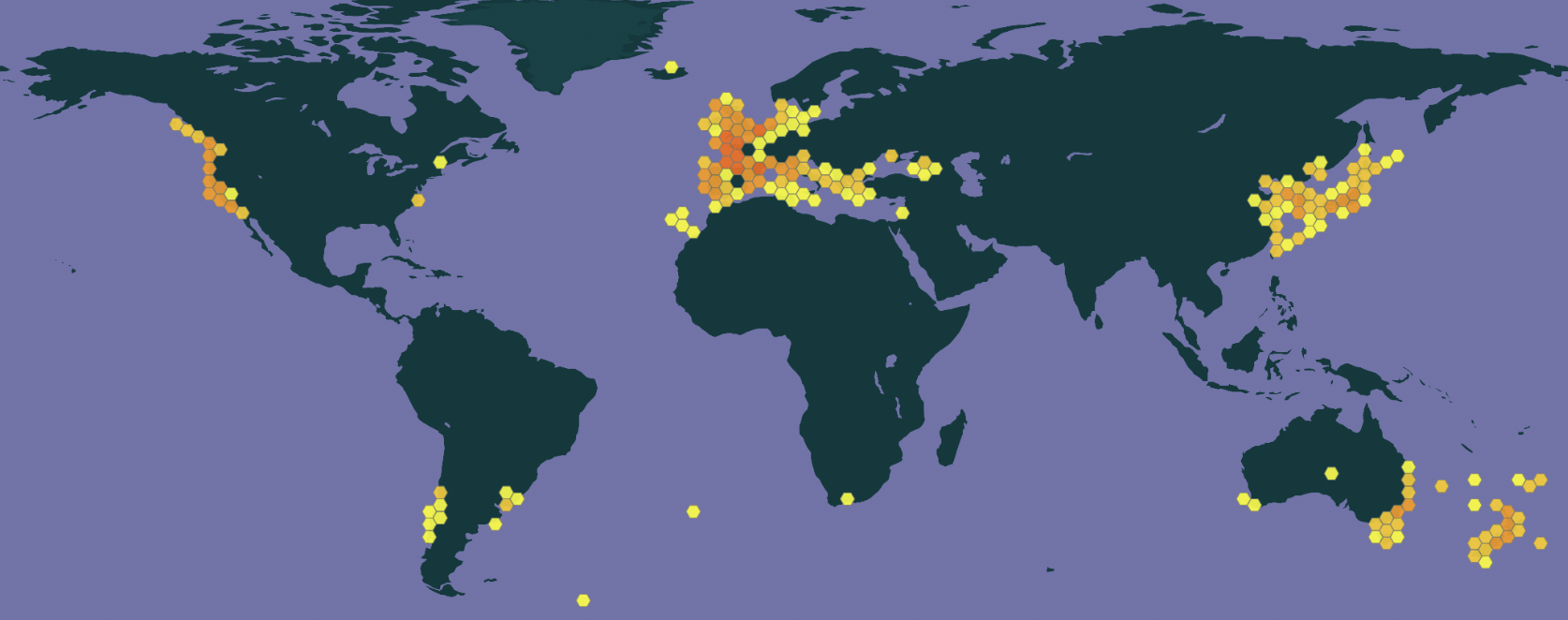
C. soldanella, global distribution according to GBIF. An example of a strongly disjunct distribution .
Seeds are definitely produced, but when Italian researchers took sand cores and painstakingly searched for seeds amongst the grains of sand they found none (di Sacco & Bedini 2015). They surmised that at a local level the plant relies entirely on its rhizome system to spread and thus form a large clonal patch. The seeds are however thought to be important in long distance transport. They can float and moreover they remain viable after long periods in sea water. This may help to explain the global distribution pattern – the species is considered native in both the northern and southern hemisphere. For example, it is native in New Zealand where it is said “the Maori gathered the thick, white, fleshy roots and pounded these to form a pulp, this was then used as a relish to flavour some meats” (de Lang 2022). European populations of this species show a low level of genetic divergence, i.e. the are ‘well-mixed’. and so do Korean populations, lending further support for the long-distance-spread-by-seeds-in-the-sea hypothesis.
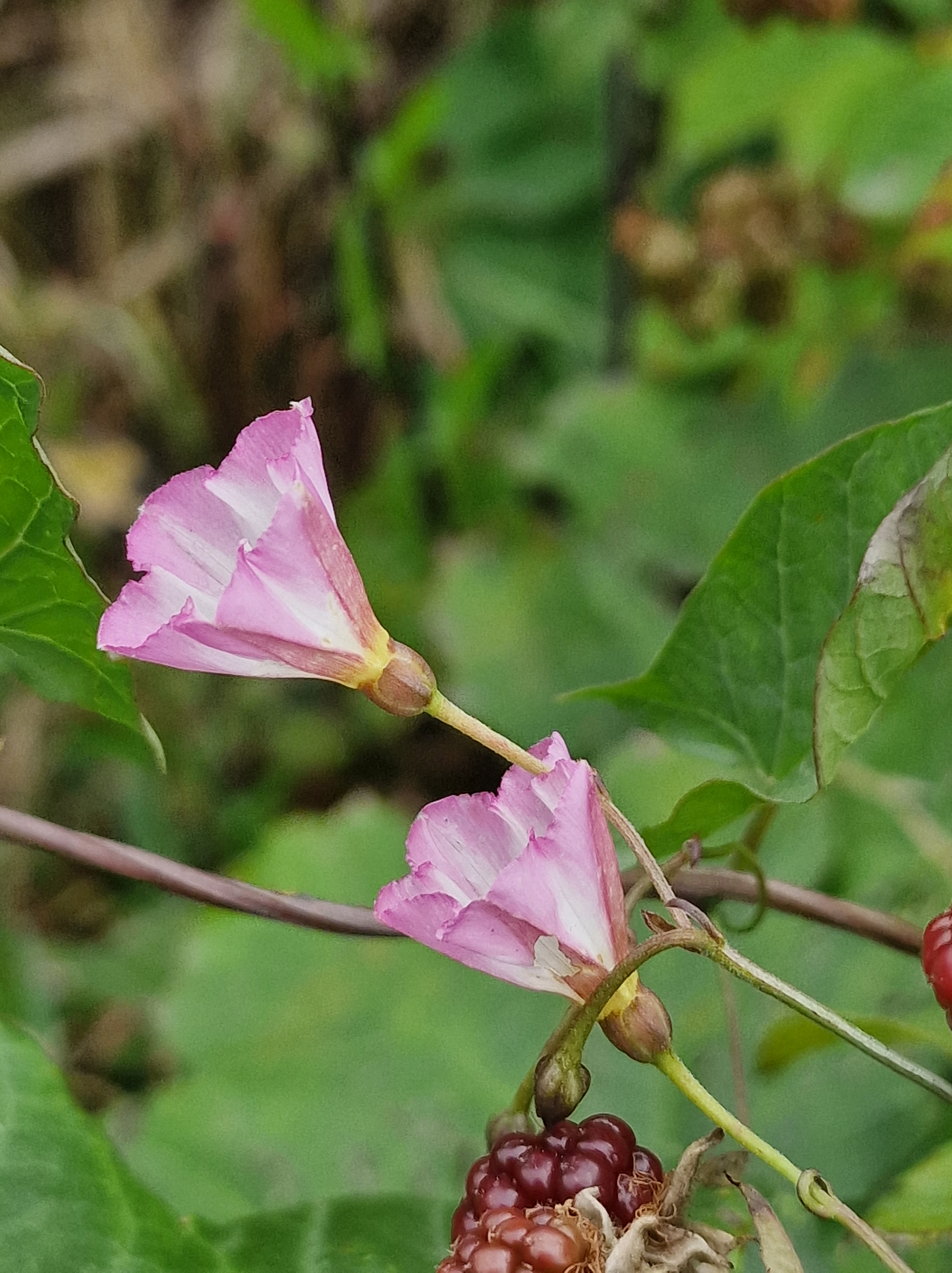
Definitely not C. soldanella but the much smaller and very common Convolvulus arvensis climbing on brambles. Note flower colour and pattern. Photo: John Grace.
The rather subtle colouration of the flower and the pattern of white stripes is the same as in some forms of C. sepium (subspecies roseata) and Convolvulus arvensis (which is often white but sometimes pink) so I’ve shown an example of the pinkish form of Convolvulus arvensis in the picture above. The New Zealand article says the flowers of C. soldanella are “Red/Pink, White” . Perhaps there are geographic colour variations; I haven’t seen red or white ones. I would describe the colour as pinkish-lavender. The pigments involved are several types of anthocyanin. These pigments are water-soluble and change colour (red, purple, blue) according to pH, so it is possible that the variation in colour that we observe in the field (also on google images) is simply reflecting a small variation in acidity.
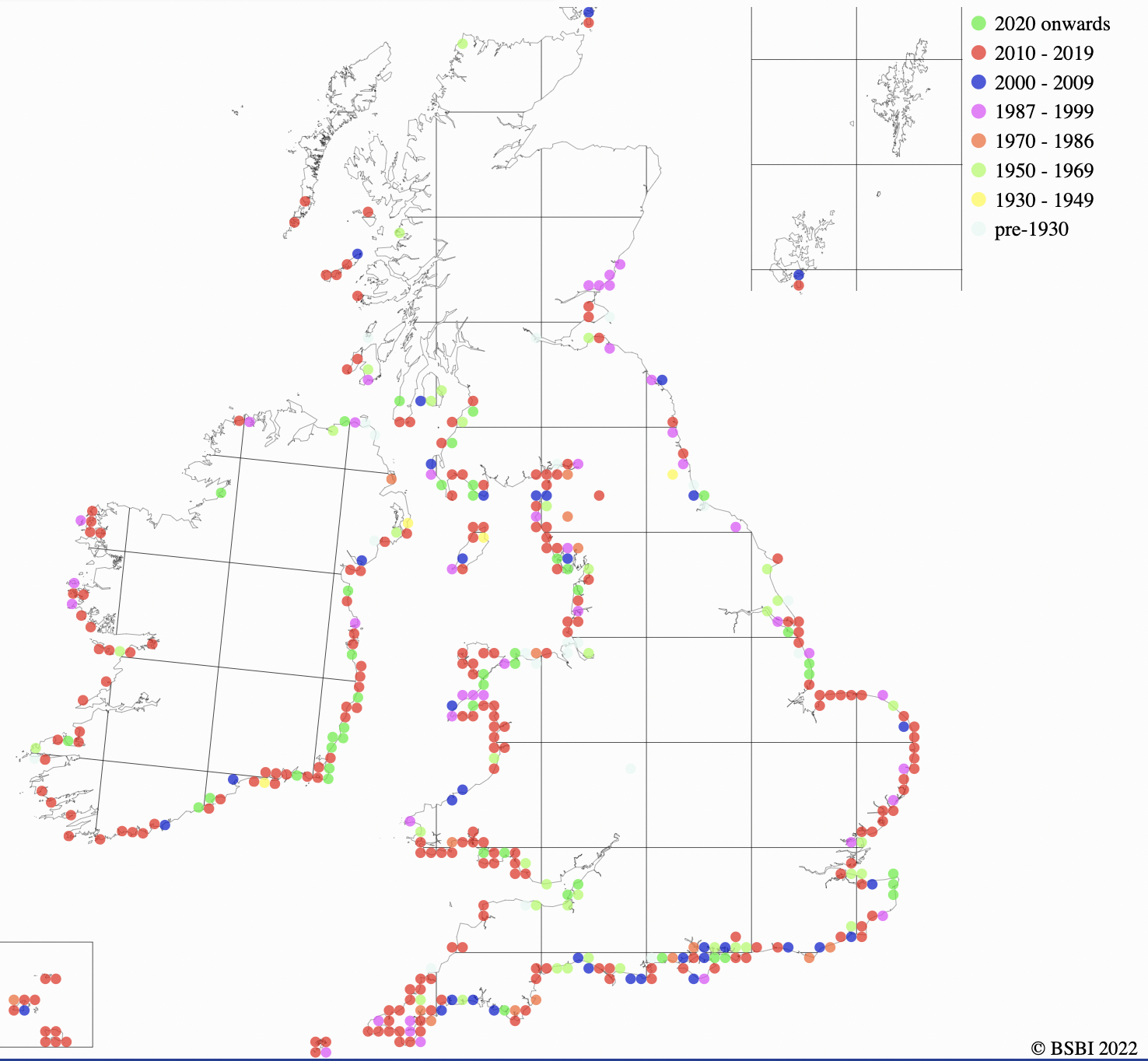
British distribution of Calystegia soldanella. Note its presence in the Outer Hebrides . Image: BSBI Maps.
Its Latin name has been Calystegia soldanella or Convovulus soldanella ever since Linnaeus first described and named it in 1735 but Gerard’s Herbal of 1597 called it Soldanella marina. It has various common names: sea bindweed, seashore false bindweed, shore bindweed, shore convolvulus, Scotch scurvy grass and beach morning glory. In Britain, the name Morning Glory is more often reserved for the mostly-tropical genus Ipomoea whilst Calystegia or Convolvulus are called Bindweeds.
There is an interesting Scottish-cultural connection. The plant is sometimes known as ‘The Prince’s Flower’ , named after Prince Charles Edward Stuart, aka ‘Bonnie Prince Charlie’. It is said that he sowed it on the Island of Eriskay, in the outer Hebrides of Scotland, when he landed there in 1745 to lead the Jacobite rising. It’s still there.
References
Arafeh RM (2005) Molecular phylogeography of the European coastal plants Crithmum maritimum L., Halimione portulacoides (L.) Aellen, Salsola kali L. and Calystegia soldanella (L.) R. Br. Dissertation zur Erlangung des Grades“Doktor der Naturwissenschaften”, Am Fachbereich Biologie, der Johannes Gutenberg-Universität, in Mainz, Germany.
de Lange P.J (2022) Calystegia soldanella Fact Sheet, New Zealand Plant Conservation Network. https://www.nzpcn.org.nz/flora/species/calystegia-soldanella/
Di Sacco A and Bedini G (2015) Demography and reproductive performance of Calystegia soldanella on a sandy seashore in Tuscany, Italy. Botany 93, 100-108.
Patino S and Grace J (2002). The cooling of convolvulaceous flowers in a tropical environment. Plant, Cell and Environment 25, 41-51. DOI 10.1046/j.0016-8025.2001.00801.x
To find last year’s Calystegia sepium, click on this: