Acer pseudoplatanus – 2nd January 2023 – Sycamore
Sycamore, also called Sycamore Maple, is a deciduous tree in the Family Sapindaceae. It has Scottish connections although its native range is Central Europe, from France eastward to Ukraine and southward to the mountains of Italy and Iberia.
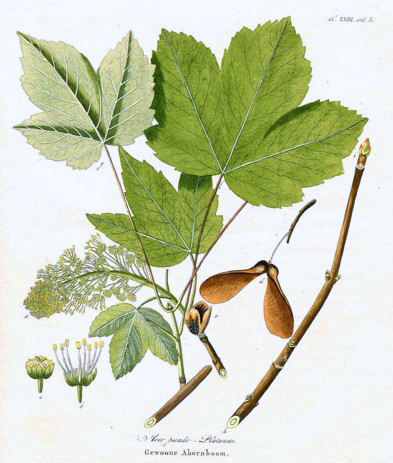
Acer pseudoplatanus by Johannes Allart, 1802, Amsterdam.
Sycamore is the most widely distributed tree in the whole of Britain and so many folk are surprised to read that it isn’t a native. Some older books say it ‘probably came with the Romans’ (Mitchell 1974), but most authors suggest it arrived from Central Europe in the 16th Century. Yet Stace and Crawley (2015), foremost authors on such matters, give the ‘date of first record’ to be as late as 1632. I spent much more time than I expected trying to trace the origin of the various claims. There is an intriguing correspondence between two Oxford scholars RT Gunter (of the Ashmolean Library) and J Burt Davy (the Imperial Forestry Institute) printed in the austere journal Nature from 1934. Gunter replies to Burt’s assertion that sycamore was introduced around AD 1300. The ‘evidence’ Burt presented was that sycamore leaves and fruits are carved in stone on the shrine of St Frideswyde in the Oxford cathedral. At least one modern botanist has dismissed this claim, saying that the carving could equally have been the related (and similar) Field Maple (Acer campestre). Next time I’m in Oxford I’ll have a wee look.
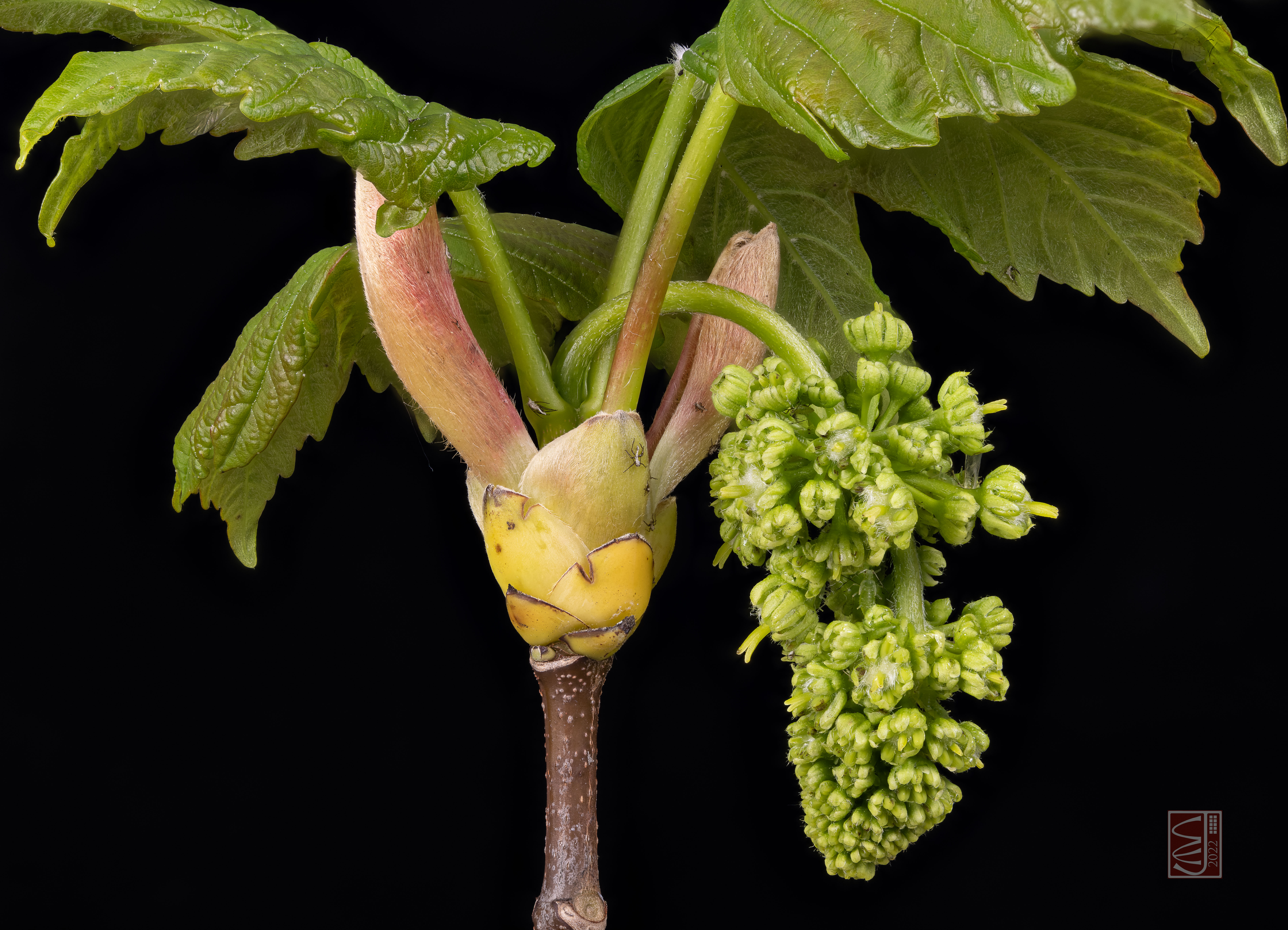
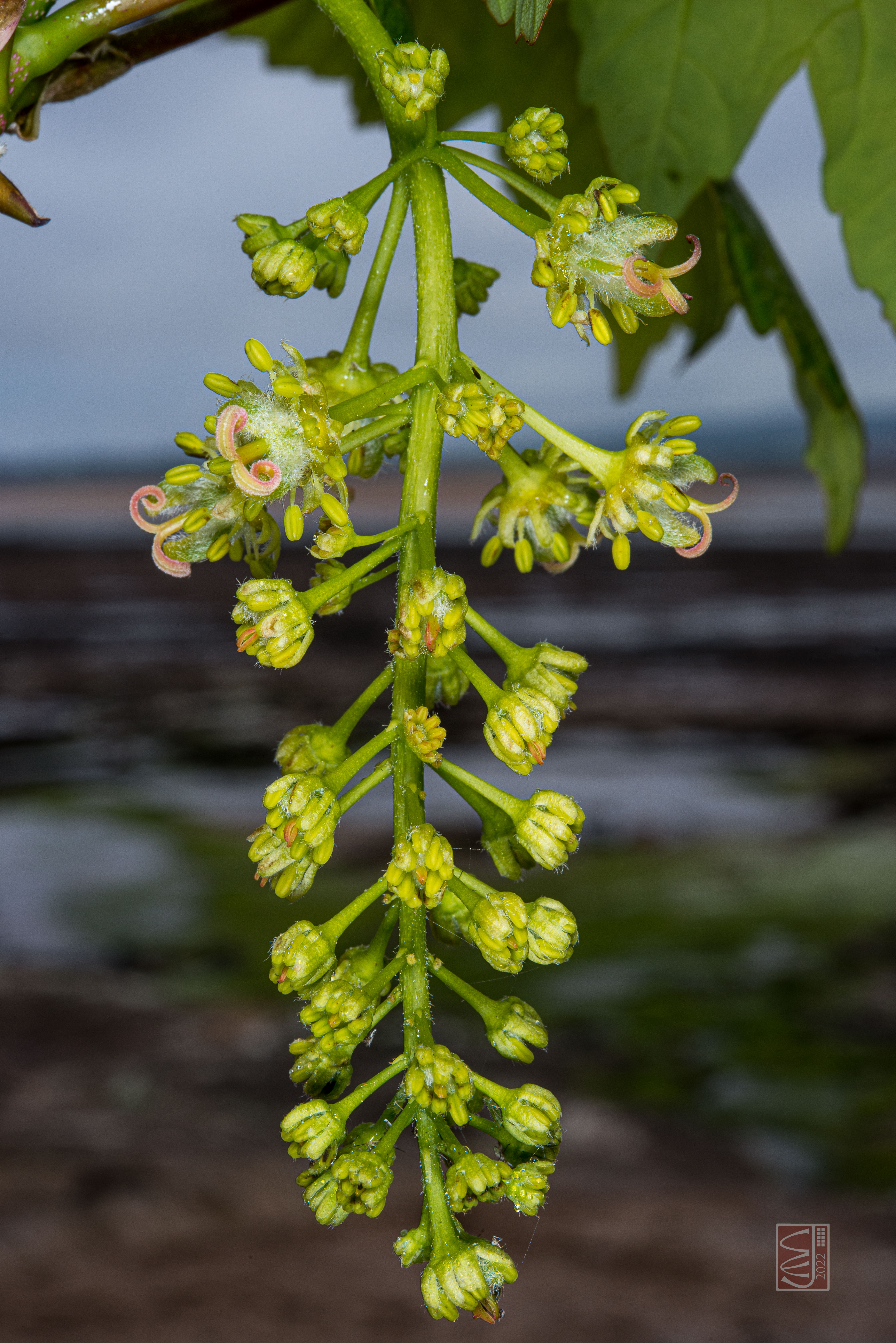
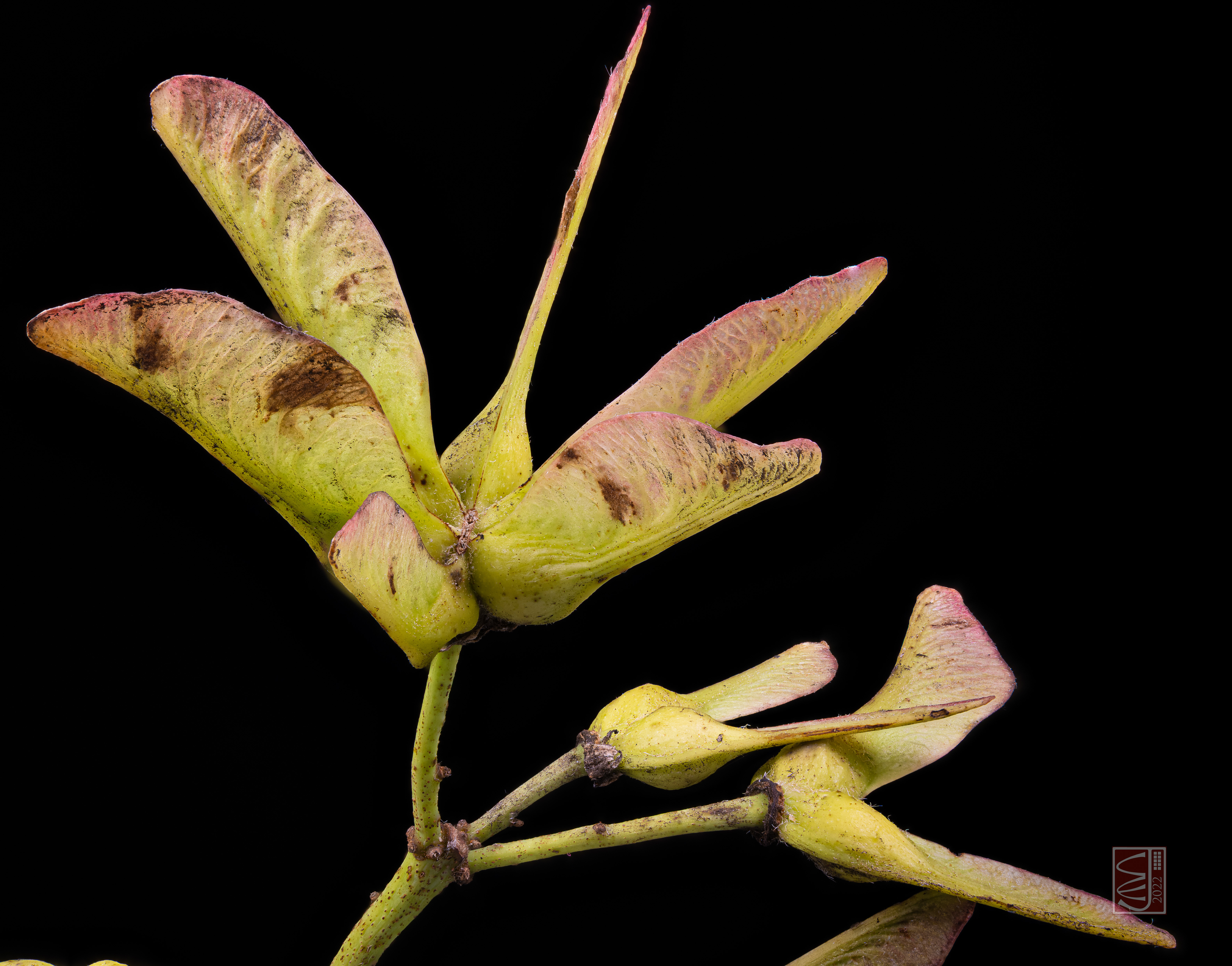
Developmental stages. Over-wintering twigs (upper left), flowers in May (upper right and centre) and the familiar winged fruits in August – November (lower). Each raceme has both male and female flowers. Pollination is usually by bees. The fruits are dispersed in the wind, mostly falling within 20 metres and germinating the following spring. Images: Chris Jeffree.
Regarding dates, I am persuaded by the account in John Gerard’s 1597 Herbal. He makes a very convincing drawing of the plant along with these remarks:
“The great Maple is a stranger in England, only it groweth in the walks and places of pleasure of noblemen, where it especially is planted for the shadow’s sake, and under the name of Sycamore tree”.
Note that the name ‘Great Maple’ was used by Gerard as the name ‘Sycamore’ was not yet in use for a tree that was so obviously an Acer (i.e. a maple). His assertion that the tree is ‘a stranger’ suggests it was present but not yet widespread by 1597.
Gerard’s observation tallies with the record from Newbattle Abbey near Dalkeith in Midlothian where a sycamore was planted in 1560, said to be ‘the earliest known planting date for a sycamore in Scotland’. That tree grew to 29 metres but was blown down in a storm in 2006. There is another in a field at Posso, near Peebles which is said to be 29 metres tall, and several others nearly as big. It may have become a ‘fashion’ for Dukes and Earls to have a sycamore tree on their Scottish estates.
Several Sycamore trees have an association with Mary Queen of Scots. There is one at Craigmillar Castle (Edinburgh) reputed to have been planted by the tragic Mary in 1566. There is another in Glasgow called the Darnley Sycamore. It is said that Mary nursed Lord Darnley back to health under this tree. Perhaps unsurprisingly there was a third giant sycamore supposedly planted by Mary’s own hands at Scone Palace in Perthshire, the coronation place of Kings and Queens of Scotland since the 9th Century. But Thomas Smout, the Scottish historian, reminds us that the Victorians often fabricated legends around big trees.

The Darnley Sycamore or ‘Plane Tree’. Mary Queen of Scots nursed her husband – the Earl of Darnley- back to health under this tree – allegedly. Attribution: Rosser1954 Roger Griffith, Public domain, via Wikimedia Commons
Scotland seems to have more of these large and famous Sycamores than England but one of the most celebrated British example is from the village of Tolpuddle in the county of Dorset. Under this tree in 1834 agricultural labourers met to discuss fair pay; they were desperate, being no longer able to support their families on nine shillings a week. But they were charged with swearing an illegal oath, found guilty and deported to Australia to work with sheep. There was however a public outcry and they were eventually pardoned and allowed to return home. Thereafter they were called The Tolpuddle Martyrs and the episode came to be seen as the start of the Trade Union Movement.
In the 18th Century, the Scottish ‘land improvers’ planted trees to create shelter for crops and livestock. Sycamore is ideally suited for shelterbelts: it can withstand high winds and salt spray, and even today the remains of these plantings can be seen – often sycamore mixed with beech (Caborn 1957).
In conclusion, it is almost certain that Sycamore is an alien plant, but one that has shed its seeds far and wide over several hundred years to occupy almost all of the British Isles, and has become home for a myriad of native birds, insects and mammals. I say ‘almost certain’ after reading Keith Kirby’s remark that it is just possible that it arrived not through human intervention but by its seeds arriving from France by natural means, during a storm (Kirby 2020). According to modern definitions of ‘native’, it would qualify as a native!
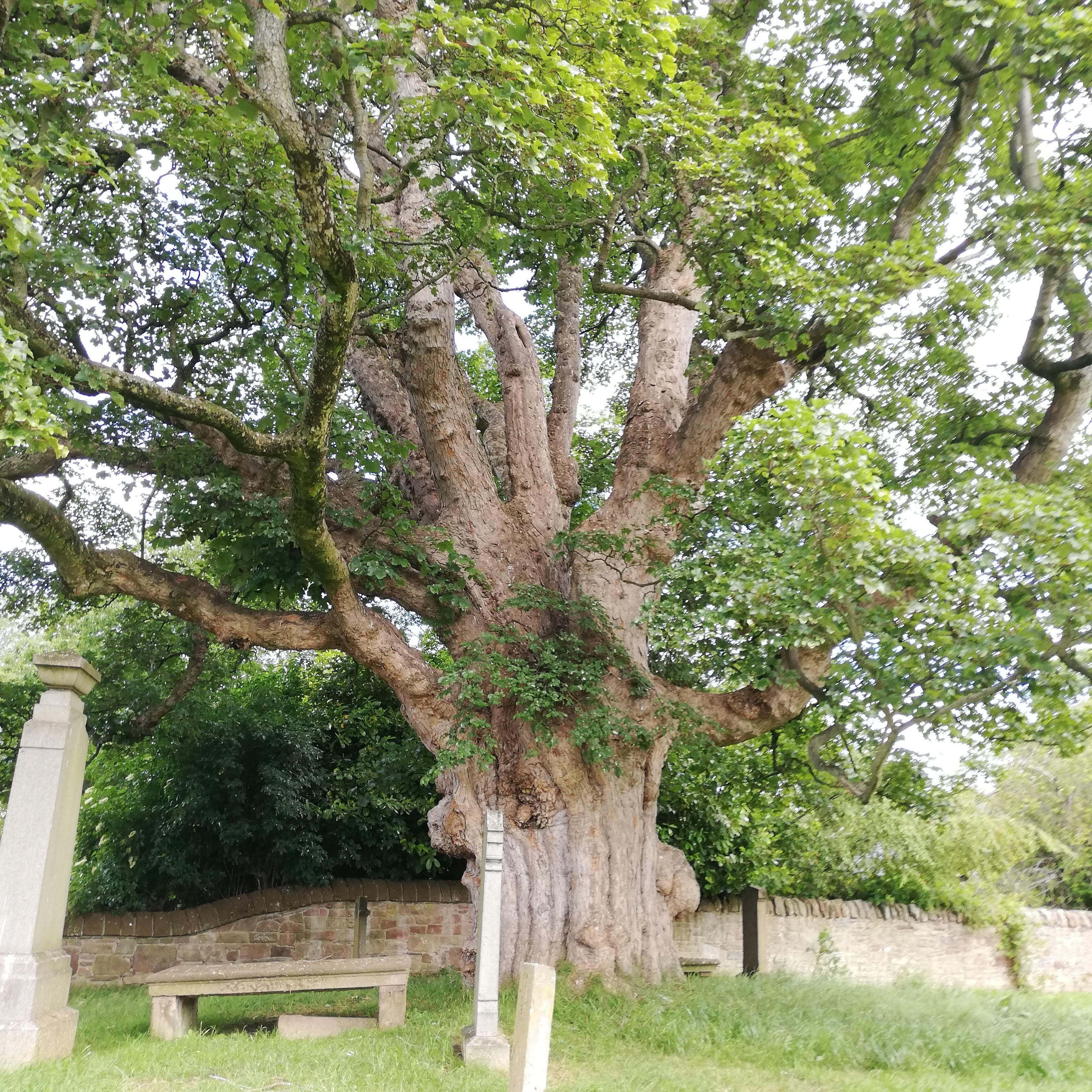
Another large sycamore, this one at Beauly Priory Inverness-shire. Girth is 5.33 metres, height is around 17.50 metres (in 2017). Photo: John Grace.
Conservationists sometimes develop an undue dislike for ‘aliens’ and they often try to eradicate them. In my judgement, Sycamore does little harm and enriches the British landscape which has has been impoverished through Dutch Elm disease (and now Ash Dieback threatens). It also provides useful timber, used especially for furniture and kitchen-ware such as platters, wooden spoons and rolling pins.
But gardeners, motorists and railway companies care little for Sycamore. The leaves attract the aphid Drepanosiphum platanoidis which feeds on the sap and excretes much ‘honeydew’ (mostly sucrose). Gardeners complain of a general stickiness of pathways beneath its sturdy boughs, motorists need to clear the goo from the windscreens of parked cars and railway timetables are thrown into havoc by ‘the wrong sort of leaves on the line’. But the aphids attract swallows, swifts and house martins, not to mention blue tits, garden warblers, robins and chiff- chaffs. Bees soon discover the honeydew and feed voraciously upon it. You can buy honeydew honey; it is said to have antioxidant, antimicrobial, and anti-inflammatory potential.
There is a usually-fatal muscle disease of horses, known as atypical myopathy, caused by ingesting sycamore seeds, leaves or seedlings. If you have a horse, keep it away from all Acer species.
The leaves of Sycamore and other Acer species are often infested with the ascomycete fungus Rhytisma acerinum, causing the condition known as tar spot. The infection is normally absent in regions of high atmospheric pollution, formerly thought to be caused by fungal intolerance of sulphur dioxide. But now that the air contains much less sulphurous pollution than it once did, the mechanism is thought to be a combination of fungal intolerance to oxides of nitrogen (from car exhaust) and the ‘tidying up’ of infected leaves in towns and cities. The condition does not harm the tree in any measurable way.
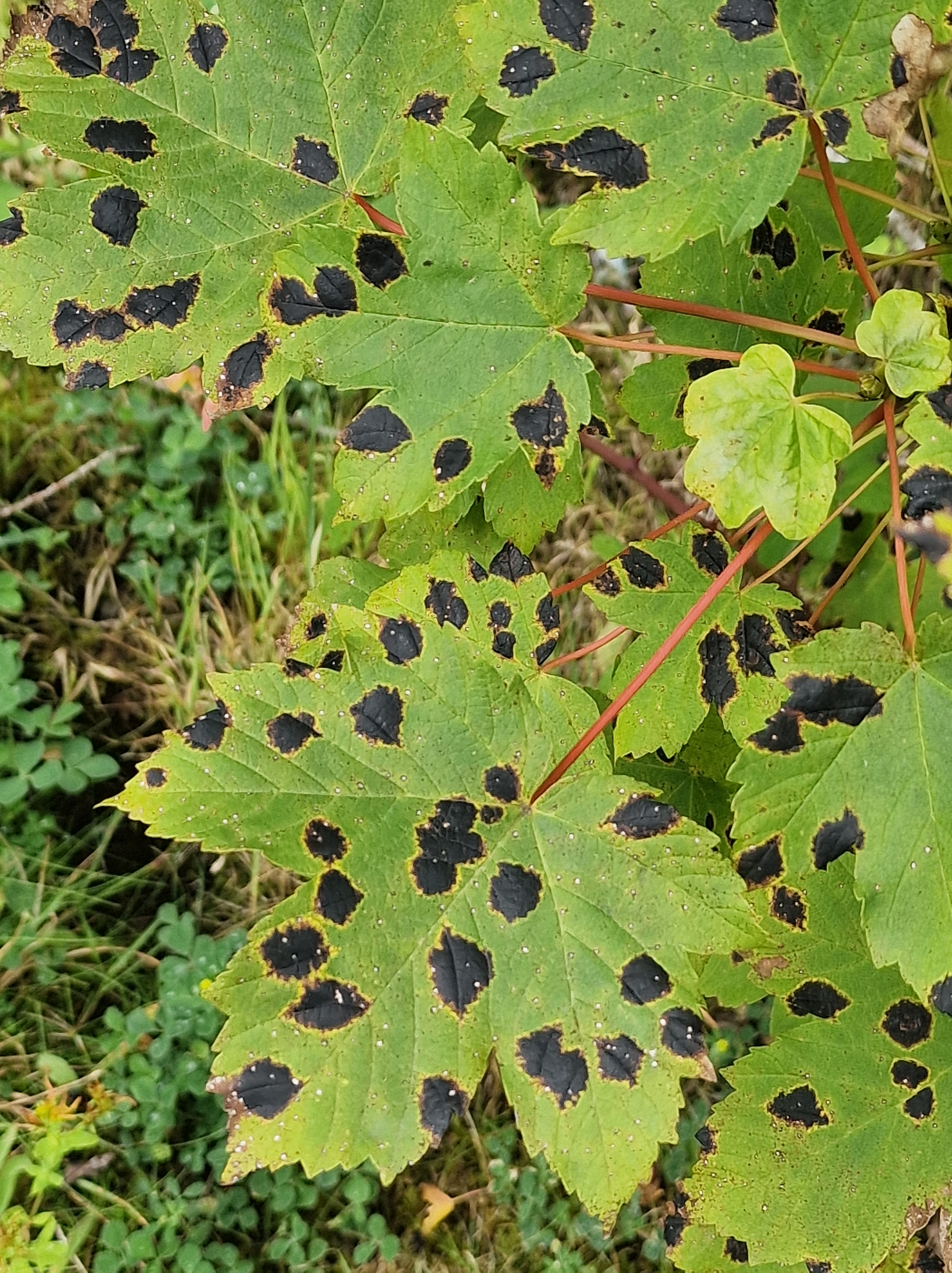
Leaves infected with Rhytisma acerinum, causing the condition known as ‘tar spot’. Photo: John Grace.
Another leaf infection appears as red pimples on the upper leaf surface. These are galls, the homes of tiny mites which feed on the leaf. The leaf responds with a burst of abnormal growth, forming the red pimple. Once mature, the mite exits from the underside of the leaf to find other spots to lay eggs. As with tar spot, the condition does not seem to harm the tree.
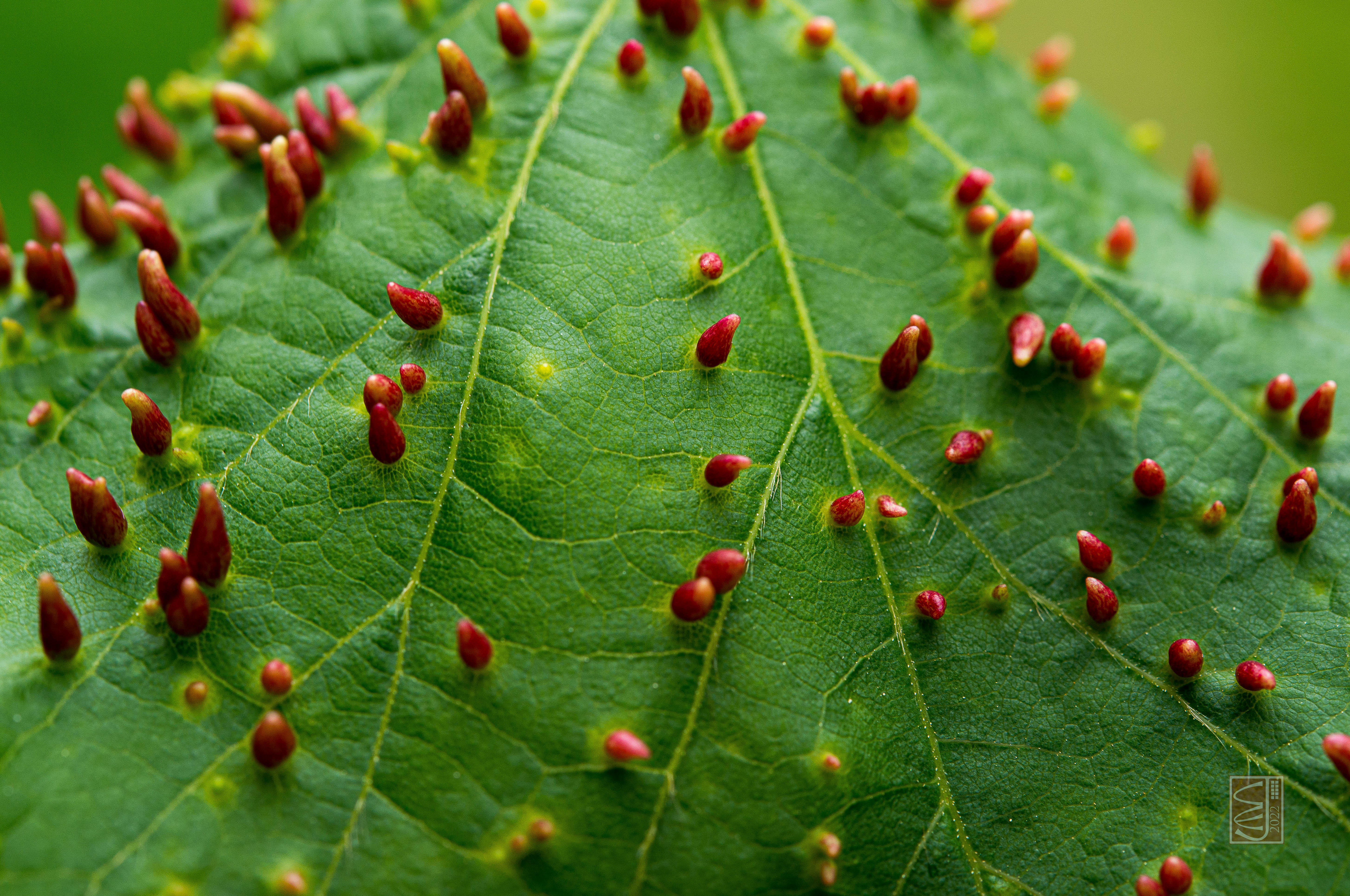
Leaf with galls on the upper surface, caused by the mite Aceria macrorhynchas. You can read more about these galls here. Photo: Chris Jeffree.
Most of us see the tree every day in an urban setting. In the summer, seedlings with their strap-like cotyledons can be found growing by roadsides, on parkland and in private lawns and gardens. We had a big Sycamore in the garden of our Victorian terraced house, but it threatened to push over the wall of the neighbouring school playground and we were forced to cut it down. Now, we rarely see swifts above our house, but perhaps there are other reasons for that.
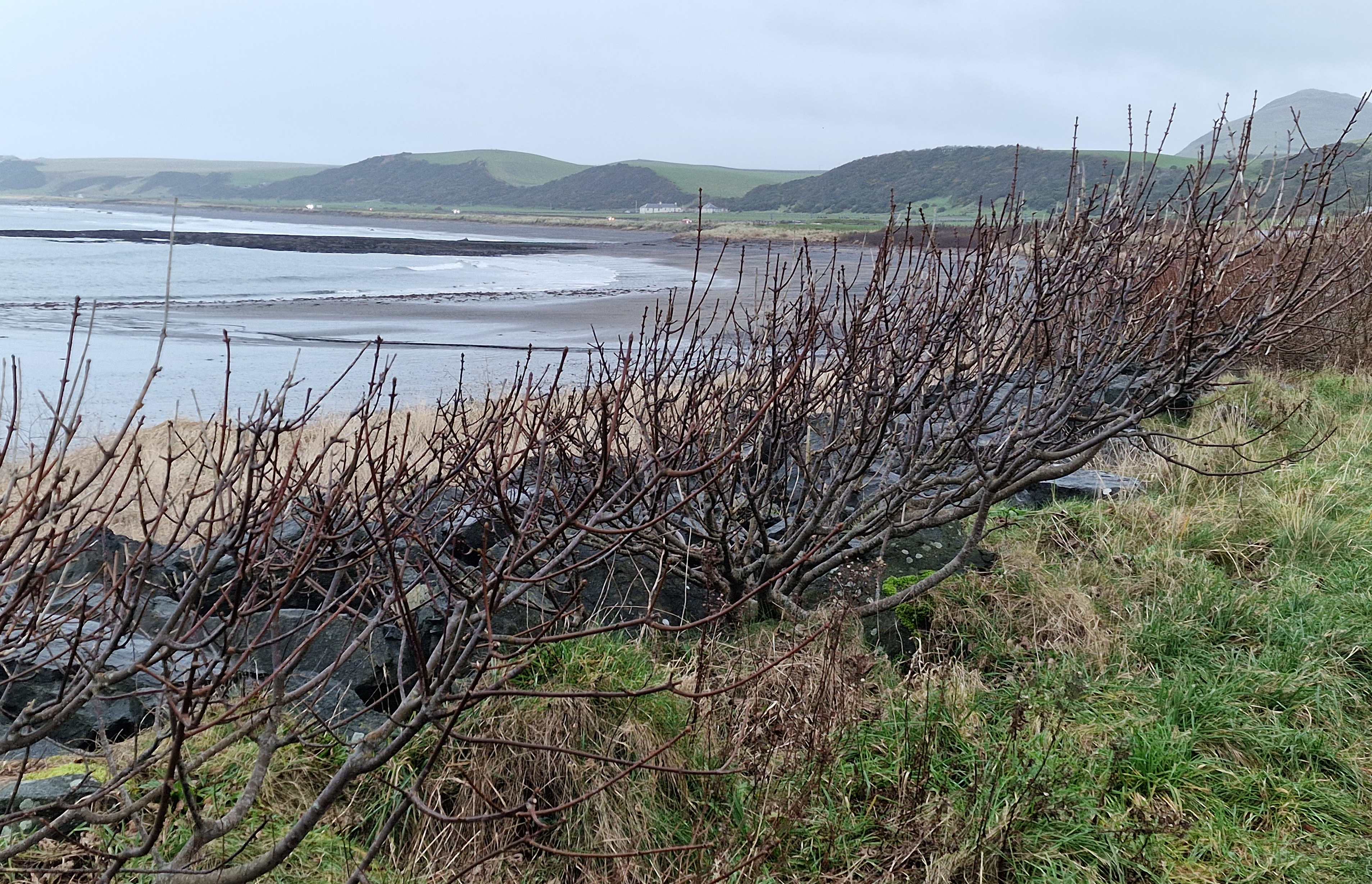
These Sycamores have colonised the coastal defences at Ballantrae, South Ayrshire. They tolerate the full force of salt-laden storms from the North Atlantic Ocean. Photo: December 2022, John Grace.
As a timber species, Sycamore may have a good future in British Forestry. Although not a native, it produces useful timber rather quickly and perhaps even faster as the climate warms. Much silvicultural knowledge is available from work in Continental Europe (Hein et al 2009), and as we seek to diversify our species-poor British forests, increase biodiversity and capture carbon, Sycamore has several roles to play. Commercially, its timber commands similar prices to beech and oak. It may be considered as a replacement species in ash woodlands devastated by the fungal disease ‘ash dieback’.
As a street tree, it can stand high levels of atmospheric pollution but it has several drawbacks already referred to and it lacks the red autumn colours which appear in other species of Acer.
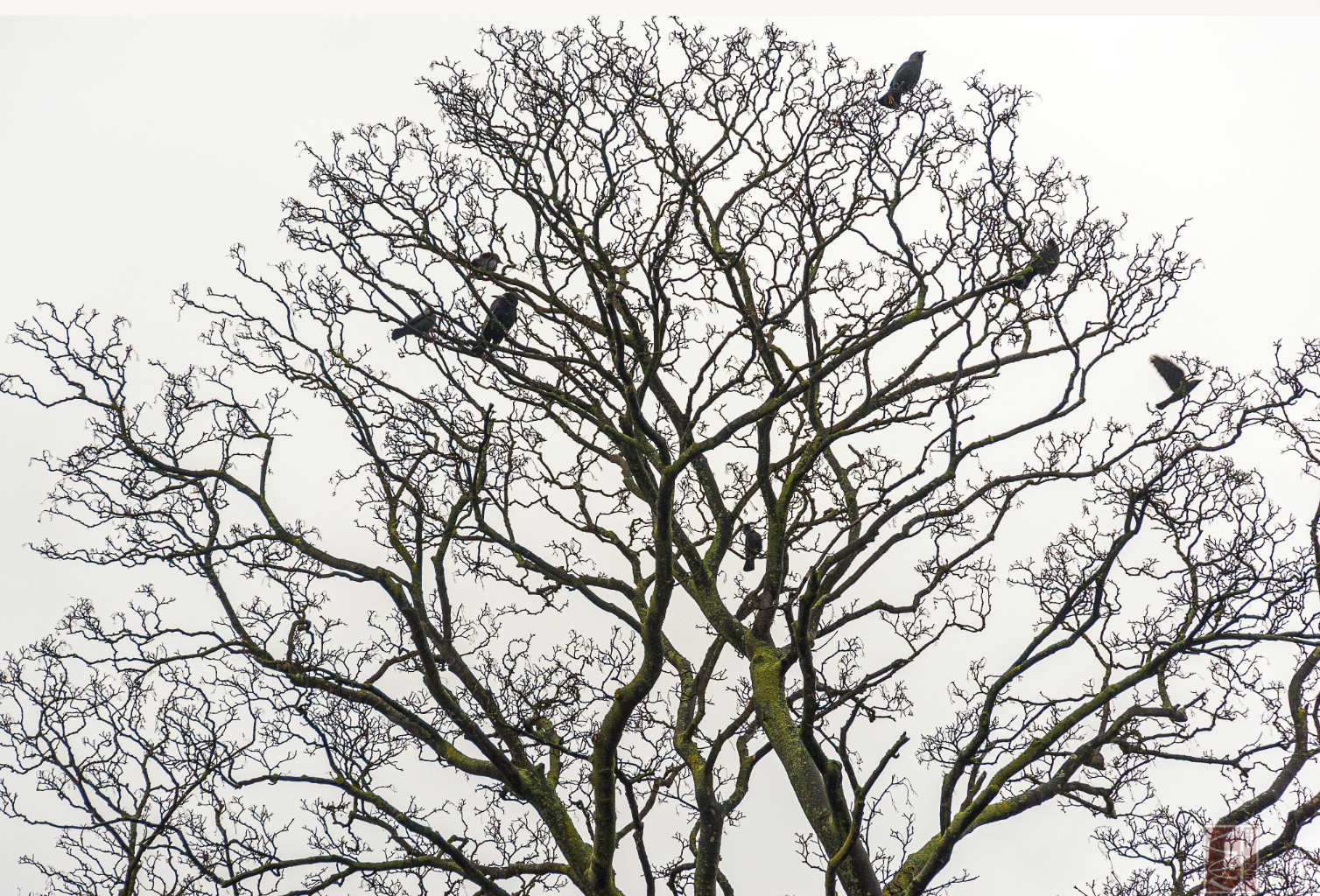
The mature Sycamore trees in parklands and fields are magnificent in winter, silhouetted against the grey northern sky. They are prime roosting and look-out sites for crows, jackdaws, pigeons and gulls. Photo: Chris Jeffree.
I have been impressed by the huge number of articles written about Sycamore, along with poetry and painting. In this short blog I regret that I have been unable to develop all the points that arise. Another author has been more successful here. Perhaps in future I will re-visit the topic. It is unusual for an alien species to have commanded so much attention from such a wide range of interest groups.
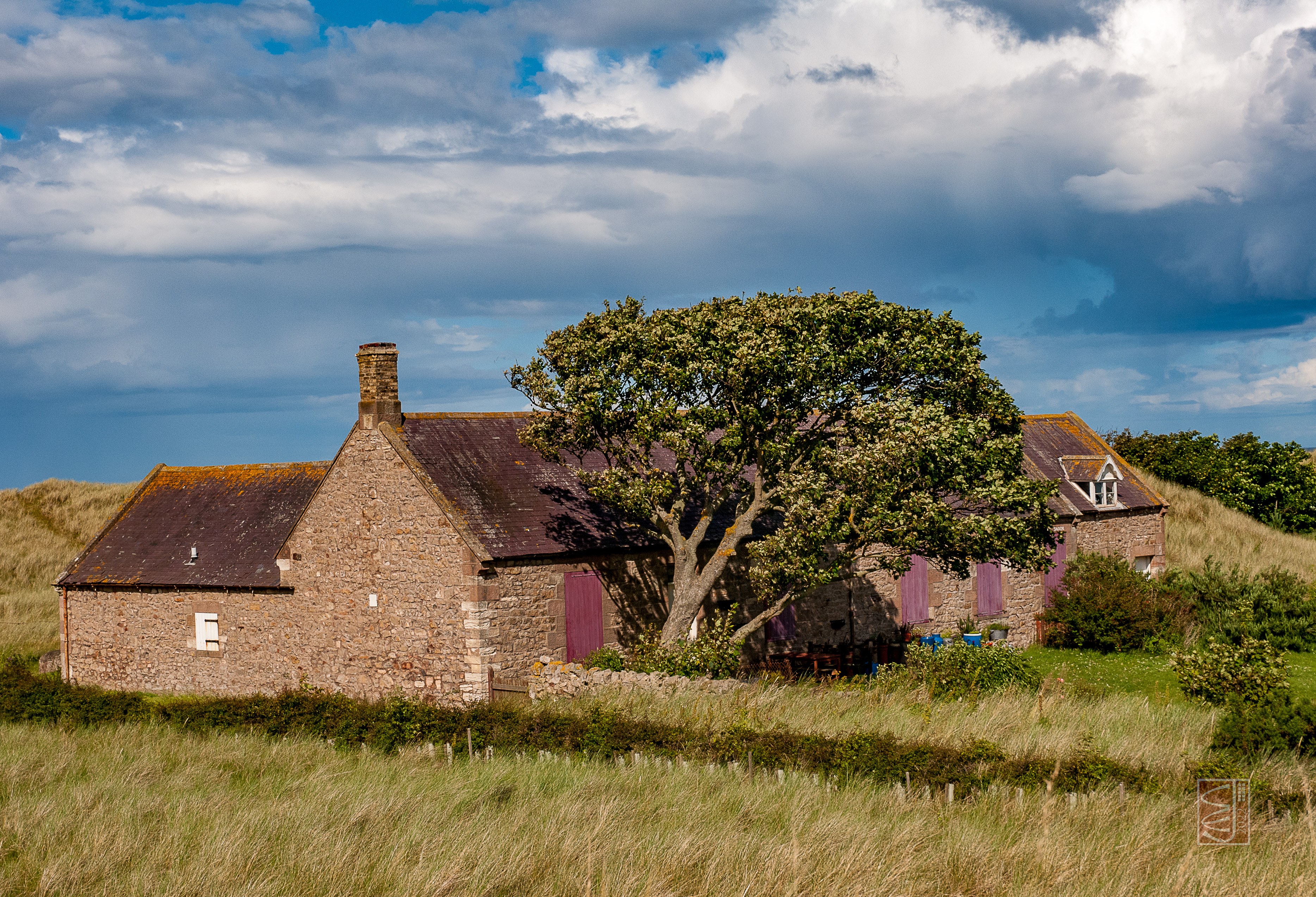
Windswept sycamore on Lindisfarne (‘Holy Island’) off the coast of NE England. Photo: Chris Jeffree.
Note added 16.00 on Jan 2nd.
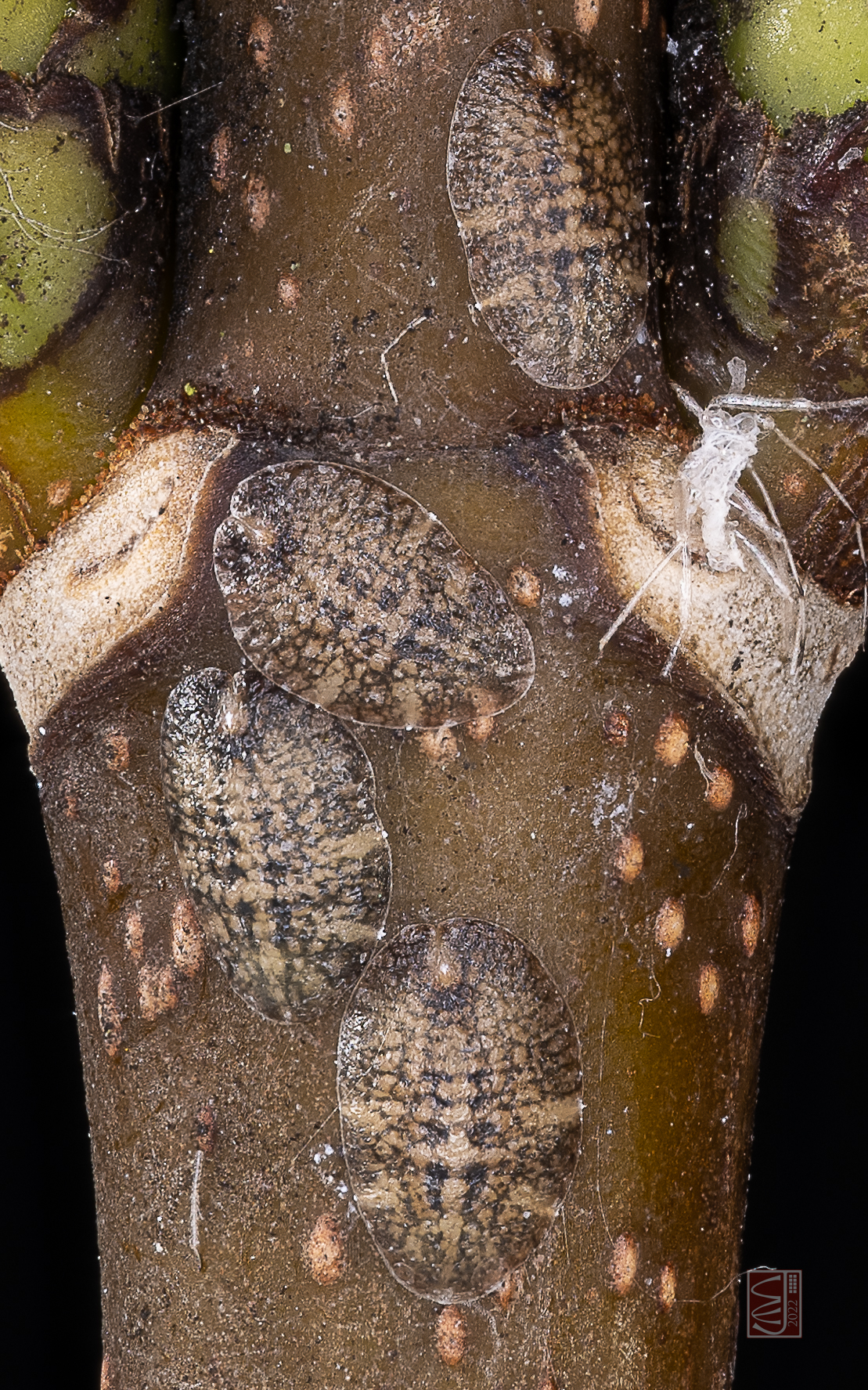
Observant readers might have noticed the scale insects on the image of the twig. We believe it to be a species of the genus Pulvinaria, (order Hemiptera (true bugs), family Coccidae). NBN Gateway maps multiple records in Glasgow and Edinburgh, but no other records north of Hull and Manchester. Here’s a close up from Chris Jeffree.
References
Binggeli P and Rushton BS (1999) Sycamore and Ash: a Review of Aspects
Relevant to Irish Forestry. COFORD, Dublin.
Caborn JM (1957) Shelterbelts and Microclimate. Forestry Commission Bulletin 29. Her Majesty’s Stationery Office, Edinburgh.
Hein, S et al. (2009) A review of growth and stand dynamics of Acer pseudoplatanus L. in Europe: implications for silviculture, Forestry: An International Journal of Forest Research, 82, 361–385, https://doi.org/10.1093/forestry/cpn043
Kirby K (2020) Woodland Flowers. Bloomsbury, London.
Mitchell A (1974) A field guide to the trees of Britain and Northern Europe. Collins, London.
Stace CA and Crawley MJ (2015) Alien Plants. Collins, London.
©John Grace