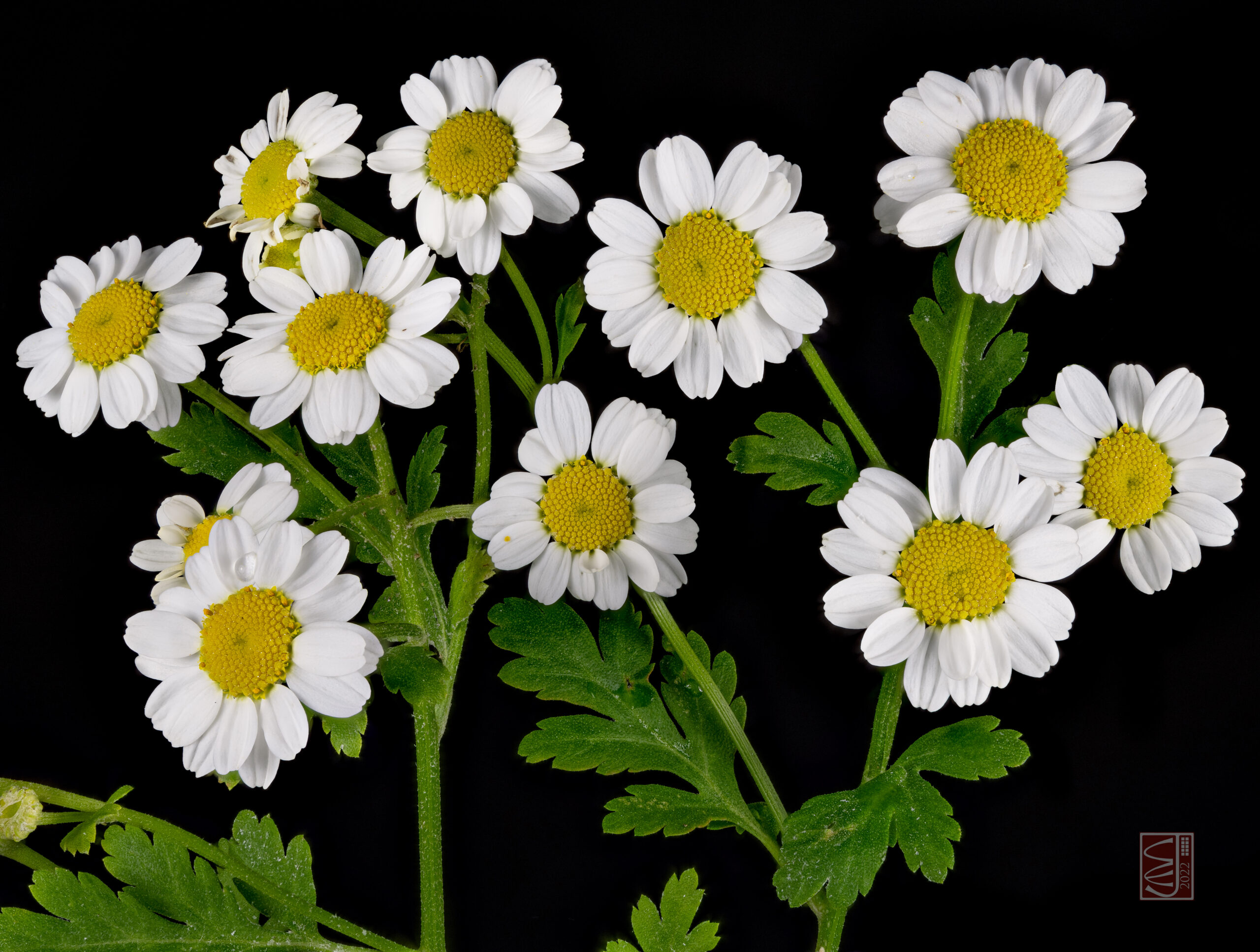
Tanacetum parthenium – 26th December 2022- Feverfew
If you have been over-indulging with festive spirit over the Yuletide period you will probably reach for the paracetamol. Our forefathers didn’t have such pills; instead they employed herbal remedies as prescribed by the great physician-botanists of old. In Britain the most well-known of these are John Gerard (1545 – 1612) and Nicholas Culpeper (1616 –1654).
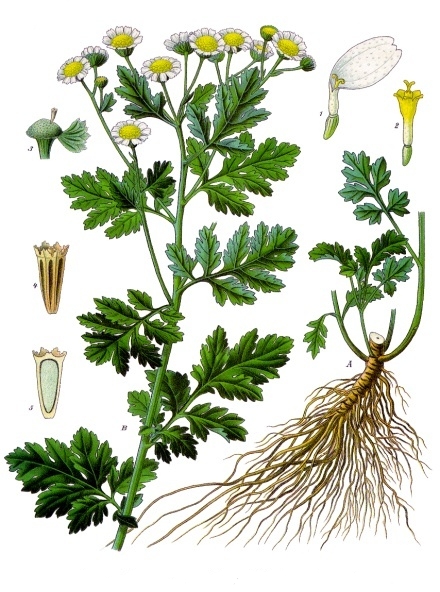
By Franz Eugen Köhler, from Köhler’s Medizinal-Pflanzen, Public domain, via Wikimedia Commons. Note: highly dissected leaves, rather weak tap-root, achenes have no pappus of hairs but a ‘crown’ of short appendages.
But all the European herbalists of the 16th and 17th Centuries were influenced by (or copied) ancient works from Greece and Rome including Dioscorides (about 40 – 90 AD) and Galen (129 – 216 AD). One of the most widely-used medicinal plants was feverfew, Tanacetum parthenium, recommended especially for migraine headaches but also for allergies, arthritis, fevers, headaches, menstrual irregularities, psoriasis, ringing in the ears (tinnitus), vertigo and cancer. The earliest known botanical descriptions in the English language are by William Turner (1548) and John Gerard himself (1597). Despite these early records the plant is not considered to be a native in Britain but an archaeophyte, having been brought here by humans before these dates. Most people imagine the Roman legions would have carried it – perhaps planting it around settlements throughout the Empire. We know it was cultivated in the monastic gardens to be used by the monks and distributed around local communities. We will never be sure of its history, but we can reckon that the widespread distribution today is, in part, a result of its reputation as an important herbal medicine and still sold these days as pills but rarely prescribed by the GP.
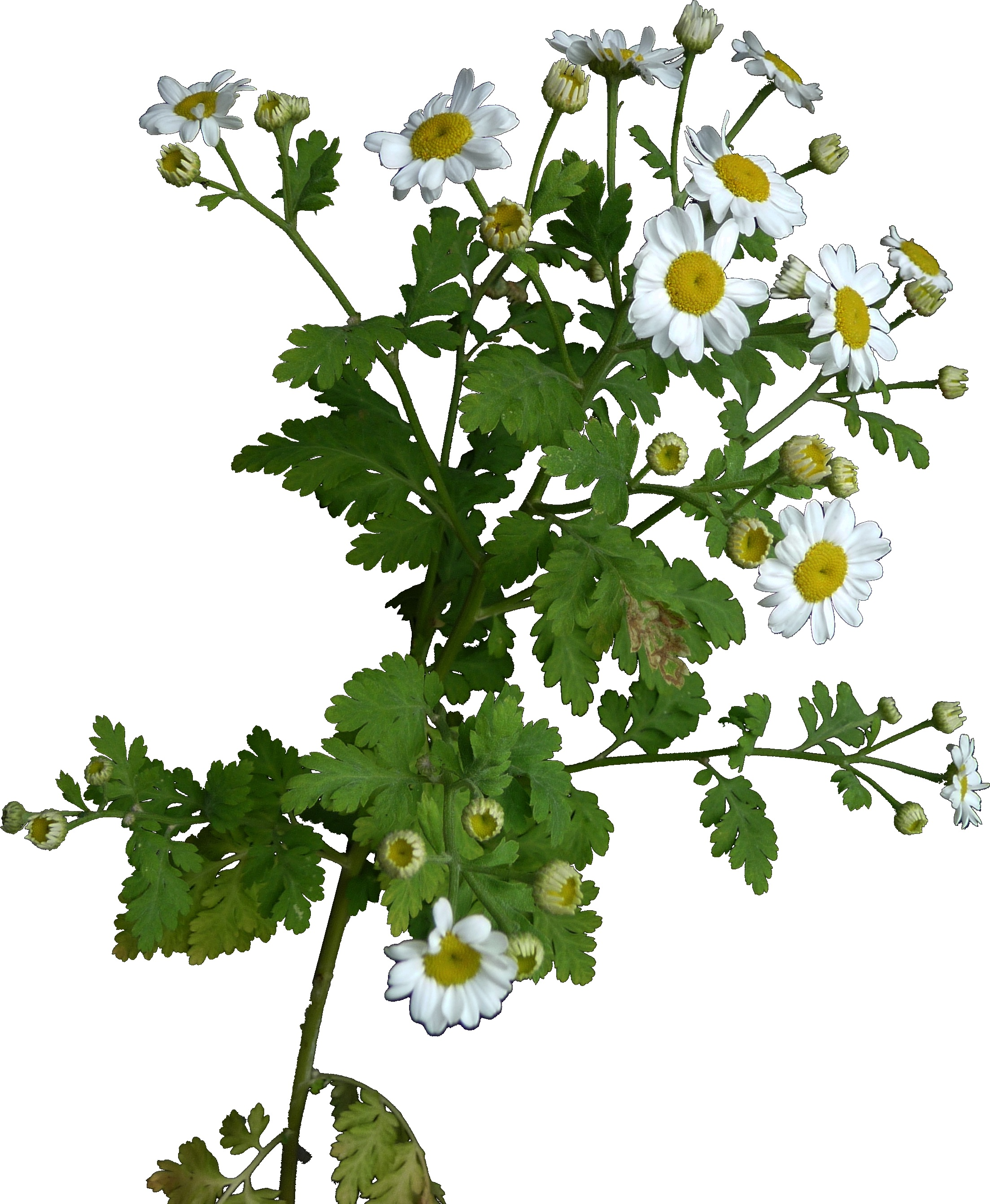
General appearance and branching pattern. Image: Richard Milne
Culpeper was especially effusive about the plant in his 1794 Complete Herbal:
“Venus commands this herb, and has commended it to succour her sisters (women) and to be a general strengthener of their wombs, and remedy such infirmation as a careless midwife hath there caused; if they will but be pleased to make use of her herb boiled in white wine..”
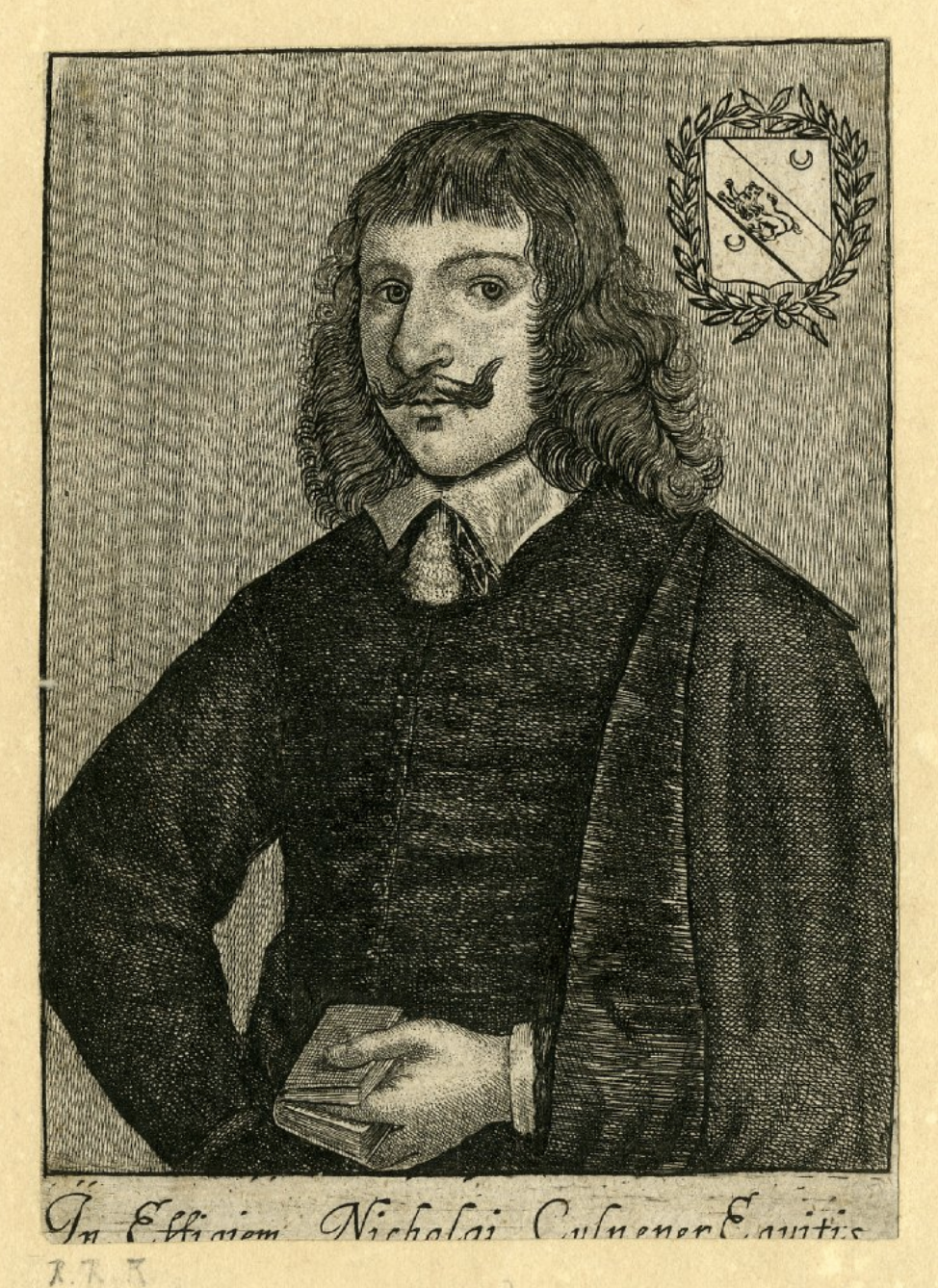
Nicholas Culpeper, a herbalist known for his laddish behaviour. See the witty article by Emily Petch here.
It belongs to the Asteraceae (the Daisy family). It grows to about 70 cm with daisy-like flowers (15-23 mm across) in lax bunches as shown in the photographs below. We see it in almost all our botanical surveys of towns and cities – parkland, car-parks, gardens, rubbish heaps, waste ground, walls and waysides. It is one of those species that seems to follow humans around. Its leaves are much divided, lime green and bitter to taste with a pungent aroma. Some people grow it in their herbaceous borders – it’s pretty and it can flower profusely over a long period in summer. The seeds lack the ‘pappus of hairs’ and so they are scarcely carried in the wind (we see the hairy pappus in many of the Asteraceae, for example think of dandelions). Most of Feverfew’s seeds are dispersed over short distances or hitch lifts on boots, tyres and birds’ feet. Only a few folk think it is a troublesome weed – it does indeed produce plenty of seedlings but its tap root is quite feeble and it can be plucked from the ground or hoed.
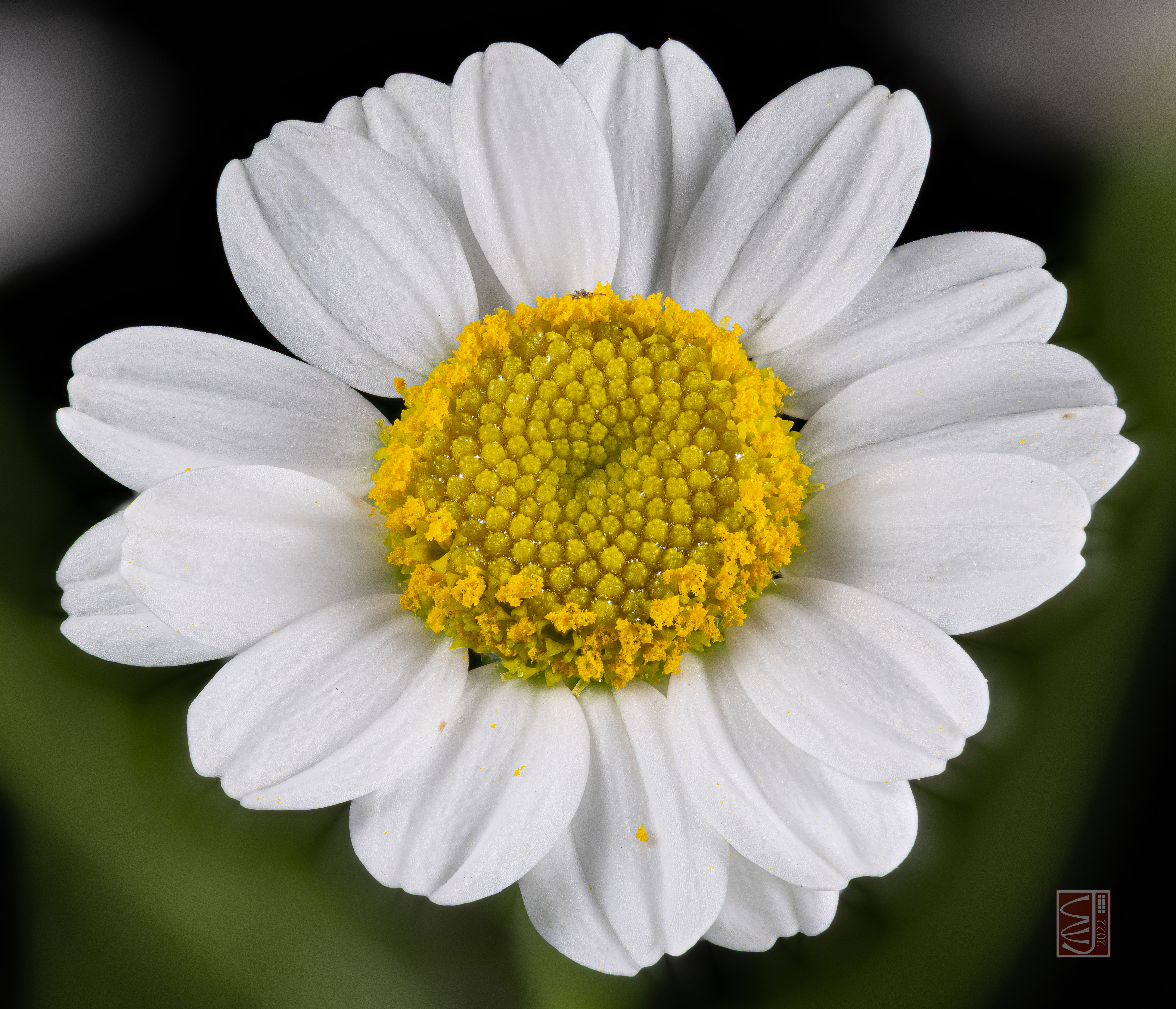
White ray florets (outer) and yellow tube florets in stages of development. The diameter of the whole structure is 15-23 mm. Image: Chris Jeffree.
What does modern science have to say about Feverfew’s reputation as a cure for migraine and other conditions? It isn’t good enough to say ’my old auntie always took it and she lived to a ripe old age’. We need more evidence than that, and we need to take into account the placebo effect, as follows. When a new pill is tested there has to be a ‘control group’ of patients who are given fake pills (the placebo) that look like the real thing but contain nothing at all. That’s because ‘belief’ itself has a powerful curative effect. For good measure, the clinician in charge of the trial must also be unaware of which are the fakes (in case she/he biases the interpretation of the data), so a system of code numbers is used, and the code is revealed only when the study is concluded. Such a trial is called ‘double blind’. Also, many volunteer patients are required (preferably thousands, to increase the statistical ‘power’ of the analysis). They should be issued with real pills or placebo pills on a random basis (according to their age, gender, medical history).

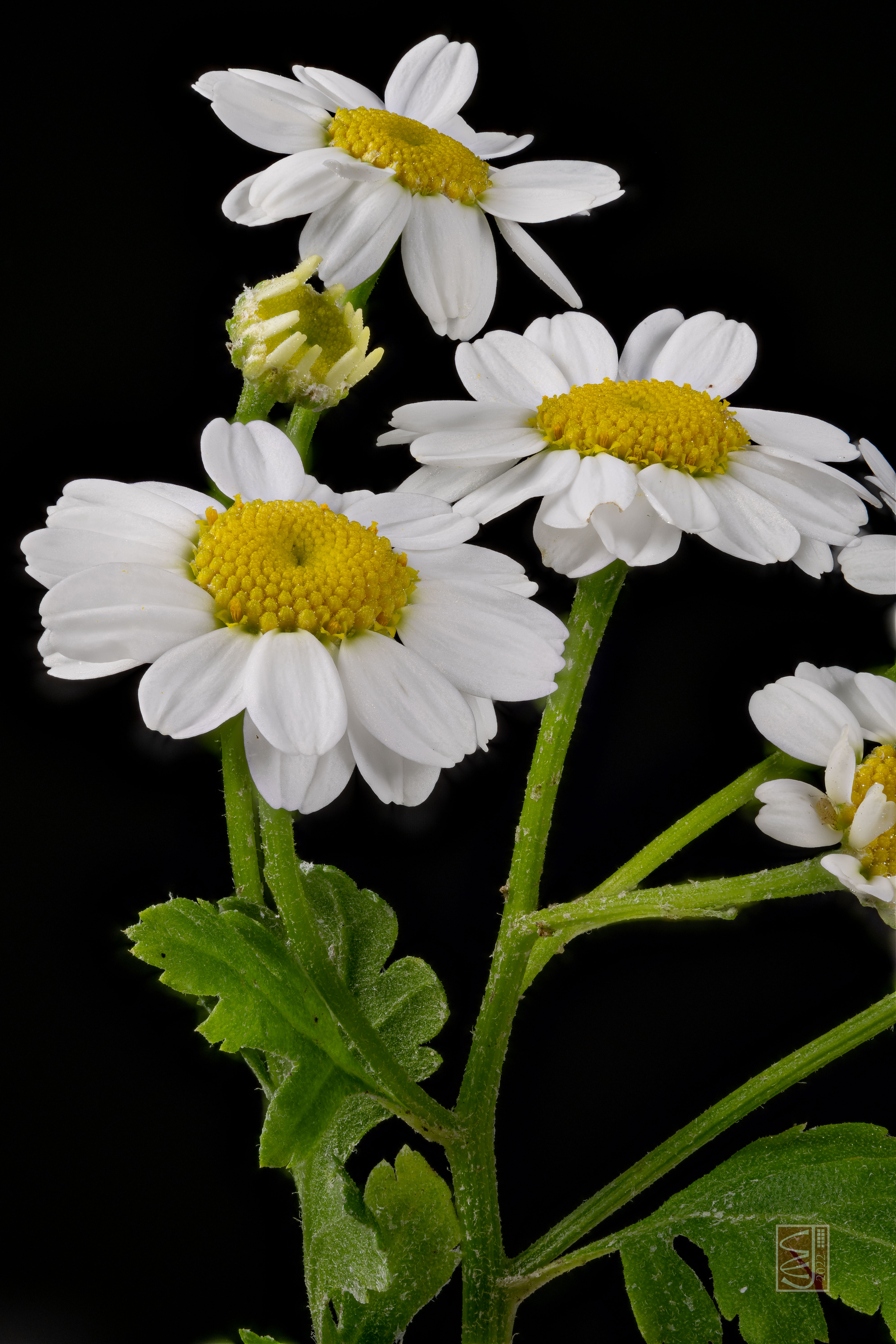
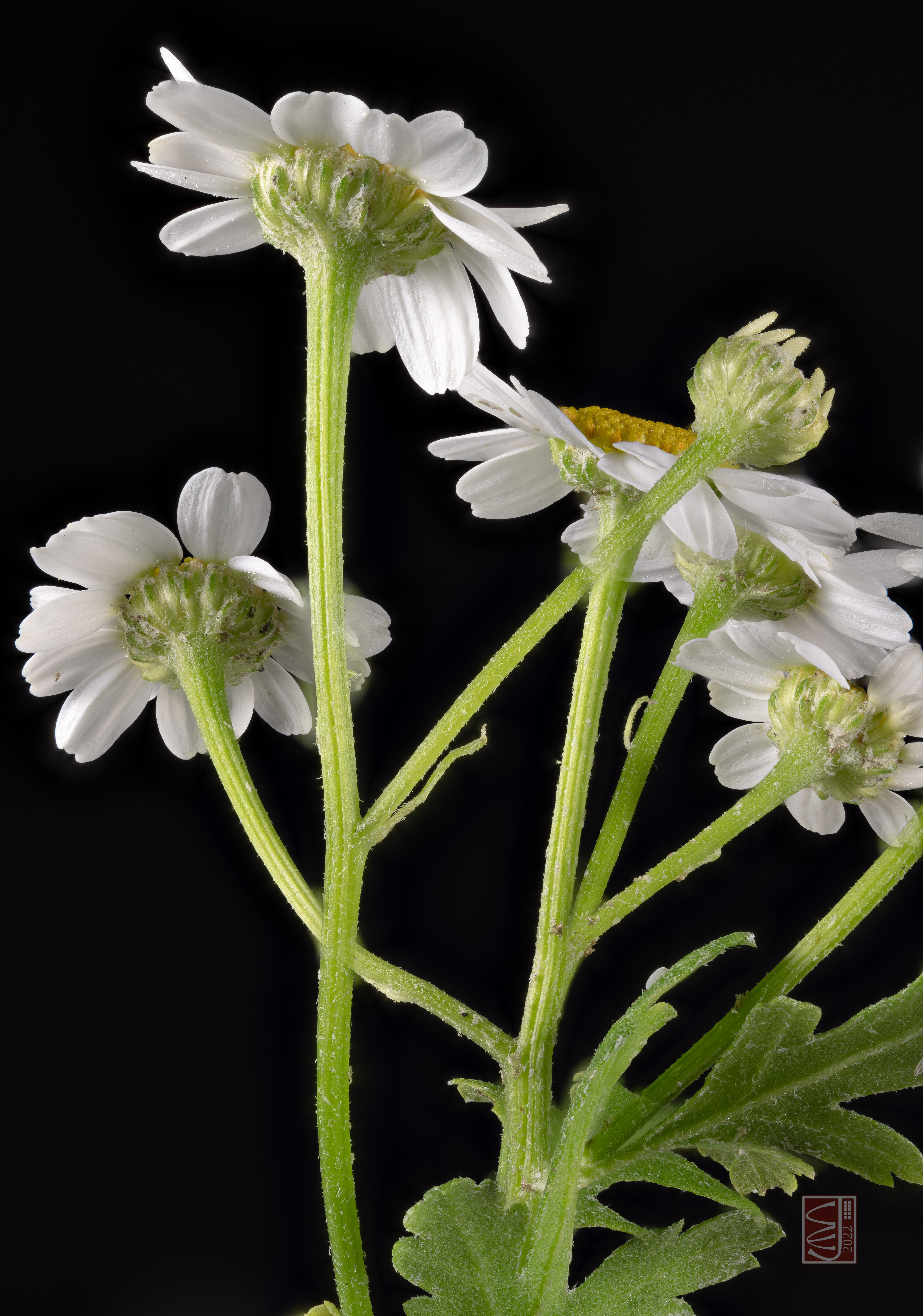
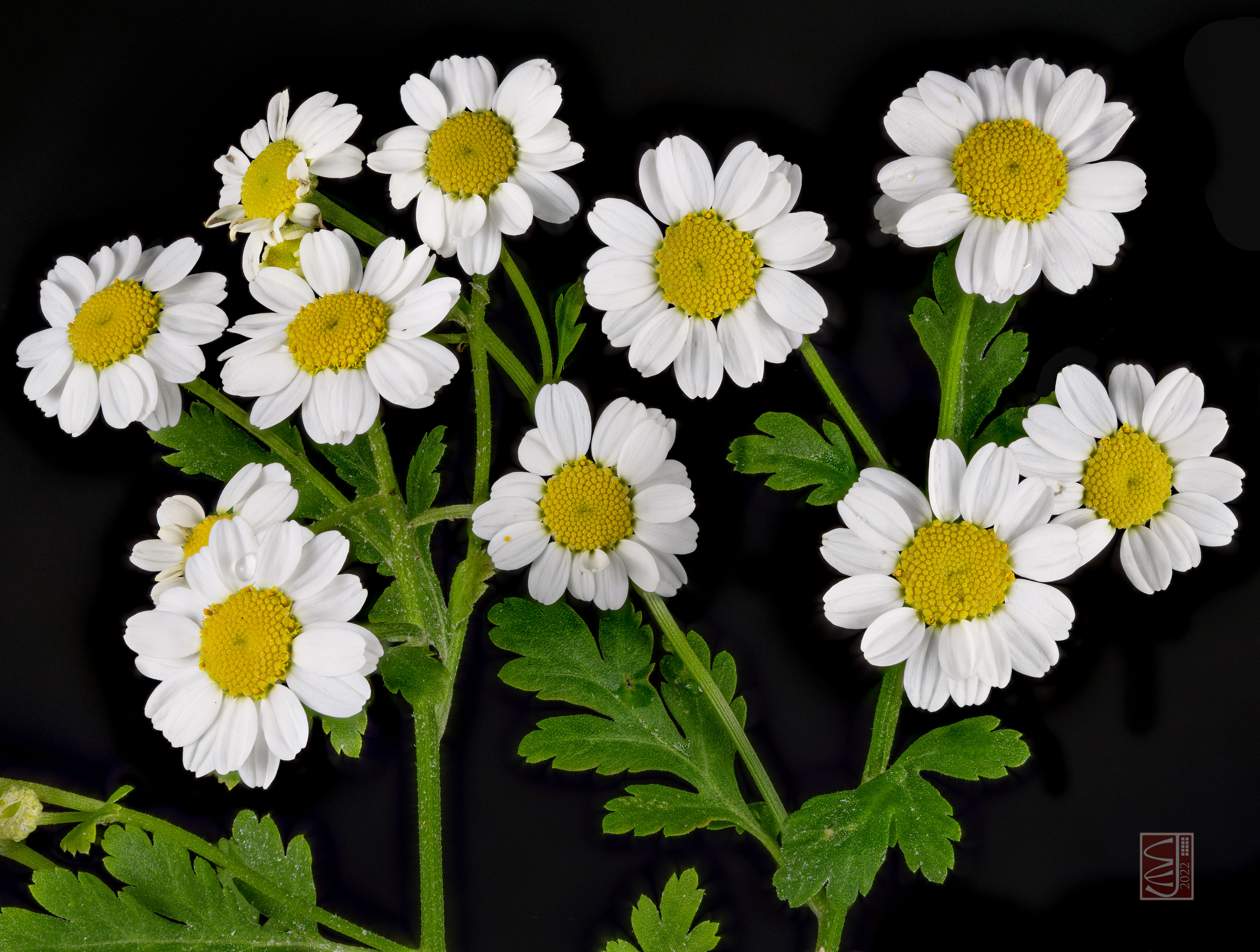
Various views of Feverfew: top left, growing with other ruderal species; mid-upper, high resolution image showing the grooves on the stem; mid-right, showing the bracts (‘phyllaries’) that support the flower head; lower, a group of flower-heads. Images: Chris Jeffree.
So what results are available? Lopresti et al. (2020) searched the medical literature and found seven randomised, controlled studies examining the effects of feverfew on migraine frequency, severity, duration, and other accompanying symptoms. They concluded ‘the efficacy of feverfew as a treatment for migraine is mixed’. A single study in London (Johnson 1997) was more optimistic; of the 242 migraine sufferers in the trial, 33 percent had no migraine attacks whilst taking Feverfew.
Most plant species contain an array of biologically active compounds, usually part of the plant’s chemical defences against attack by herbivores, and some of them highly poisonous to humans. Consequently, herbal remedies are likely to have more unwanted side effects than pure compounds such as aspirin and paracetamol.
But in comparing the efficacy of herbal remedies with pure compounds, the one huge issue not usually addressed is that the pure compounds are ‘owned’ by companies who are able to fund large scale trials. No rich commercial company ‘owns’ Feverfew or any other wild plant and thus research on the efficacy may not meet the high standards generally required before a drug is deemed truly effective and safe for release. Moreover, herbal remedies are ‘unregulated’ which means any formulation can be put on sale to the gullible public even if it has never been systematically tested. I have seen that companies offering Feverfew for sale are usually careful not to make false claims – rather, they simply state that the product is ‘healthy’. Sometimes they go a bit further, for example:
“Feverfew is well known for helping to treat migraine headaches. Feverfew has been found to work for two-thirds of those who use it consistently and has been invaluable for helping regular migraine sufferers. Studies published in the British Medical Journal agree that feverfew taken regularly prevents migraine attacks”
I decided to check out this claim. I searched the British Medical Journal using the search term ‘Feverfew’. I found what I believe is the paper referred to (Johnson et al. 1985), but it was followed shortly after by a rebuttal by Waller and Ramsay, clinicians at the Royal Hallamshire Hospital in Sheffield (there were only 17 patients in the study, and this was not a ‘double-blind’ test).
We do however know quite a lot about the chemical constitution of Feverfew. There are 30 sesquiterpene lactones, especially parthenolide (C15H20O3) a compound named after this plant and known to be highly active in many biological systems (causing DNA damage) and active against Leishmania amazonensis, the parasite responsible for the disease leishmaniasis. Lim (2014) gives its concentration in Feverfew as high as 3.8 % and presents a very good overview of the chemistry.
About the name of the plant: we know it has had very many names. It has belonged to these genera: Chrysanthemum, Leucanthemum, Matricaria, Pyrethrum, Pontia and Aphanostephus. Its English names have included: Bachelor’s Button, Bridal Roses, Camphor Geranium, Common Feverfew, Double Feverfew, European Feverfew, Feather-Fully, Febrifuge Plant, Feather Foil, Fetter-Foe, Feverfew, Feverfew Chrysanthemum, Feverfew- Chamomile, Flirtroot, Flitwort, Golden Feather, Lesser Feverfew, Matricaria Parthenium, Midsummer Daisy, Mother Herb, Nosebleed Parthenium, Pellitory, Santa Maria, White-Wort, Wild Chamomile, Wild Quinine, Grande Chamomile, Mutterkraut, Vetter- Voo, Feverfew, Featherfew.
Feverfew’s specific name parthenium is supposed to come from its use to cure a hapless fellow who fell from the Parthenon in Ancient Greece, 5th Century BC.
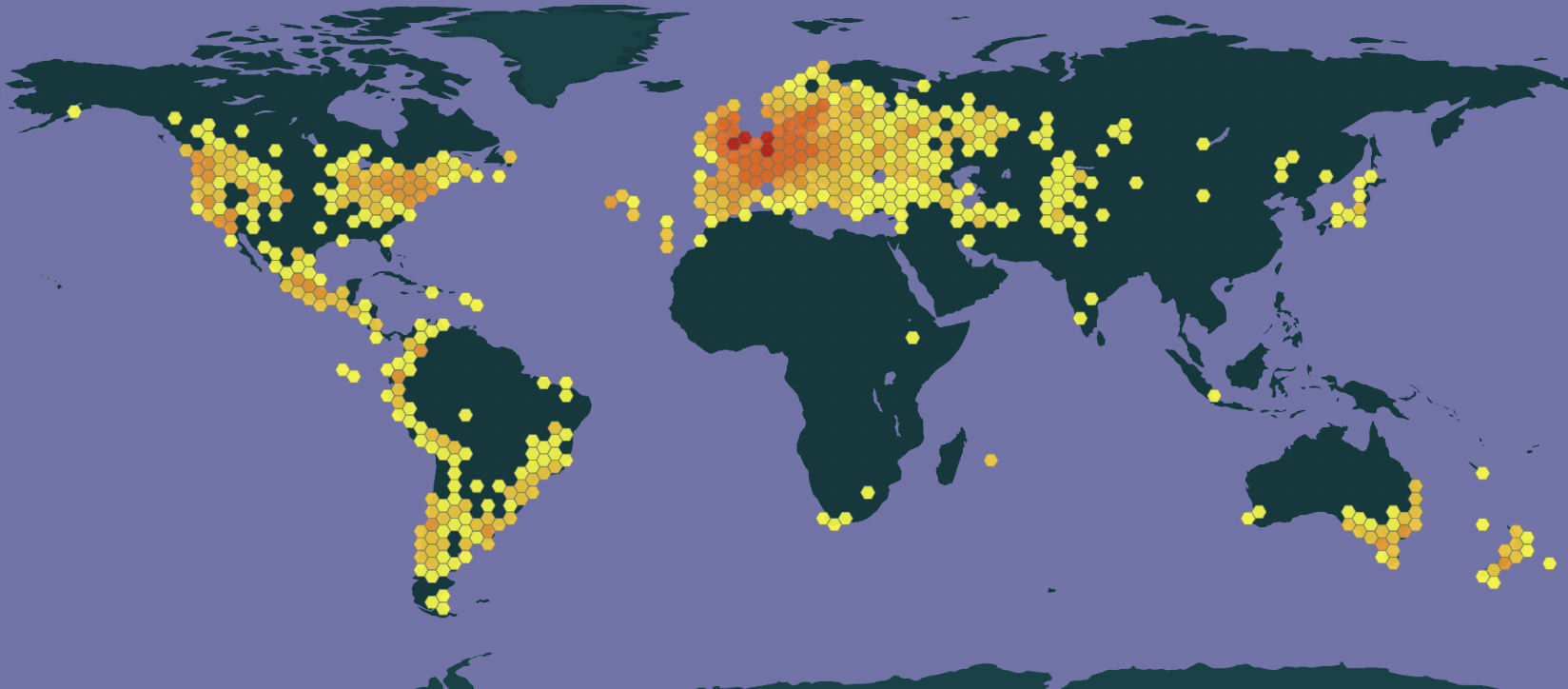
Global distribution of Feverfew. It is said to be native to southeastern Europe, but is now widely distributed. Source: GBIF.
References
Lim TK (2014) In Edible medicinal and non-medicinal plants volume 7. Pages 473-500. Springer, Berlin.
Lopresti AL et al. (2020) Herbal treatments for migraine: a systematic review of randomised-controlled studies. Phytotherapy Research, 34. DOI: 10.1002/ptr.6701
Johnson ES et al. (1985) Efficacy of feverfew as prophylactic treatment of migraine. British Medical Journal 291(6495), 569–573.
Johnson S (1997) Feverfew. Sheldon Natural Remedies. Sheldon Press. This is a short book written for the non-specialist – it has a very good account of the issues involved in testing herbal medicines.