Revisiting some Plants of the Week in this strange winter weather- January 9th 2023
We’ve been having strange weather lately, and I have been wondering how the wild plants have been affected. Last January we found many species still in flower, but this year it’s different: a walk along the street where I live revealed roadside scenes of devastation. I saw dead and dying plants, plants buried under piles of leaves washed down from up the hill, and almost nothing in flower. However, some species are thriving, with fresh green leaves.
How strange has the weather actually been? Subjective impressions can be misleading and it is best to consult the UK’s Meteorological Office where up-to-data maps and summaries can be found. It turns out that November was very warm and December very cold (air coming from the frozen north). In both months, records were broken.
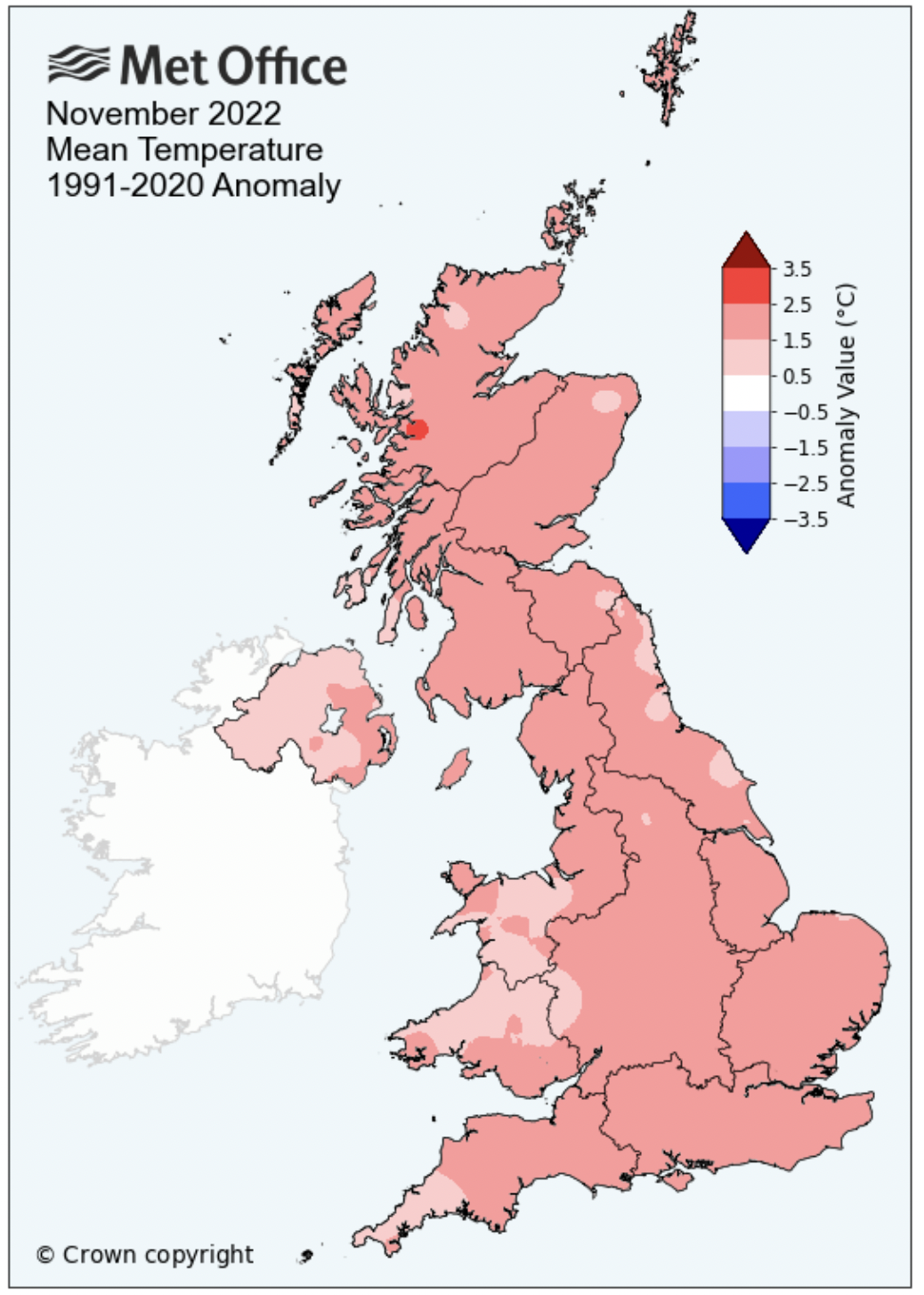
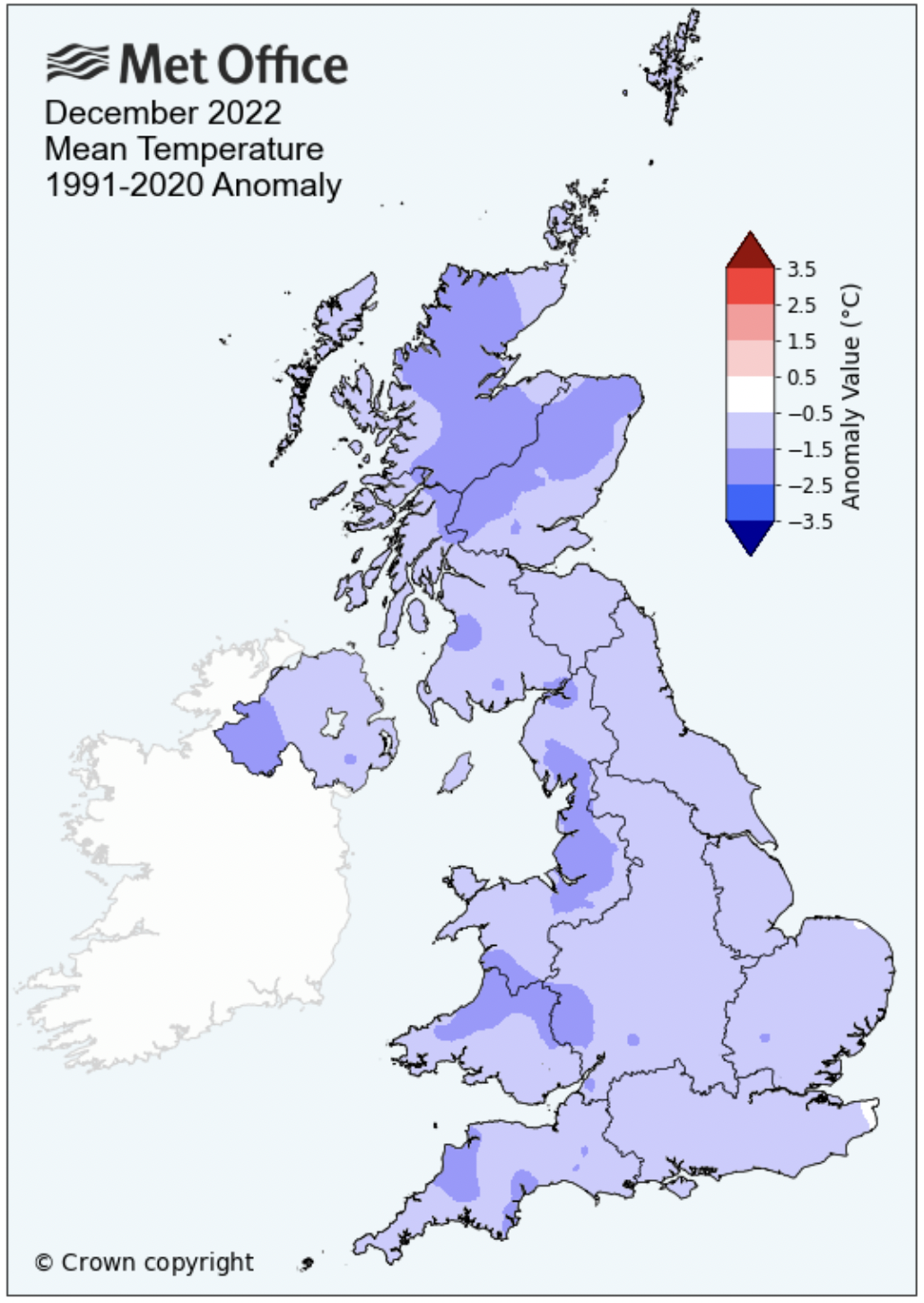
Left: mean November air temperatures 2022 relative to the longer term average (1991-2020); Right: the same, but for December. For most of Scotland November was around 2 degrees warmer than usual but December was 1-2 degrees colder. These averages hide the extremes: UK experienced record high temperatures in November (19.1 degrees in Lossiemouth, Fife on November 11th). But a 10-day cold spell made December the coldest since 2010 with the temperature in Braemar falling to -16 degrees on December 12th. Maps are Crown copyright from the UK Meteorological Office, available to use free of charge for non-commercial purposes under the Open Government Licence.
Would we expect this sudden change to affect wild plants? To some extent, in the course of their evolution, native species will have ‘seen it all’ and natural selection should have produced populations that can withstand extremes. But now, we are seeing extremes that may be more extreme than hitherto. And, in the context of November and December, we saw a sudden change. In November some gardeners reported ‘new growth’ and imagined a false spring; a week later the temperatures were below zero.
I reckon that the species that have not ‘seen it all’ will be the recently arrived neophytes coming from the warmer parts of the world. There are a few of these that have appeared in Edinburgh and Glasgow in recent years, and on January 3rd I went out looking for some of the Edinburgh examples that have featured in ‘Plant of the Week’ over the last two years.
Early Pampas Grass, Cortaderia richardii, is a relative newcomer to British shores, first recorded in 1980 from cliffs at Lyme Regis in Dorset. You may revisit our blog and read about it here. It comes from the South Island of New Zealand where it is found on river beds, stream margins and wet places. One New Zealand source says it is “very fast growing and hardy. It will grow in almost any conditions, from dry land to swamp, from mountains to coast”. Here in Britain it has become popular in suburban gardens. As its name suggests, it flowers much sooner than its South American cousin C. selloana. Its escape to the wild has been rapid. I have found very many young plants growing in roadside gutters and one individual has been living just outside my house for a few years. I was interested to see whether it had been killed by the ‘cold shock’. No, it was still green but it looks ‘unhappy’.
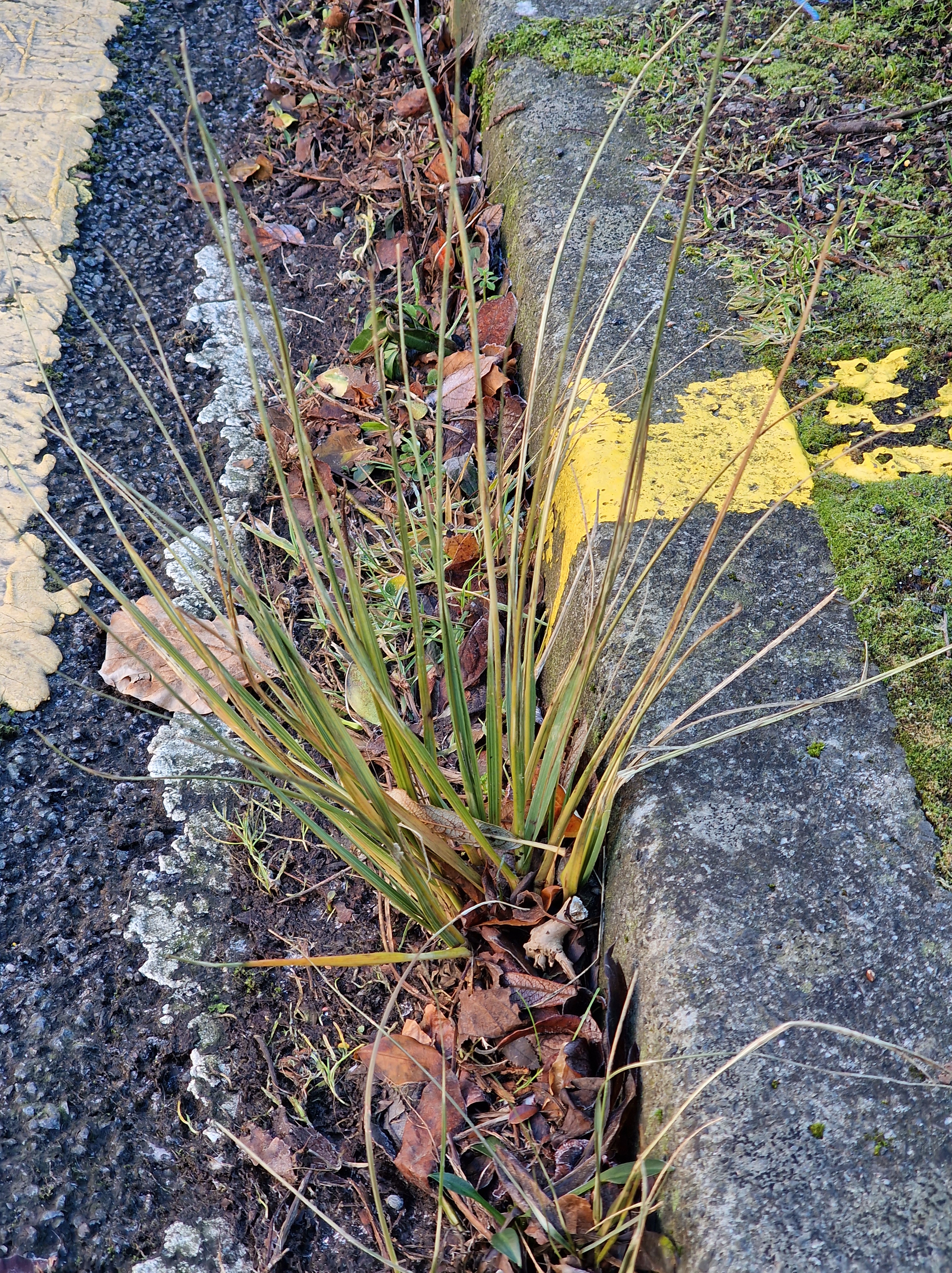
Young Cortaderia richardii presumably derived from one of the many garden specimens that Edinburgh folk have planted in their front gardens. It is by no means dead, but some of its weaker neighbours looked dead. Photo: John Grace.
Walking up and down the street I saw that that some juveniles of this species appeared to be quite dead. But then I re-visited the suburban garden featured in our blog from last summer. See the images below: this fine specimen is by no means dead. It has shed its seeds (mostly onto the road!) but its leaves are unscathed. It lives and thrives! Perhaps this is not so surprising as South Island New Zealand, from where it came, is quite a cold place.

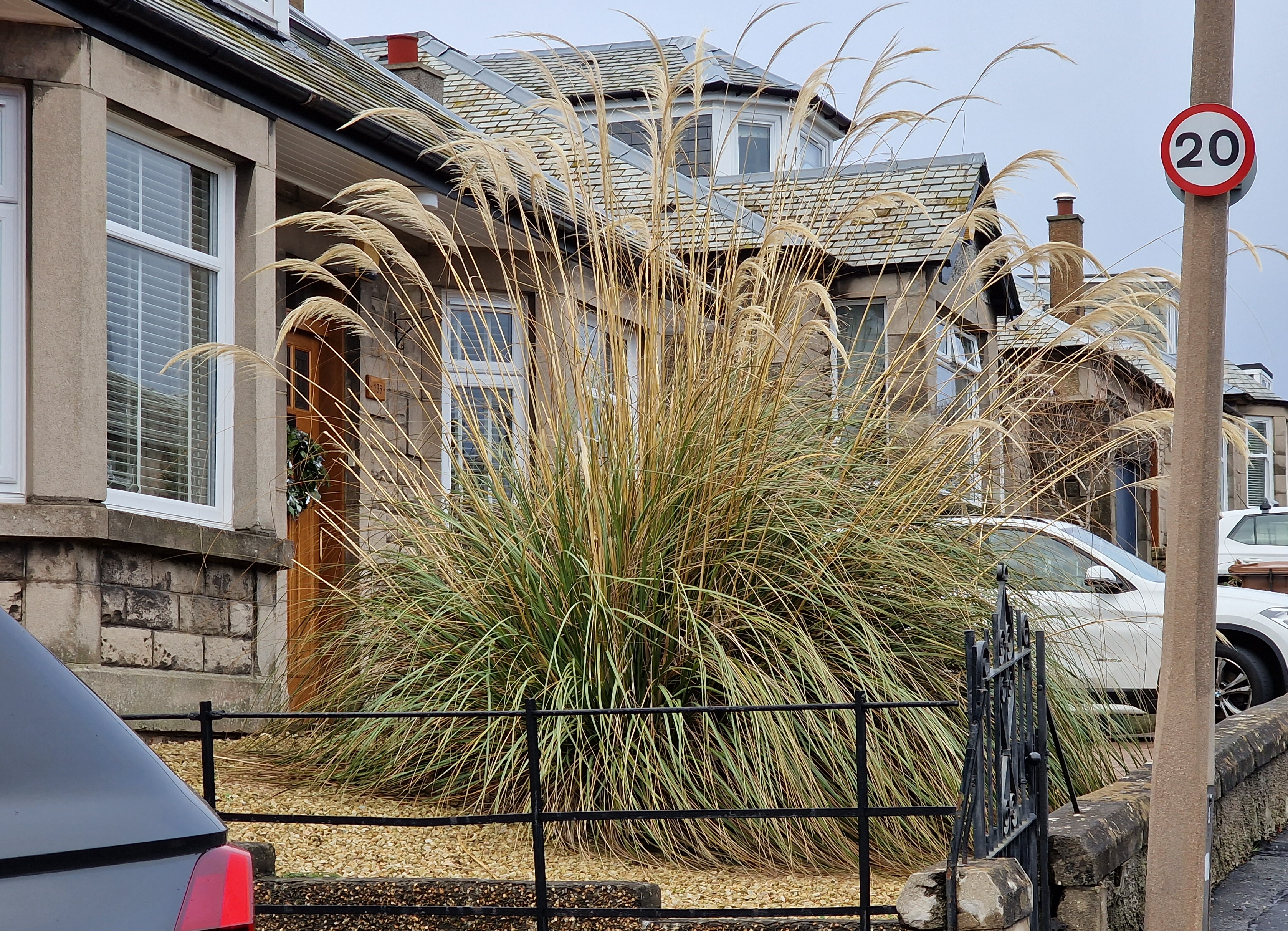
A fine suburban specimen in August 2022 (left) and the same on January 4th 2023. Photos: John Grace.
Then I looked for a species from warmer climes. The obvious choice was Water Bent Grass Polypogon viridis, claimed to be the most rapidly invading species in the British Isles (see our blog here). The native range is Macronesia to NW India and Somalia, Central & S Europe to Yunnan in China. It is considered to be a subtropical species in Kew’s Plants of the World Online. It has been common in London for some time but only recently reached Scotland, most observations being in Edinburgh and Glasgow. I see it every time I walk past my local school to the corner shop. It has been expanding its range, and consolidating its position despite kerbside spraying. Can a subtropical species survive warm weather followed by cold? Yes it can. About 2/3 of all the plants in a 50-metre stretch of pavement appear to be dead, but the remaining individuals look fresh and green in the faint afternoon sunshine of early January. Back in early November it did have a few flowering stalks but they have now died. I think Water Bent is here to stay.
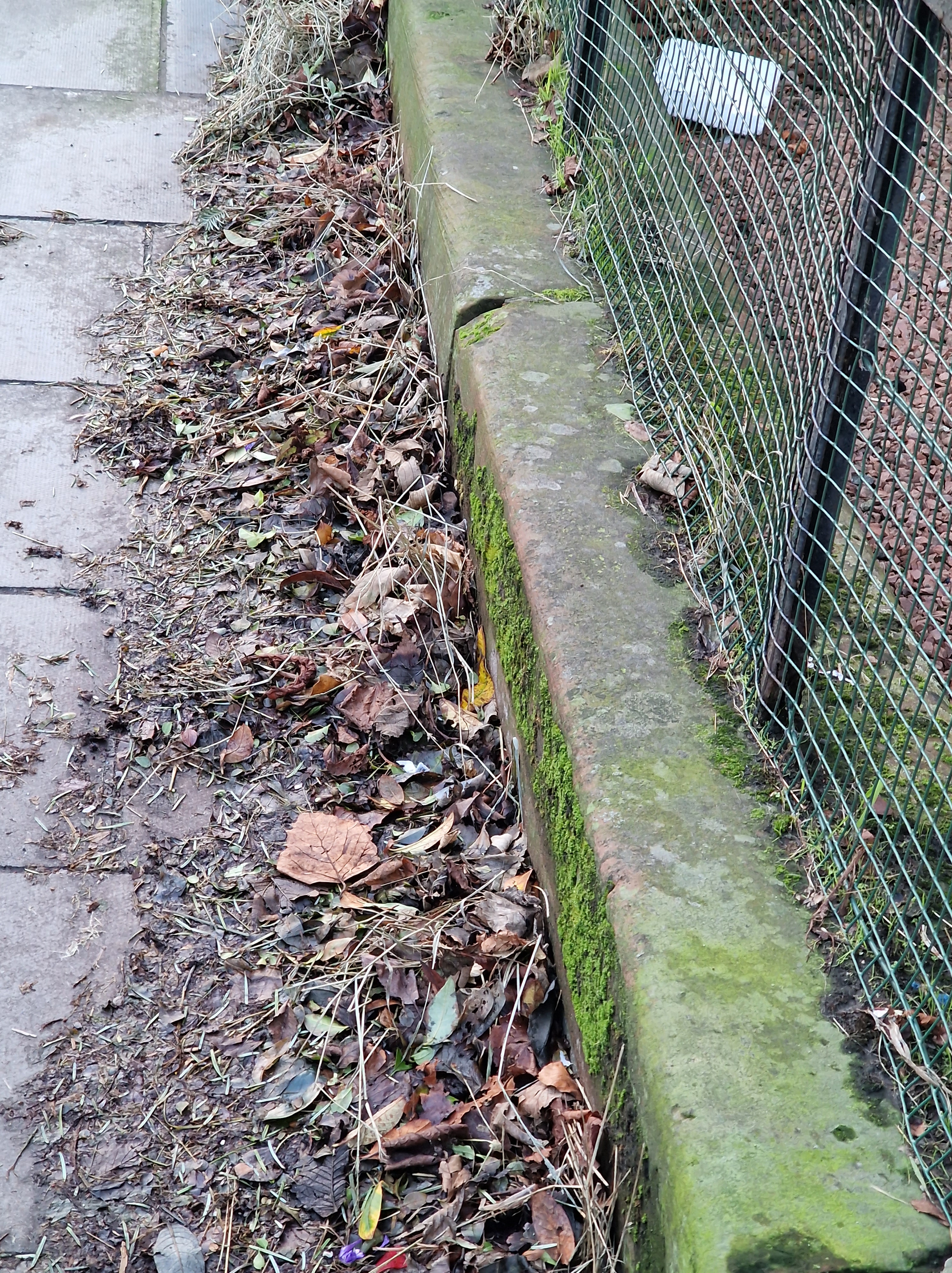
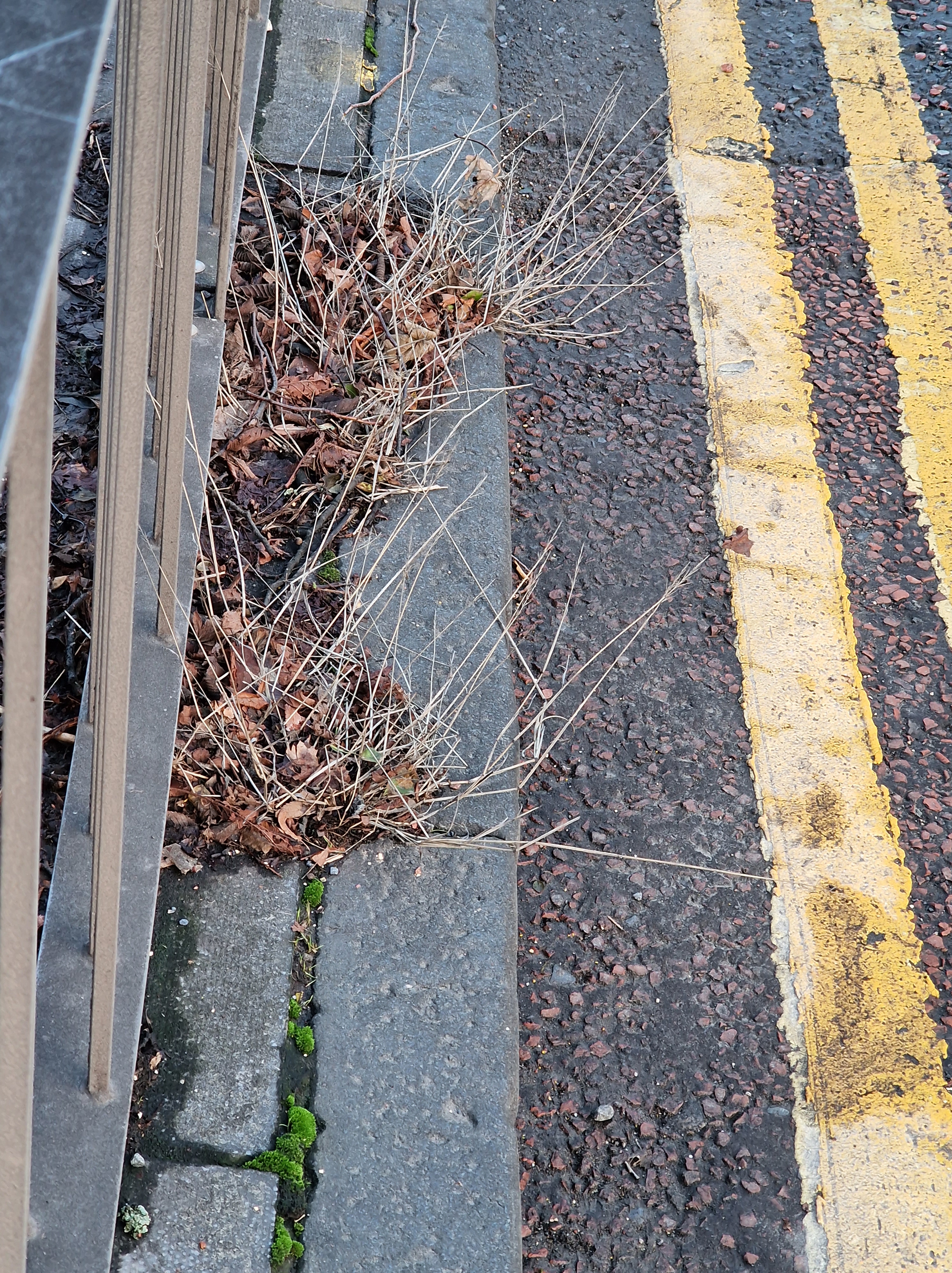
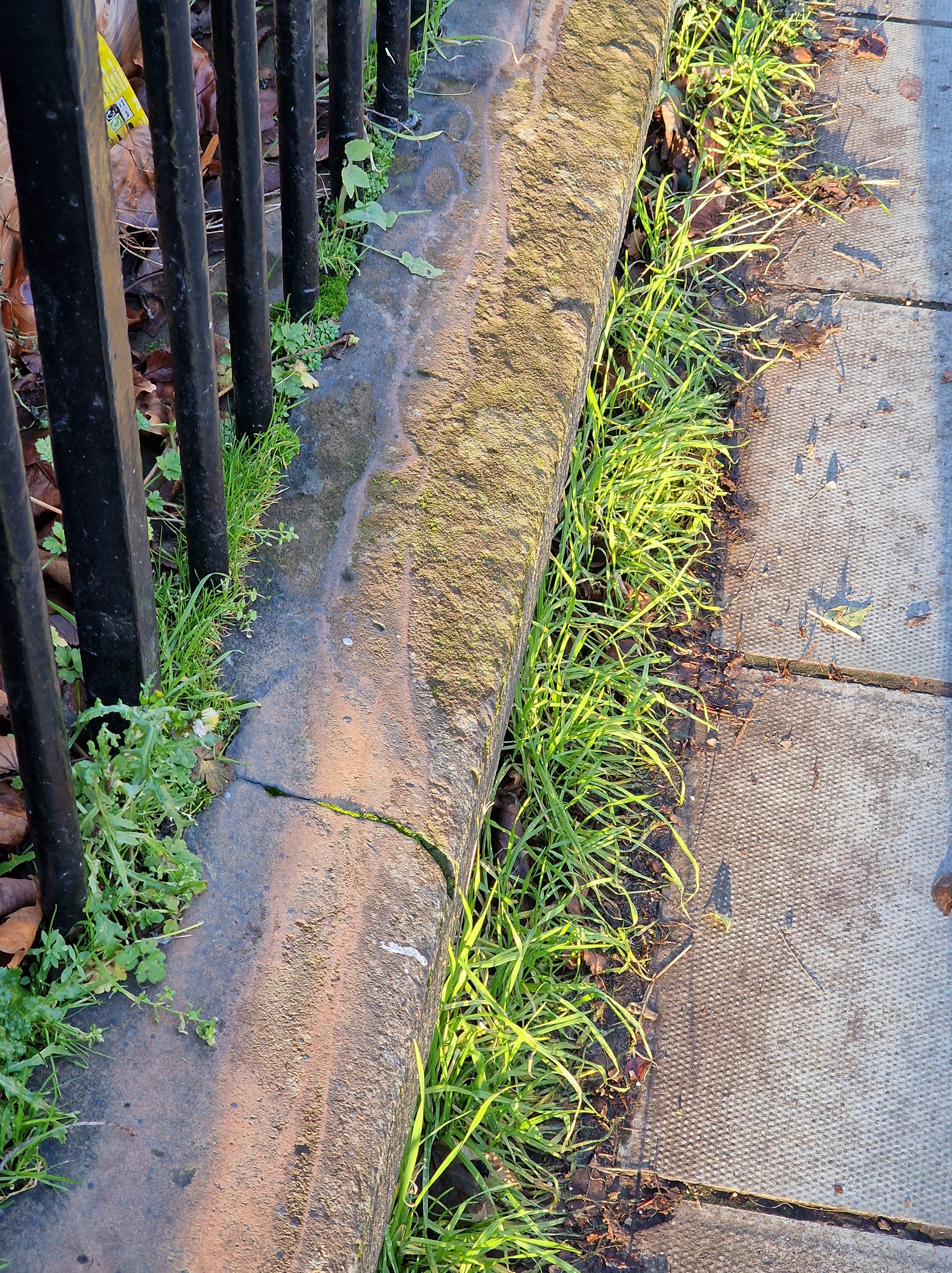
Water Bent Grass Polypogon viridis, outside South Morningside school in Edinburgh, January 2nd 2023. On the left, the grass is apparently dead and covered in water-saturated dead leaves – resembling a compost-heap; in the centre the grass seems dead near the double-yellow lines, on the right the plants are alive and thriving where pavement meets the wall. Photos: John Grace.
The third plant I looked for is the annual, Claytonia perfoliata (Spring Beauty, also called Miners’ Lettuce) described as a “fleshy herbaceous plant native to the mountain and coastal regions of north America”. Again, it grows close to where I live in Edinburgh, and flowers in the Spring. You can see the blog here. I was surprised to see that it has already started to grow, with masses of its basal leaves clustering around street trees in one South Edinburgh street. There is no sign whatsoever of winter damage – anyone might think spring is just round the corner.
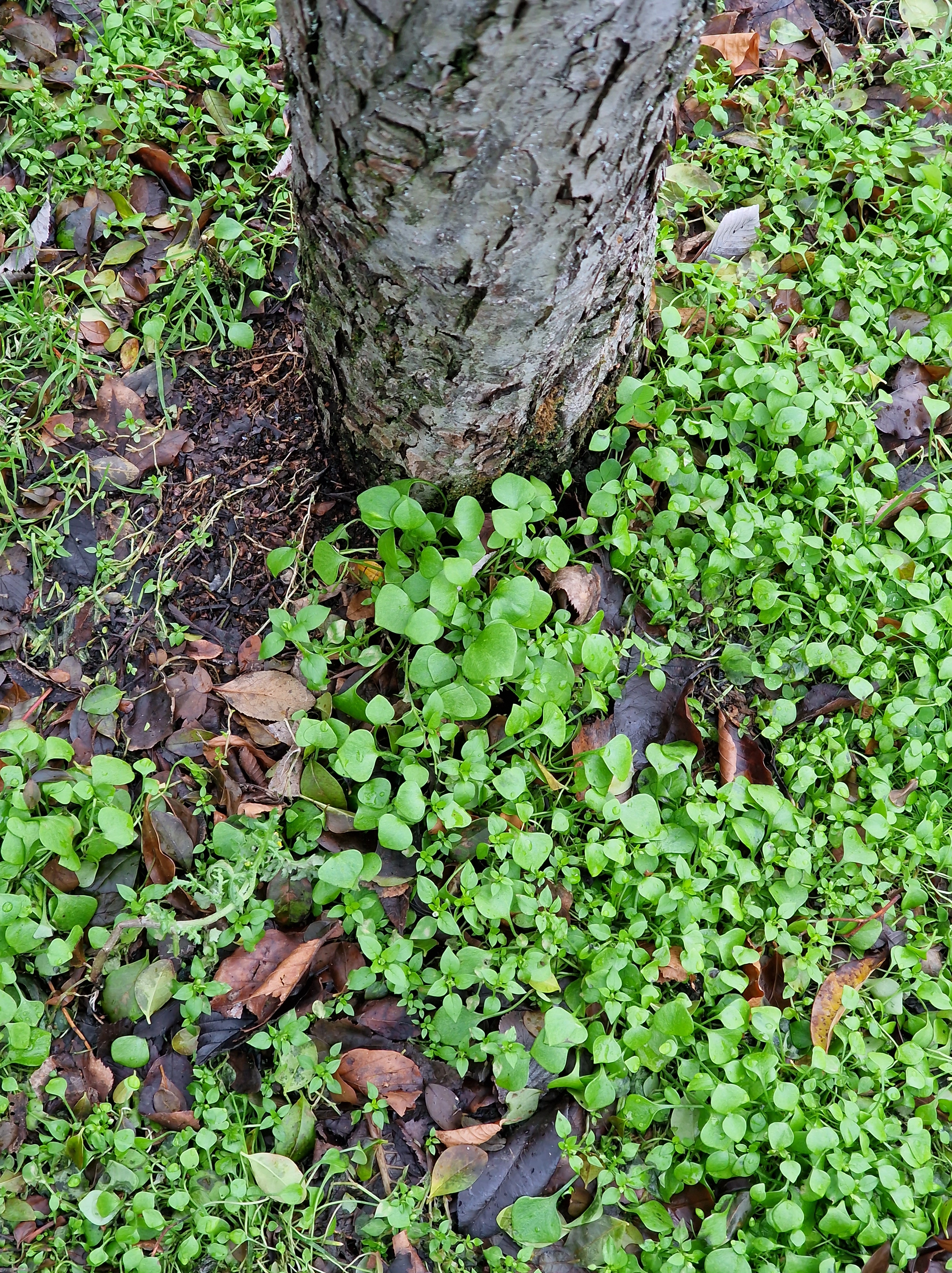
Claytonia perfoliata growing at the base of a street tree, along with Stellaria media (Chickweed). Photo: John Grace.
I did a health-check on a number of common native species but there were no big surprises. They were in rude health. I was especially interested to see so much thriving Wall Lettuce Mycelis muralis. It is a native plant common throughout England but much less frequent in Scotland. Edinburgh has it growing around almost all of its old walls, but strangely Glasgow has rather little of it. Books describe it as “a winter-green perennial herb” and indeed, it was very fresh and green in the first few days of January. All the natives that are supposed to be ‘winter-green’ were unscathed by the record low temperatures of December.
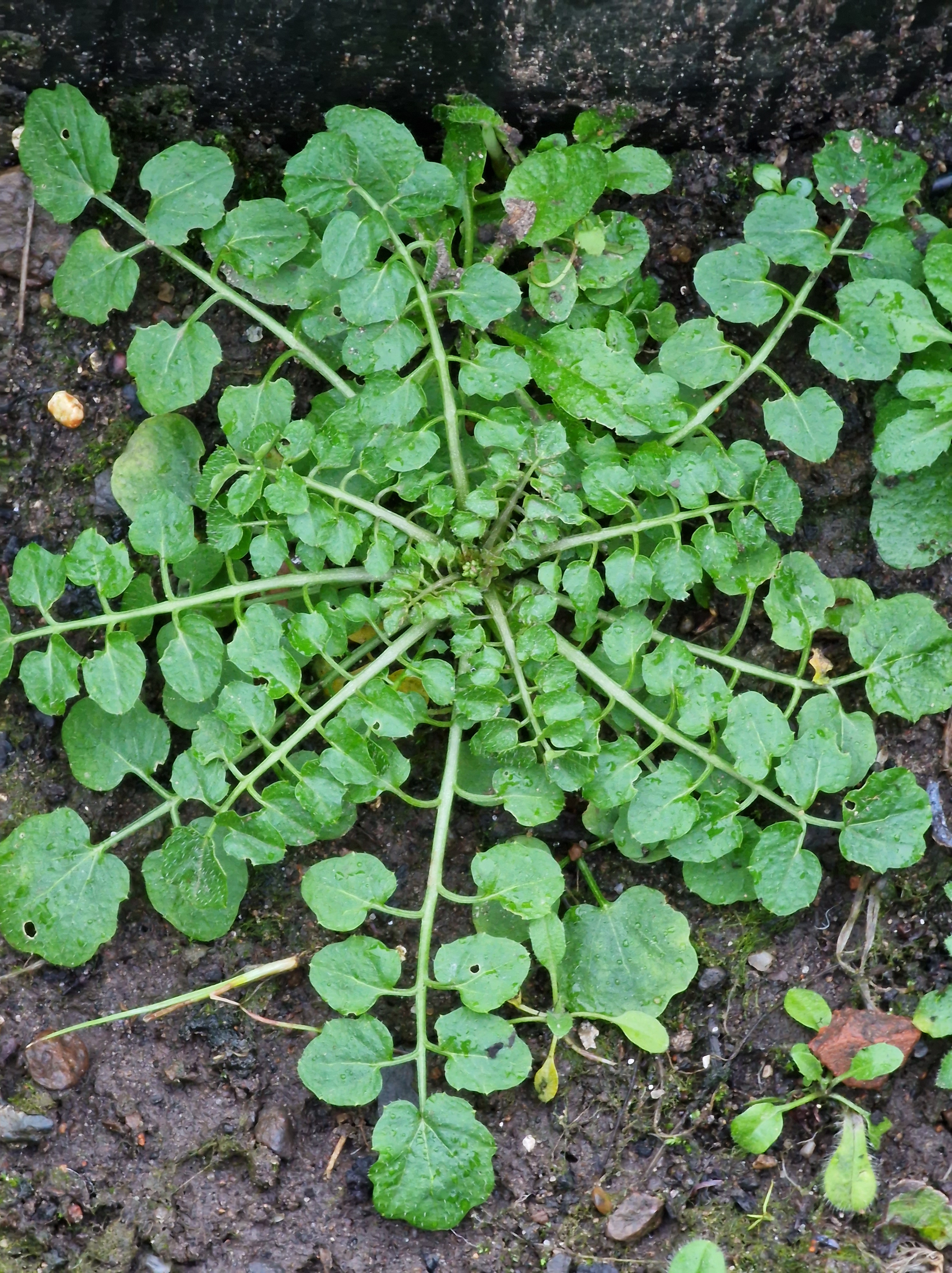
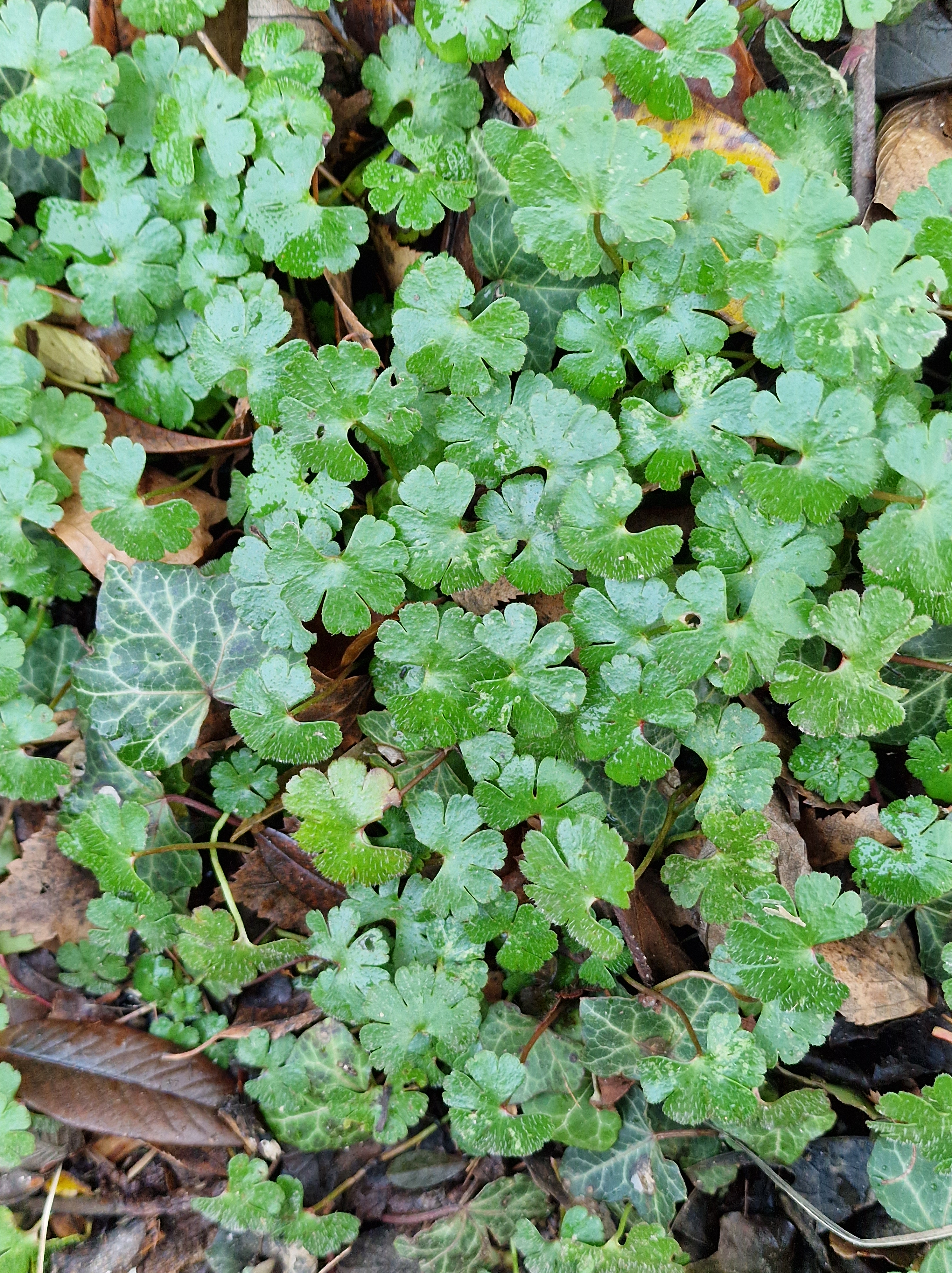
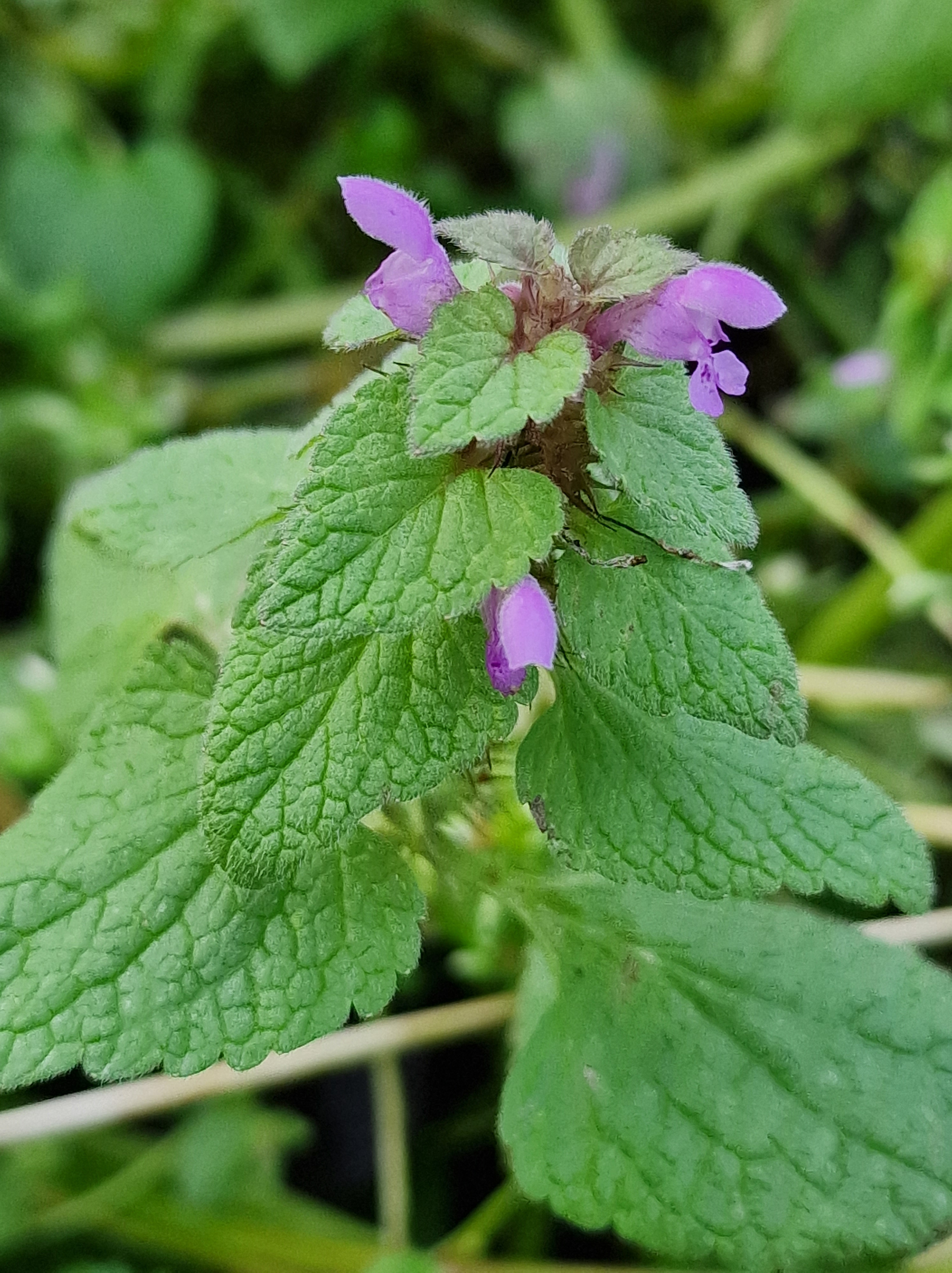
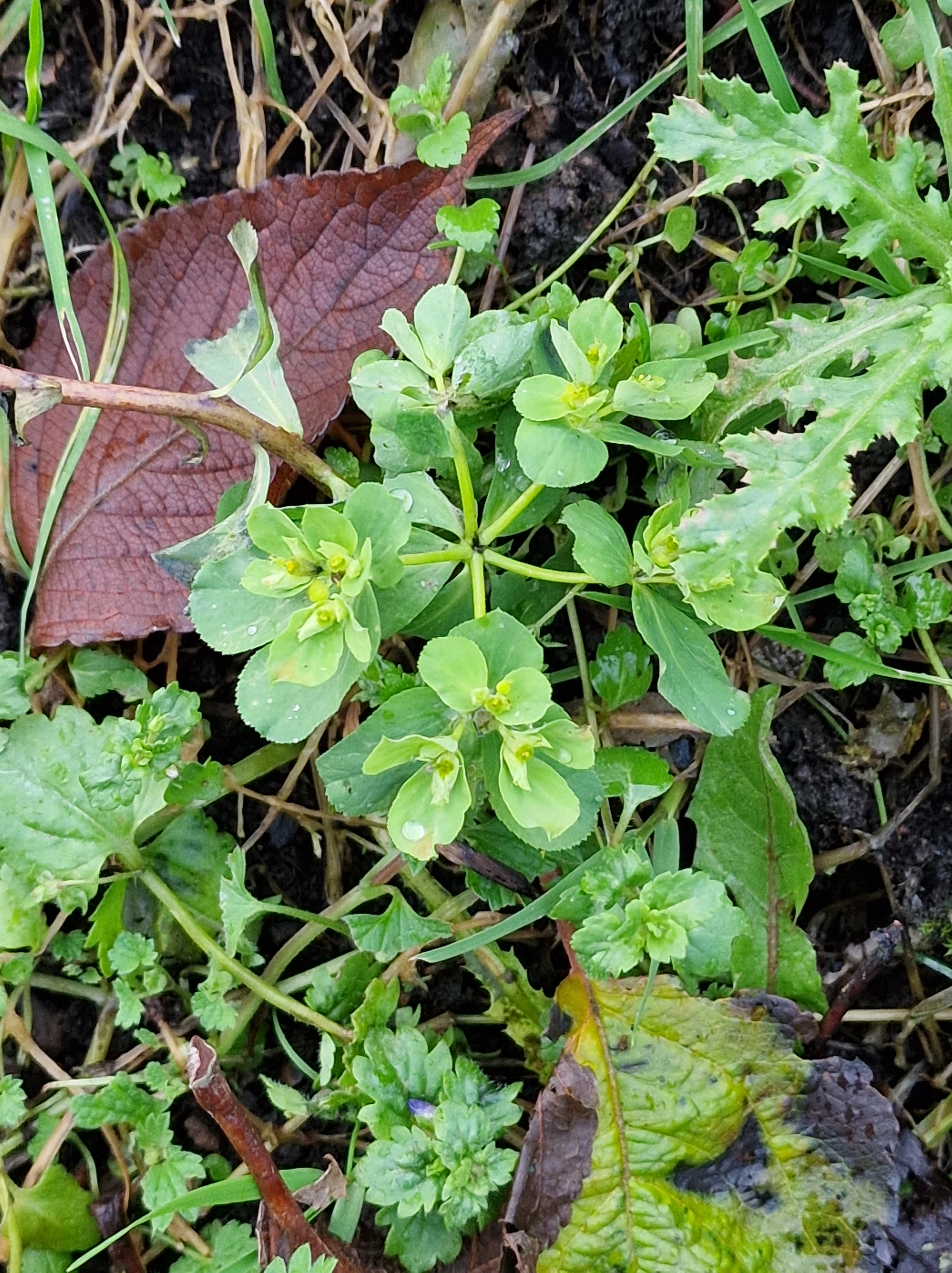
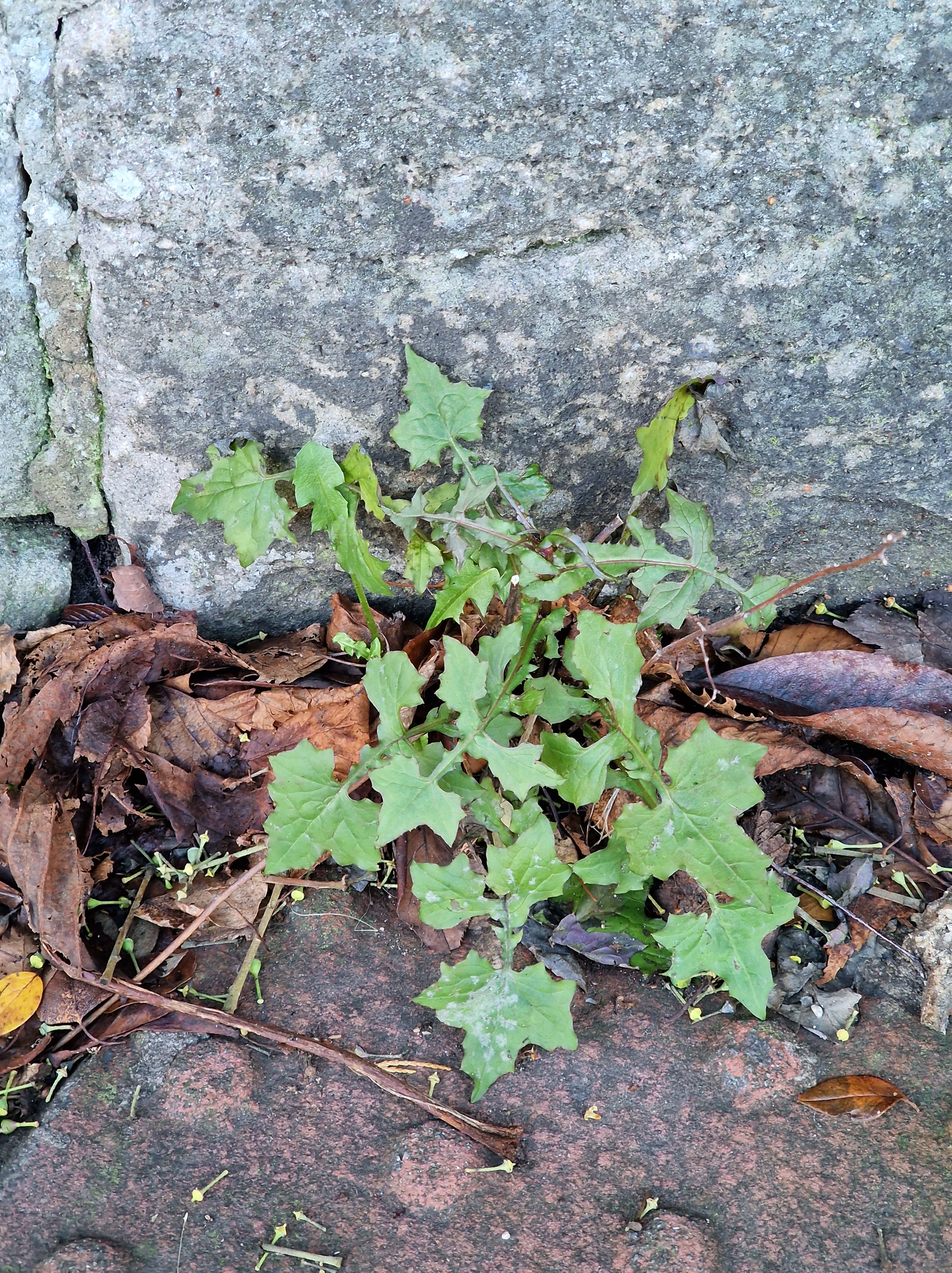
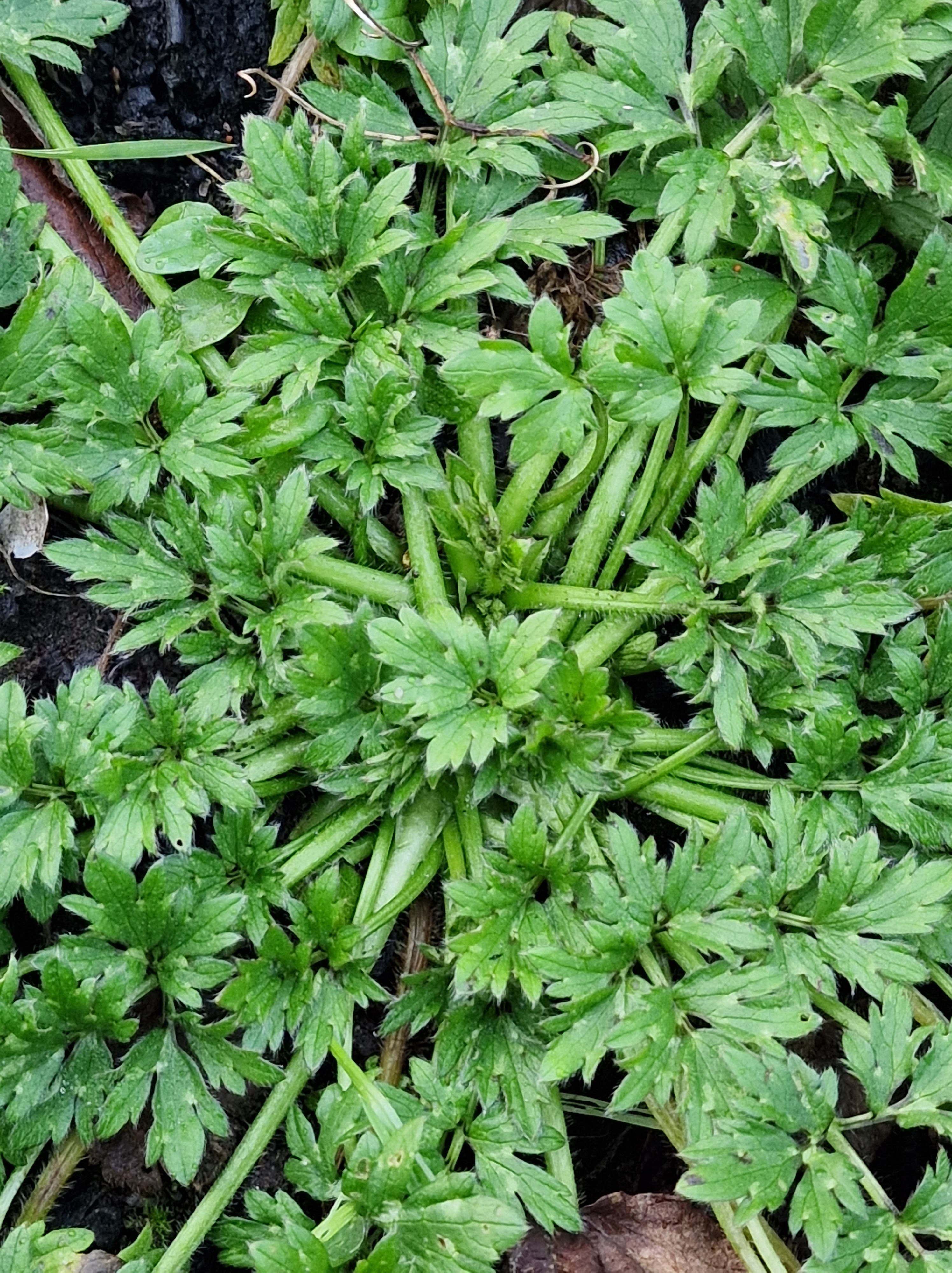
Examples of native species unscathed by the cold weather. Top left to bottom right: Cardamine flexuosa, Wavy Bittercress; Geranium lucidum, Shining Cranesbill; Lamium purpureum, Red Dead-nettle; Euphorbia helioscopia, Sun Spurge; Mycelis muralis, Wall Lettuce; Ranunculus repens, Creeping Buttercup.
My survey has been brief. I’ve been recovering from Covid and unable to stride out in my usual fashion. But I think I’ve done enough to convince myself that the neophytes that have established themselves are likely to stay put. There has of course been much phenological recording with a focus on spring flowering, but I’m also sure that winter survival has been rather under-studied. Since 2012, the Botanical Society of Britain & Ireland (BSBI) has run an annual hunt for ‘plants in flower’ during the period of New Year. These observations need to continue for a longer period (several decades) to untangle the relationship between plants and the weather. The most useful studies would consist of repeated observations at the same sites. In the Botanical Society of Scotland, we have some of this through the efforts of David Chamberlain in Edinburgh and Brian Ballinger in Easter Ross. There are several good published examples (Dunnett et al. 1998, Silverton et al. 1994). Now that climate change has become a pressing issue, more of this sort of targeted work is desirable, perhaps through Citizen Science.
References
Dunnett NP et al. (1998) A 38-year study of relations between weather and vegetation dynamics in road verges near Bibury, Gloucestershire Journal of Ecology 86, 610-623.
Silvertown J et al. (1994) Rainfall, biomass variation and community composition in the Park Grass Experiment. Ecology 75, 2430-2437.
©John Grace