Goodyera repens – November 1st 2021 Creeping Lady’s-tresses

This evergreen orchid is a pinewood specialist and is perhaps the most widespread of our “special” pinewood plants. It is our only British species in the Goodyera genus and the only other Goodyera in the European and North African species list is a Madeira endemic.
Its spiral inflorescence usually has about 12-15 white flowers and tends to follow the direction of the sun. The sepals have glandular hairs and the bracts are narrow. It spreads through leafy litter by rhizomes, although it also sets fine seed. It flowers later than many other Scottish orchids, normally in July and August and often leaves persistent dead heads. Goodyera repens is pollinated by bumblebees, although it may also be self-fertile. Like other orchid species, Goodyera repens is dependent on symbiotic mycorrhizal associations for successful germination of the tiny seeds, and their subsequent growth.
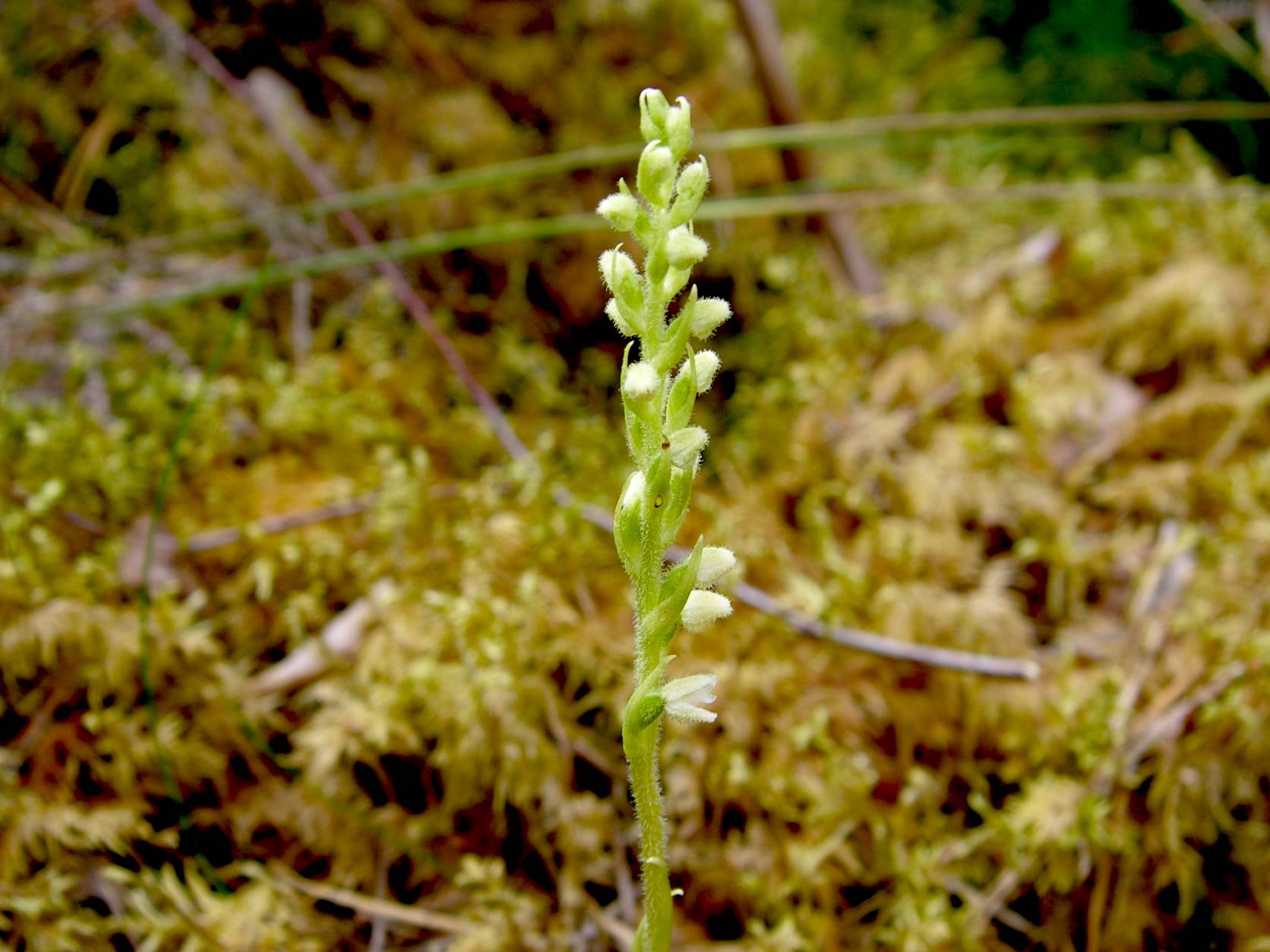

Unlike most other orchids in this area, it can normally be identified all year round by its evergreen leaves in characteristic rosettes. It may be some years before new rosettes flower.
It is usually regarded as being nationally scarce, although it is on the borderline (usually regarded as 100 10 km squares in the UK) and it has sometimes exceeded this count.
Goodyera repens is typically found in pinewoods, both native and plantation, often in partial shade. Full shade may inhibit its growth and full light may be associated with bleaching of its leaves. Birch trees may also be present, as well as typical pinewood ground flora including Heather (Calluna vulgaris). Sometimes another orchid, the tiny and elusive Lesser Twayblade (Neottia cordata), may be close by. Rarely, Twinflower (Linnaea borealis) is in the same area. Populations may be damaged by clear felling of forest and also vegetative overgrowth. There are also a few locations on coastal dunes.
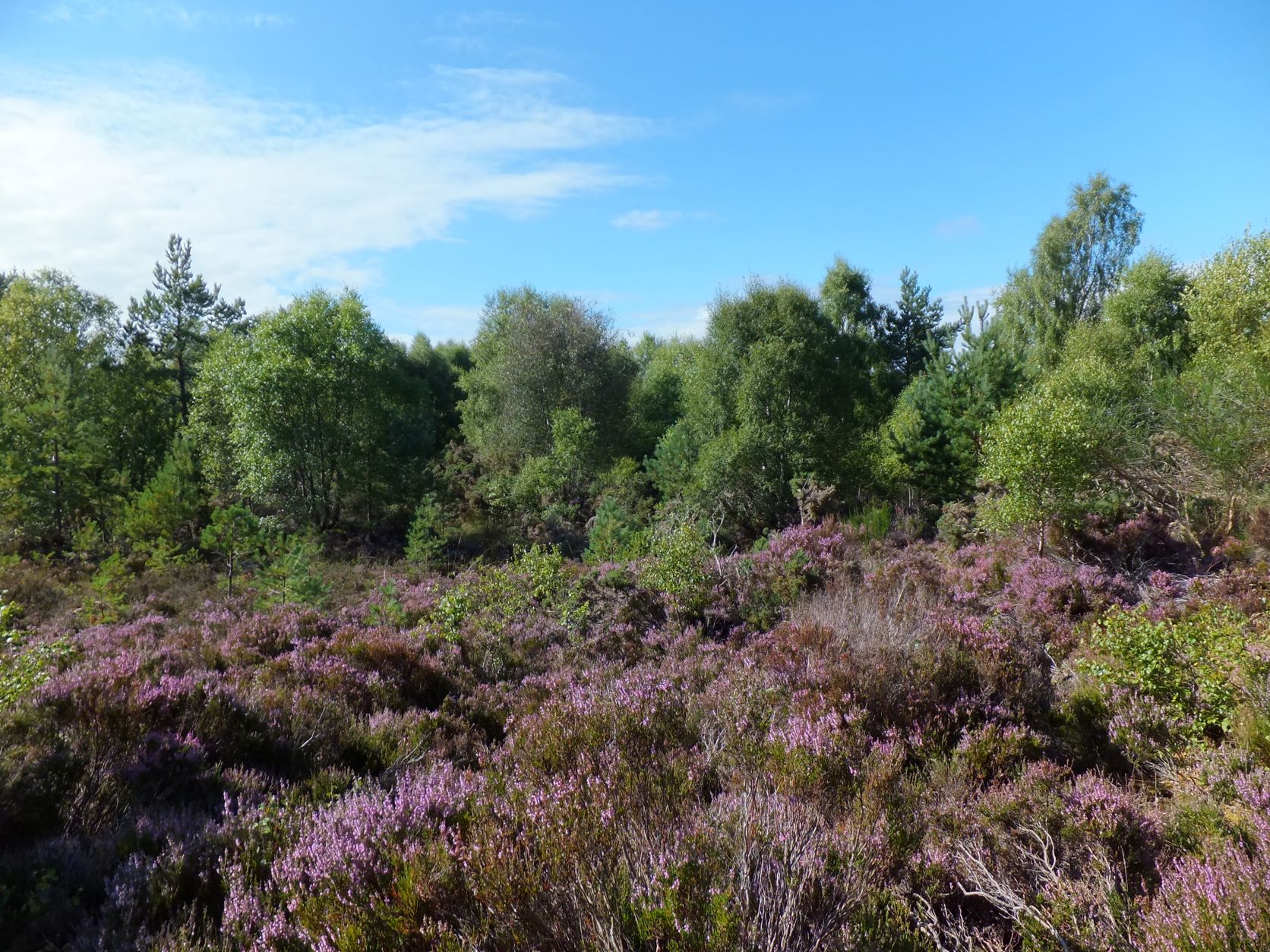

Goodyera repens is widespread in the pinewoods of Northeast Scotland, although scarce elsewhere. There are only a few scattered sites in England and some of these may be the result of the planting of Scottish tree stock.
I first saw it in Tentsmuir Forest in Fife, where it has several sites, although it is not to be found elsewhere in that county as far as I know.
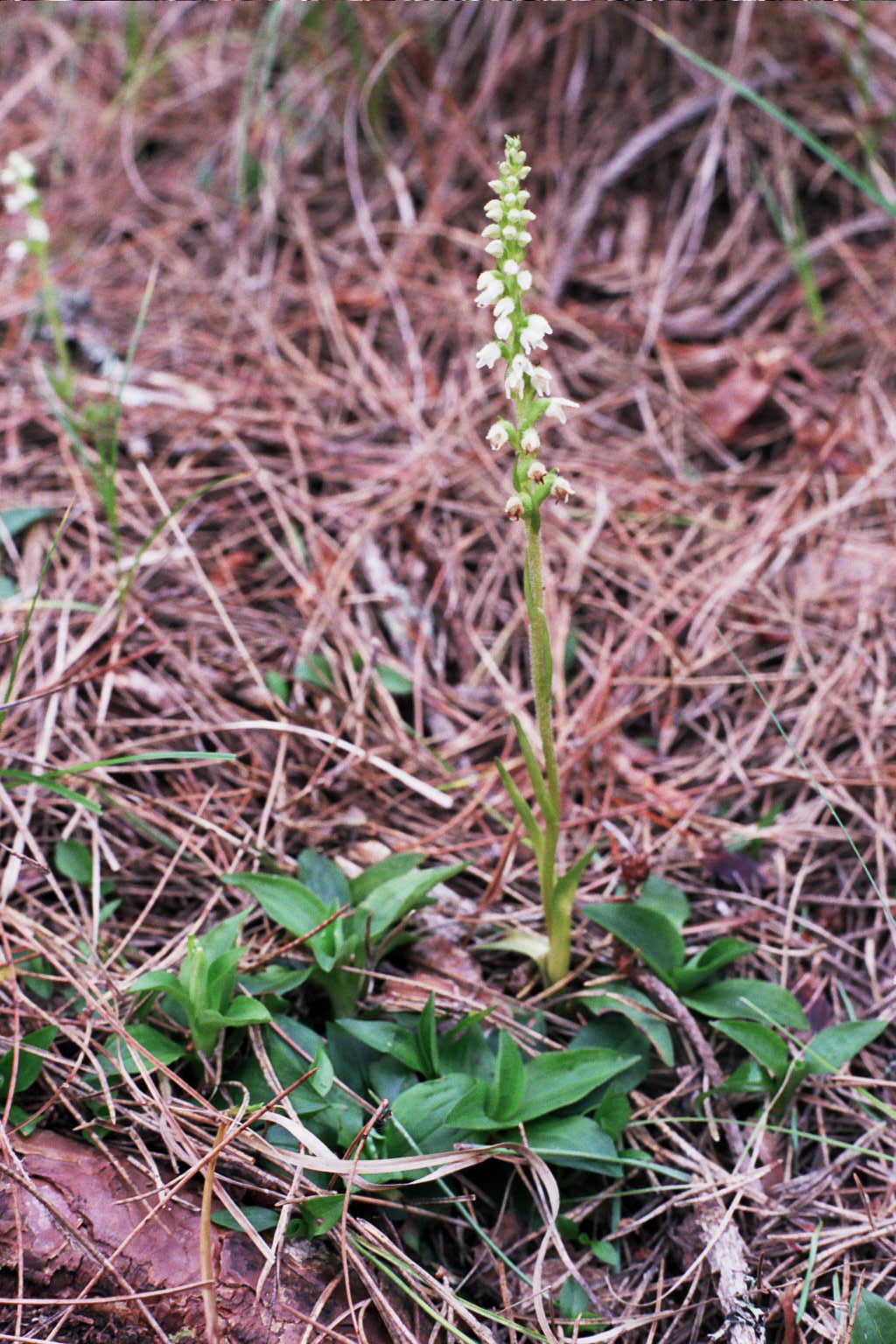
I have become much better acquainted with this species having bought a pinewood in Easter Ross near Tain in 1998. My late wife and I owned this wood for some time before spotting Goodyera, as it tends to lurk in the leaf litter and moss and often does not flower. Sometimes its sites can be disturbed by deer scratching the ground. Having found it once we came to realise that it is widely distributed throughout the wood. Sometimes new sites may also appear. When digging a small hole to establish the location of the water table I came across Goodyera leaves in an unexpected place, well away from its other locations.
Its main habitats in the UK are the pinewoods of northeast Scotland, both native and plantation (plantations may sometimes be sited on old pinewood sites). In Easter Ross, where I am the current BSBI recorder, new sites keep coming to light and it has been recorded in 19 10km squares and in many pinewoods. There is also one sand dune site by Morrich More where it is not looking very happy. I am sure more sites await discovery. We now have more than 200 post 2000 records in the database for Easter Ross for Goodyera. It is also widespread in East Inverness-shire and Moray and there are sites in Aberdeenshire and Kincardineshire.
Elsewhere in Scotland Goodyera is much less common. I saw it by Stormont Loch near Blairgowrie, but it is only known from a couple of sites in Perthshire. In Angus there is a site near Edzell and we discovered two more Angus sites on Dundee Naturalists outings, firstly at Seaton Den and then at Montreathmont Forest.

Elsewhere in the world it has a circumboreal distribution, but is often not common. In Europe I remember seeing it near the northern border of Greece a few years ago, but it is very far from being amongst the commonest orchids in most places in Europe. There are about 100 species of Goodyera in the world, most of them in South-east Asia. Richard Milne has kindly supplied an image of one that he found in China, from a high mountain in the 99 Dragons lakes area of Yunnan, growing on mossy boulders under rhododendrons. We don’t know which species it is – perhaps one of our readers in China can help us?

References:
Allan B., Woods P. and Clarke S. (1993) “Wild Orchids of Scotland” HMSO Edinburgh.
Delforge P. (2006) Ed.by Harrap S. “Orchids of Europe, North Africa, and the Middle East” A. and C. Black London.
Lusby P., Wright J. and Clarke S. (1996) “Scottish Wild Plants” HMSO Edinburgh.
Stewart A., Pearman D. A. and Preston C. D. “Scarce Plants in Britain” (1994) JNCC Peterborough.
Brian Ballinger