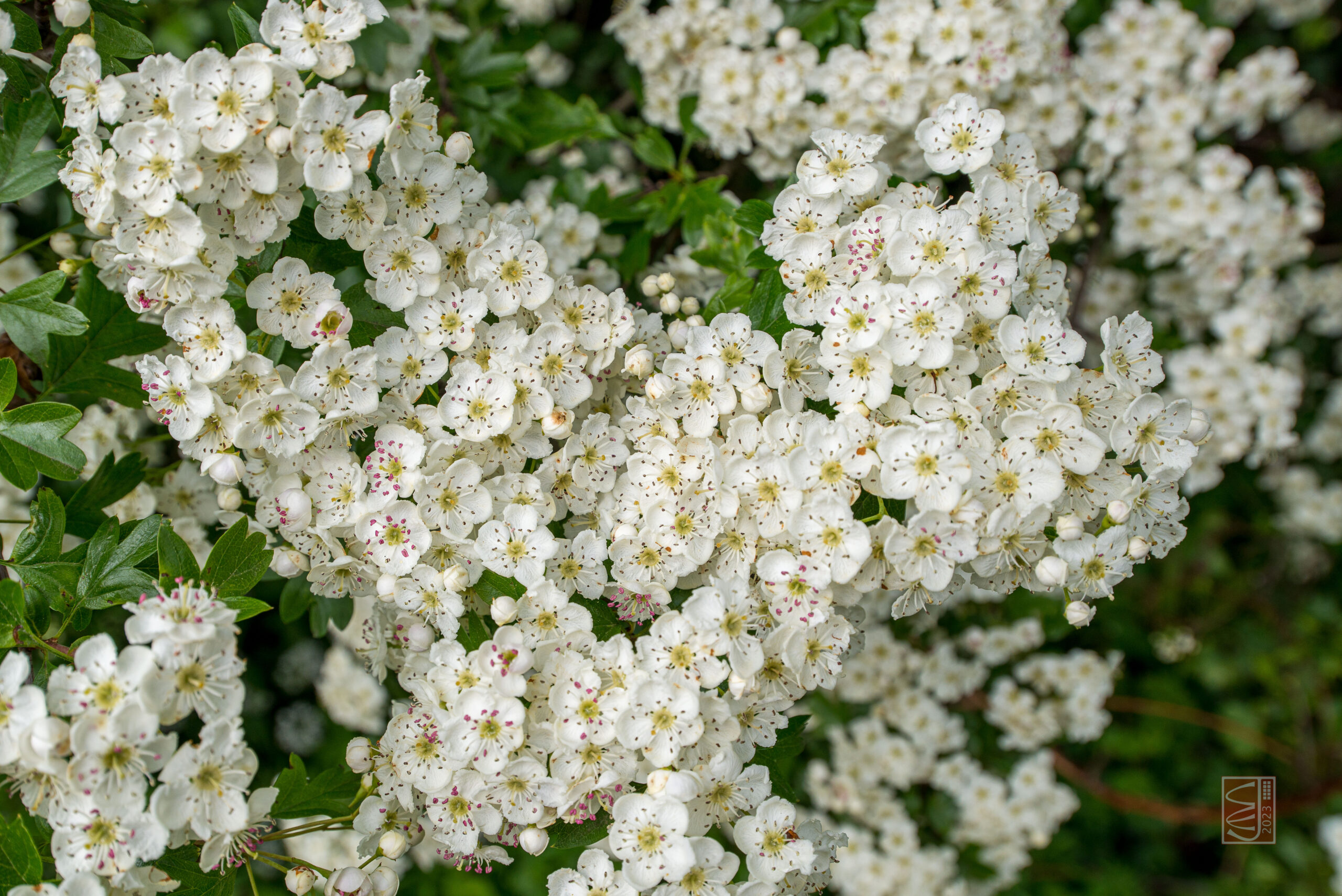
Crataegus monogyna – 29th May 2023 – Hawthorn
My mother used to say “Cast not a clout ‘til May is out”. I had always thought this meant I mustn’t discard my warm pullover until June 1st; however, I now realise that ‘May’ refers to the flower not the month. ‘May’ is the old name for Hawthorn, and ‘White-thorn’ is another ancient name. All three names crop up in Gerard’s Herbal of 1597. Hawthorn produces flowers from around the middle of the month of May, and in some years the flowering is especially intense. This year seems to be one of those. The displays in south Scotland last week were dazzling, providing nectar and pollen for bumblebees, honey bees and hoverflies.
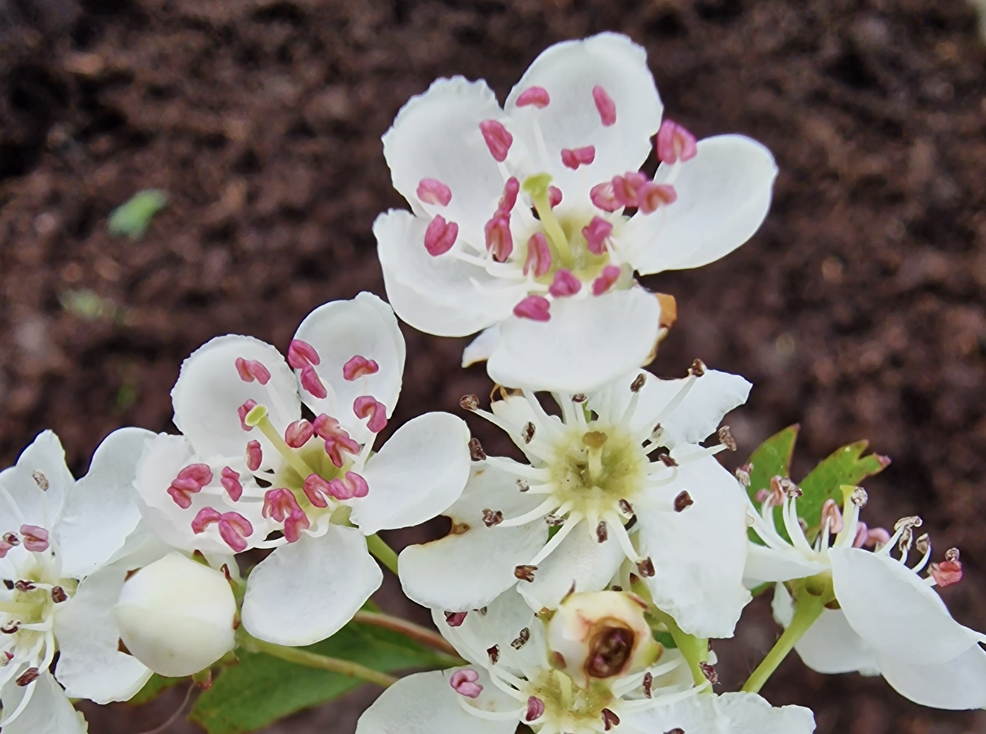
Hawthorn flowers, Edinburgh, 25th May 2023. Note the pink anthers which turn brownish-purple as the flower opens and ages. Photo: John Grace.
Crateagus monogyna is a native tree in European countries and also in North Africa. It is a globe-trotter, recorded as an alien in most of the countries where Europeans have settled. As a tree, it is never very tall. The oldest trees are several hundred years old but usually no taller than 9 metres. Hawthorns are usually more of a shrub than a tree, appearing as components of scrubs, thickets, woodlands, or hedgerows, merging with other species in a matrix of woody branches and twigs, much-favoured by nesting birds.

The common shrubby form of the tree by a farm track, probably the remains of an abandoned hedge. Photo: John Grace.
The species belongs to the rose Family, Rosaceae. Its rose traits include: saucer-shaped hermaphrodite flowers with five petals and sepals, many stamens and the presence of stipules and spines. Hawthorn fruits are called ‘haws’ and they are like the ‘hips’ of Rosa, but rather more fleshy. Both are rich in vitamin C and consumed by birds (my schoolboy recollection is that hips make better ‘itching powder’ than haws).
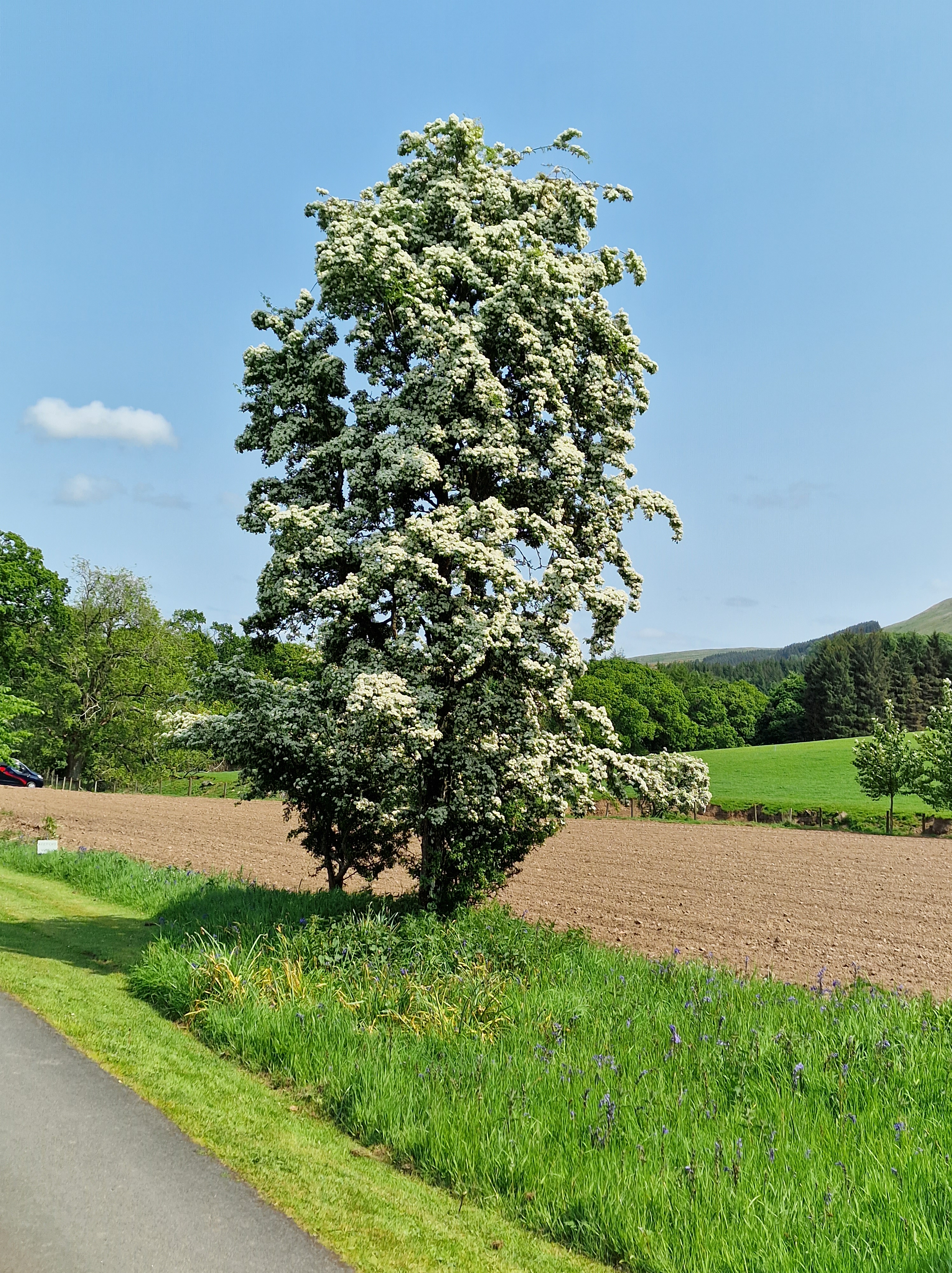
The shape is quite variable. Here is an erect tree in an agricultural landscape, Bargany in South Ayrshire.
The birds disperse the seeds in their faeces. The birds performing this service include Starlings, Robins, Woodpigeons, Blackbirds, Song Thrushes, Mistle Thrushes, Redwings, Fieldfares, Blackcaps, Blue Tits, Chiffchaff and Bullfinches. Recently I saw a Hawthorn seedling growing on the branch of an old Ash tree, presumably a favourite perch of one of these birds. Mammals do sometimes eat the seeds, and in Australia the Brush-tailed possum can disperse the seeds up to 50 metres.
The seeds may remain dormant for several years. They do require a chilling treatment to break dormancy, and various additional treatments including the use of strong acid may stimulate them to germinate (see Kheloufi et al. 2019 and Fichtner and Wissemann 2021). Once germinated, they may grow 40 cm in their first year, but do not normally flower until they are 5–8 years old. The species readily colonises open ground and grows in a wide range of soil types.
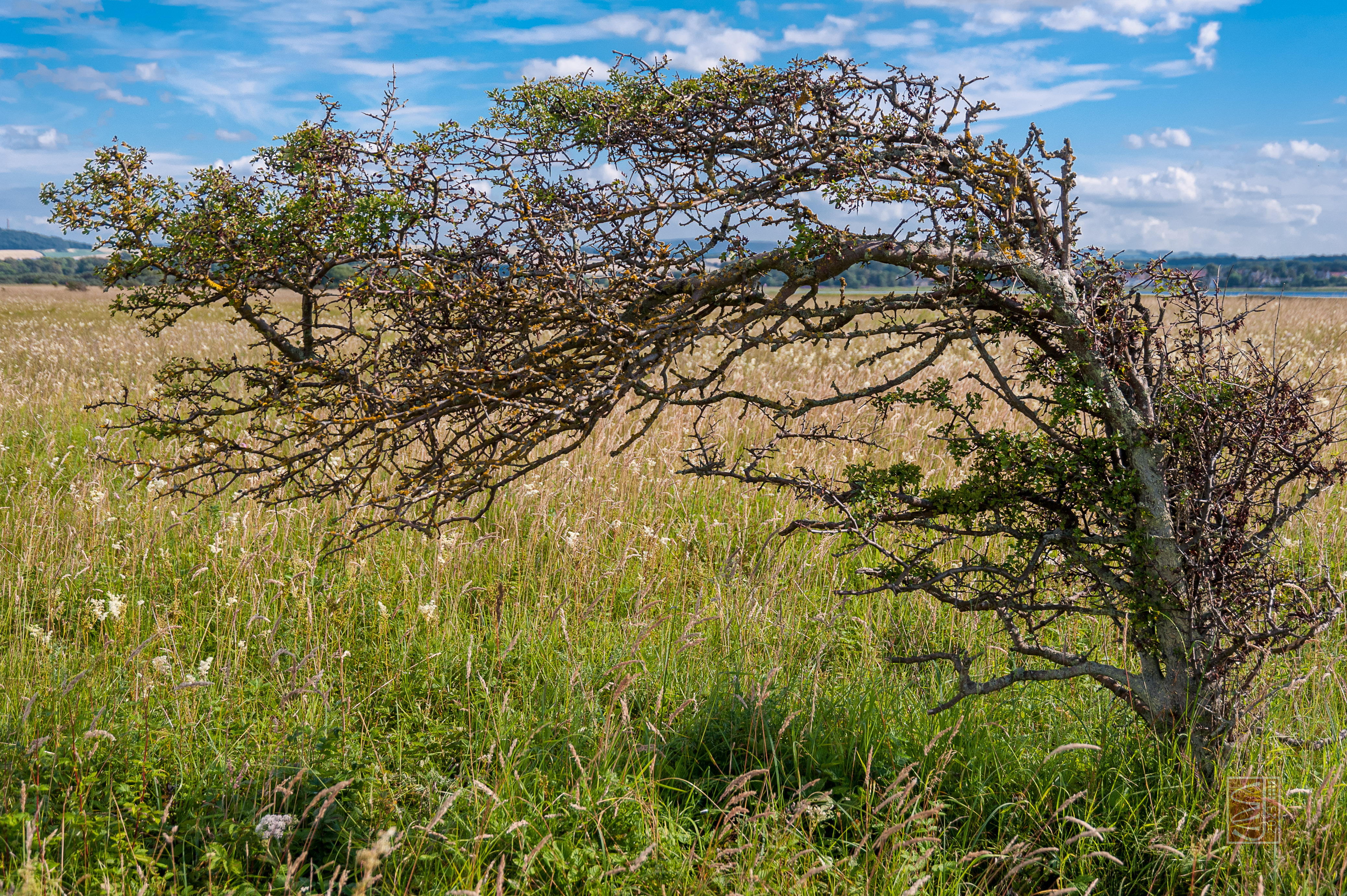
Shaped by wind and salt deposition, Aberlady Bay, East Lothian. Photo: Chris Jeffree.
Seedlings are tender and lack spines. They may be heavily grazed by rabbits which led to a sharp increase in hawthorn scrub following myxomatosis in the 1950s. The adult plants are protected by their spines but these do not always deter the more persistent goats, donkeys, Highland cattle and sometimes horses and deer.
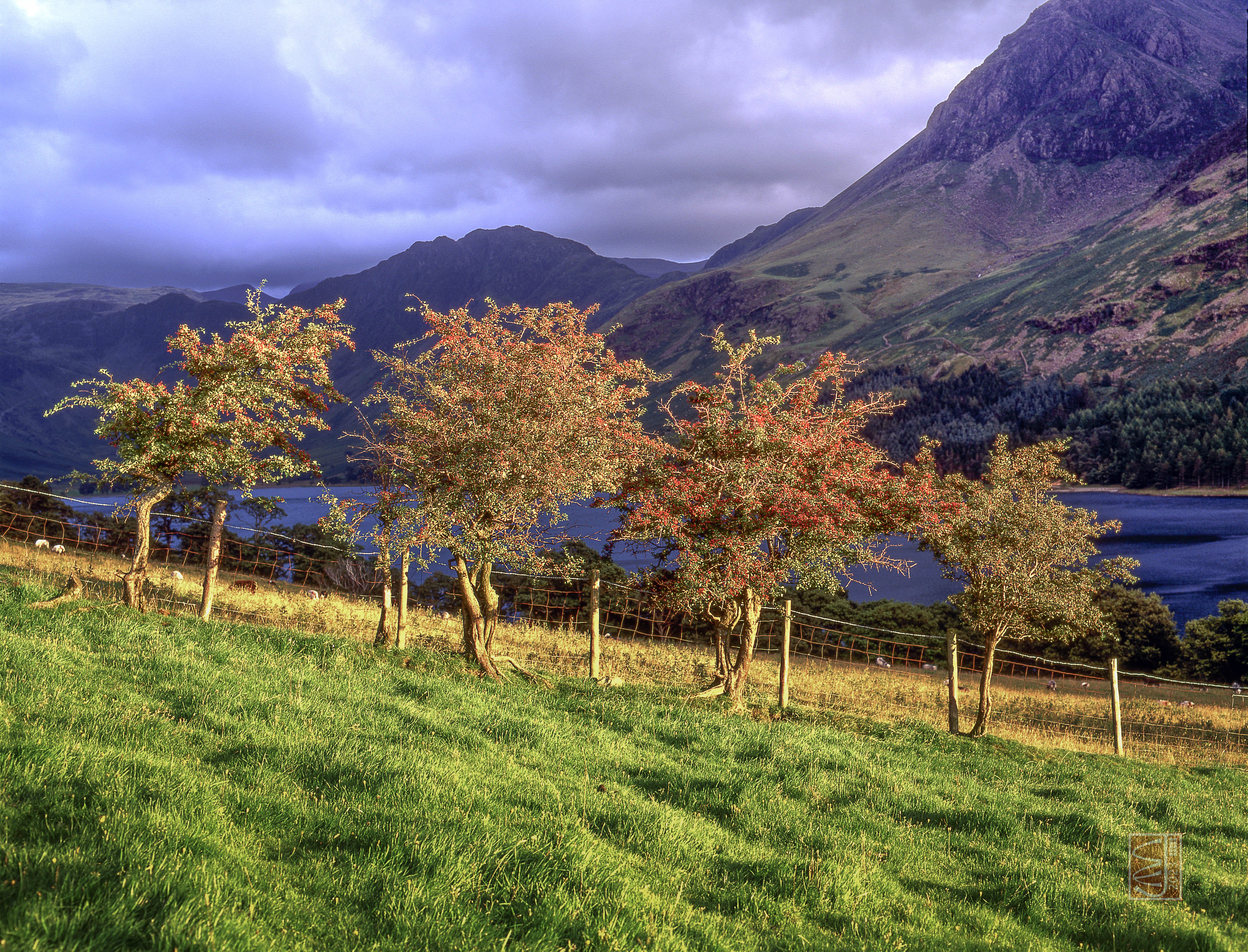
Four trees in fruit, October evening sun. Buttermere, in the English Lake District. Photo: Chris Jeffree.
A considerable amount of folk-lore exists for Hawthorn (Vickery 1995). Much of it surrounds the ‘bad-luck’ (death, illness, marriage failure) caused by bringing Hawthorn blossom into the house. In some parts of Britain Hawthorn had the local name of ‘Mother die’. How did the plant get a reputation for evil? Possibly some people associated spined plants with Christ’s Crown of Thorns prior to his crucifixion, but that plant was more likely to have been Ziziphus spina-christi, the jujube tree. But, on the other hand, there are cases where Hawthorn is auspicious: in North Yorkshire, there was an outbreak of typhoid which was ‘cured’ by bringing branches of flowering Hawthorn into the house (Vickery 1995).
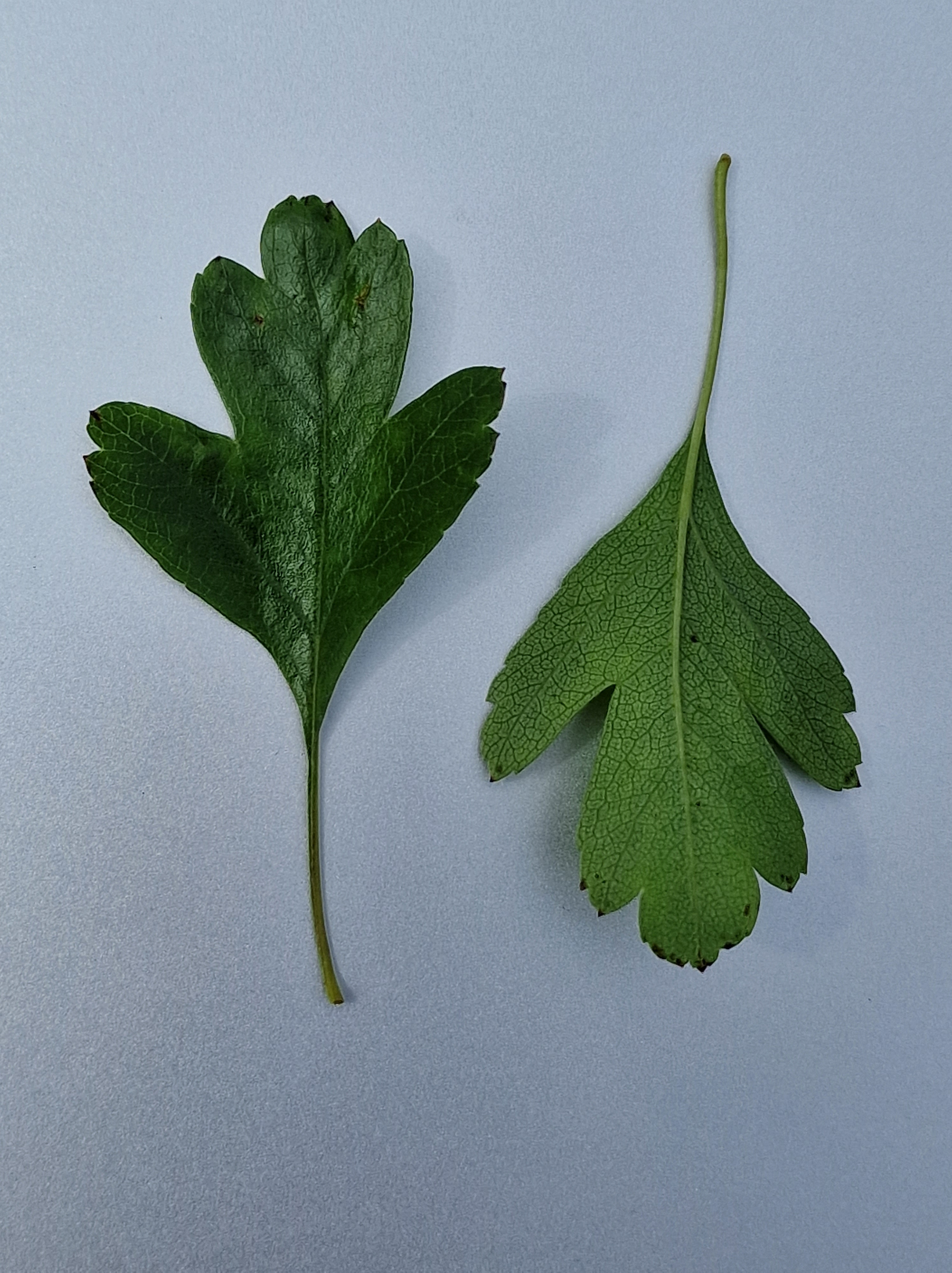
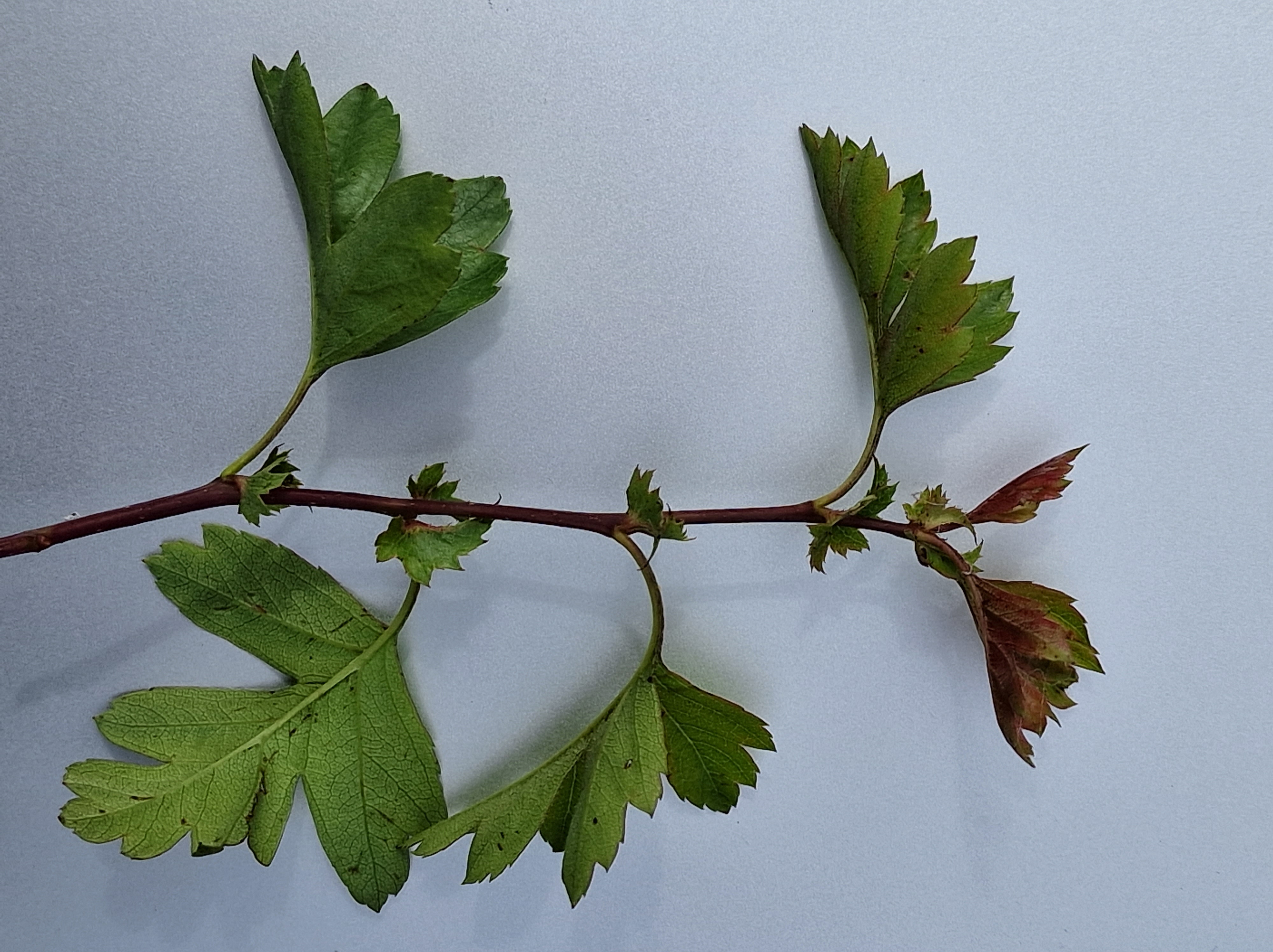
Leaves and young shoots. Note the prominent stipules in the right hand image. Photos: John Grace.
Hawthorn, as flowers, leaves, seeds, and berries, has been used as a medicinal plant for two thousand years, and is used even today. Chinese medicine has used Crataegus for centuries, and a quick scan of the world’s science literature using Google Scholar with the search term ‘Hawthorn’ reveals 259,000 research papers, many of them dealing with medicinal and pharmacological aspects, especially cardiovascular diseases.

Fruit of Hawthorn. Typically, very many of the flowers form fruit. Photo: Chris Jeffree.
The most famous Hawthorn tree in Britain was the one at Glastonbury in Somerset. It flowered twice per year, once at Christmas and then in the spring. Glastonbury is regarded by some people as the ‘cradle of Christianity’ in England. Legend has it that Joseph of Arimathea visited Glastonbury with the Holy Grail. He thrust his walking stick into the soil and from that staff grew the thorn tree. Presumably, in truth, this Hawthorn arose as a random mutation. Other examples around the country do exist, and I suppose pilgrims took cuttings from Glastonbury for their own towns and villages. There was one in my own English village, visited at Christmas by a small group of worshipers. The field where it grew has now become part of Milton Keynes but the name lives on in the Glastonbury Thorn School, a local primary school for 180 children rated ‘outstanding’ in a recent Ofsted Report. The school crest features the Glastonbury Hawthorn under a rainbow.
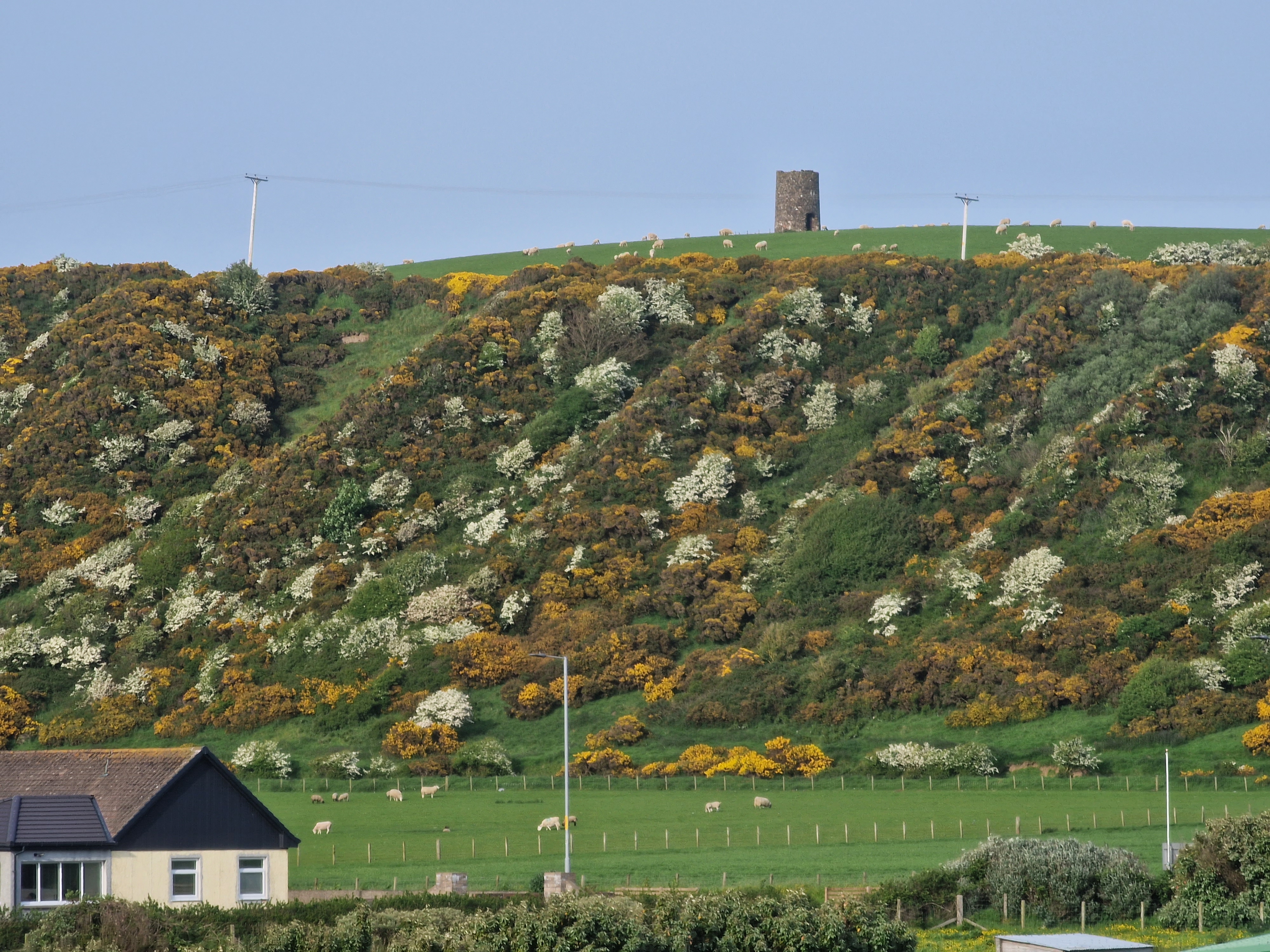
Hill slope colonised mainly by Gorse and Hawthorn. Near the coast at Ballantrae, South Ayrshire, May 20th 2023. Photo: John Grace.
You can buy ‘Glastonbury Thorn’ online now, as the variety ‘Biflora’. The advertisement says it ‘produces leaves earlier than normal and occasionally can flower twice’.
In the world there are perhaps two hundred species of Crataegus but only a few in Britain including the Midland Hawthorn (C. laevigata), several hybrids, and many introduced ornamental species (Bean 1970). There are numerous cultivars of C. monogyna, including those with bright red flowers.
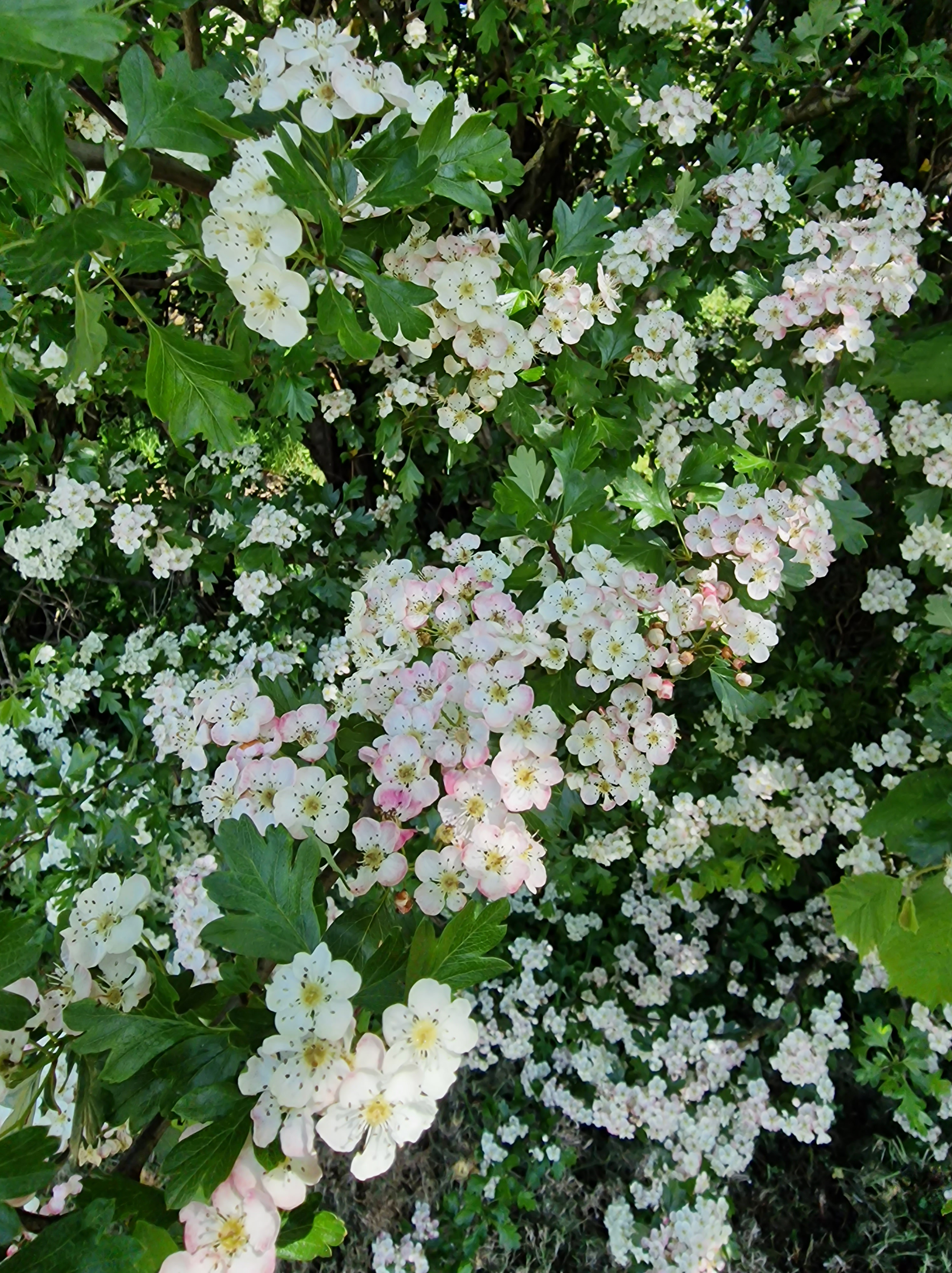
Pink-tinged flowers occur on some trees. Have these forms always existed or has there been gene flow between the native Hawthorn and red cultivars? Image: May 26th 2023, near Ayr, John Grace.
The Ayrshire poet Robert Burns certainly appreciated the beauty of Hawthorn. It is one of the five flowers he included in his poem about a bunch of flowers to give to his lady-friend. It’s called The Posie.

Having looked more closely at Hawthorn bushes over the last week and browsed the literature, I have come to appreciate the importance of the species – its utility, its status in the landscape and its ecological significance for many hundreds of other species. Several thousand years ago, Neolithic humans coming from the east began to plant hedges in Northern Europe to create fields for agriculture. Hawthorn was widely used to exclude grazing animals. Today, it still serves that role. It also colonises abandoned land very effectively and occurs throughout almost all of the British Isles to an elevation of over 600 metres. It has withstood the ravages of many diseases, most notably the Fire-blight caused by a bacterium Erwinia amylovora. It has endured, and it has served humans well.
References
Bean WJ (1970) Trees and Shrubs Hardy in the British Isles. 8th Edition. Murray, London.
Fichtner A and Wissemann V (2021) Crataegus monogyna. Journal of Ecology, 109, 541-571.
Kheloufi A, Mansouri LM, Vanbellinghen C (2019) Seed germination of Crataegus monogyna – a species with a stony endocarp. Reforesta 7, 73-80.
Vickery R (1995) Oxford Dictionary of Plant-Lore. Oxford University Press.
©John Grace