Hordeum murinum – 28th August 2023 – Wall Barley
This week’s plant is a grass I’ve known from my childhood in southern England where it was very common. As kids, we took delight in using its heads (‘inflorescences’) as darts, and we also invented a racing game where the darts become ’horses’ and were placed on corrugated metal supported on a slope. Any slight breeze would make the the horses climb the hill but they would never slip back because of the way the awns are arranged. The winner was the one reaching the top first.
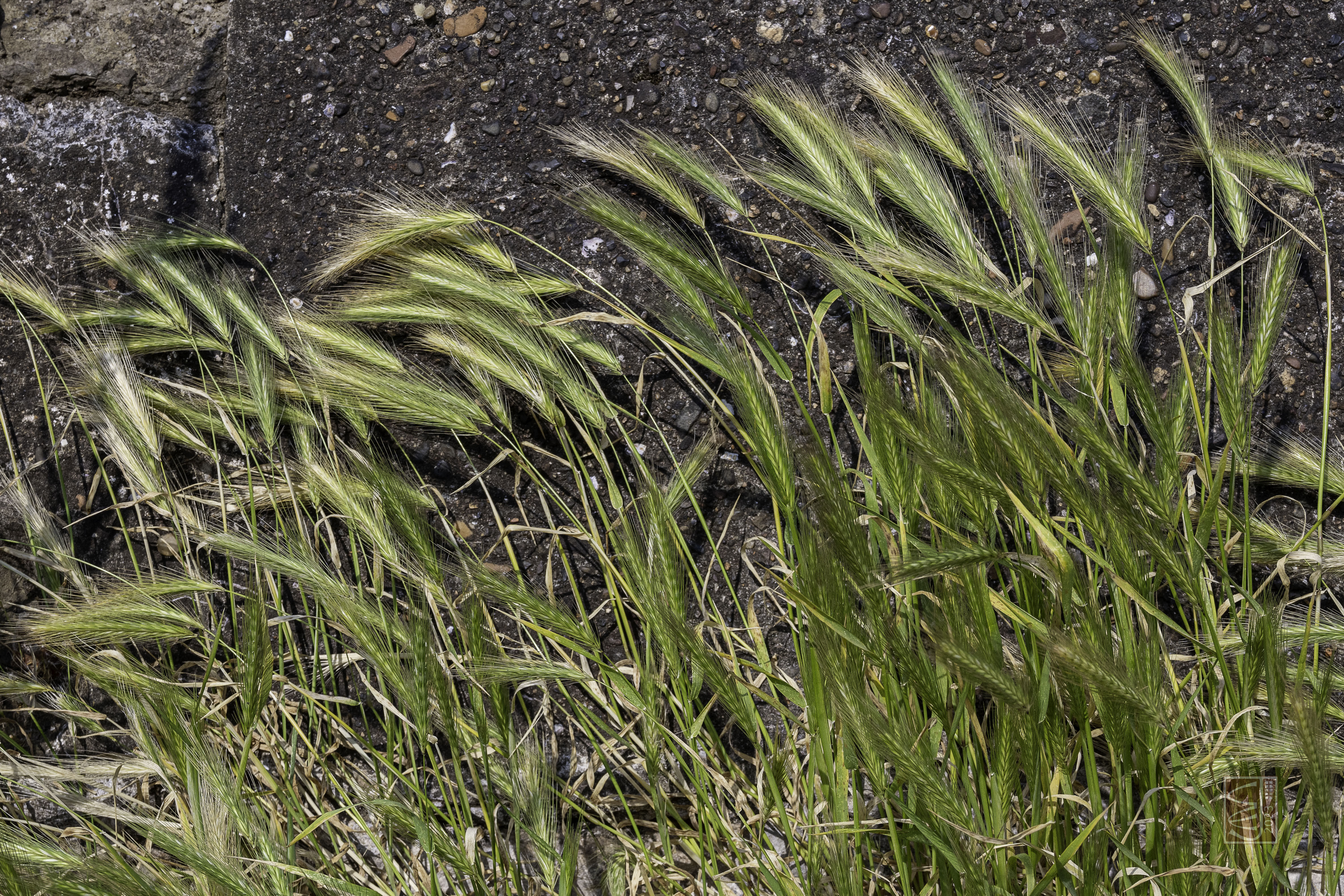
H. murinum on the Sea Wall at Portobello, Edinburgh. It occupies many habitats; according to the BSBI Atlas 2020 it can be found “…growing in all kinds of fertile, disturbed ground, on roadsides, pavements, walls, railway banks and rough grassland.” In the southern parts of Britain the maritime habitat shared with H. marinum. Photo: Chris Jeffree.
It is probably an ancient introduction but some authors say it is native to Britain. It is included in Pearman’s book The Discovery of the Native Flora of Britain and Ireland but the entry shows uncertainty. The first record seems to have been 1548, although there are a small number of archaeological records that suggest a much earlier date. We know it was collected and described by Jonathan Salt (1759–1815) a cutler and local naturalist who catalogued plants of the Sheffield region.
Its ecology was investigated quite thoroughly by Alan Davison about 50 years ago when he was a young researcher at Newcastle University (now he’s an Emeritus Professor). He measured the pH of the soils where it grew and found it never grows on acid soils. All its soils had a high pH (greater than 6.7, and most exceeded 7). He concluded that this is one of those species associated with lime-rich habitats (they are called ‘calcicoles’). It likes to grow on walls that have mortar to hold the stones or bricks together, hence its specific name murinum coming from the latin word for wall, murus. But some people say the name comes from the latin word for mouse, mus.
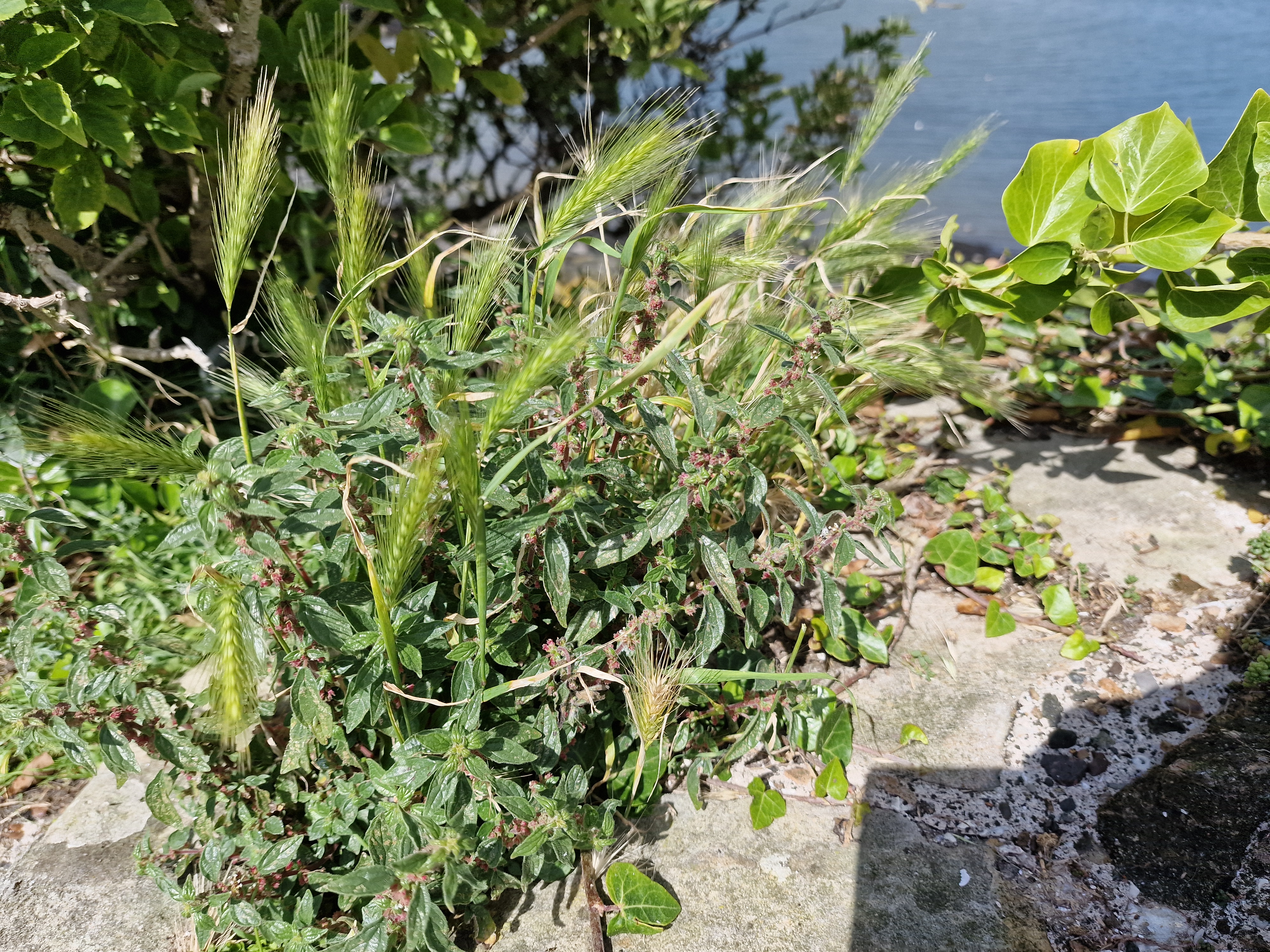
H. murinum growing on the Island of Inchcolm, in the Firth of Forth. Here, it is on the top of an ancient wall, along with Pellitory-of-the-Wall (Parietaria judaica) and Ivy. Photo: John Grace.
He also investigated its response to the harsh conditions of Moor House, a well-known ecological research site in the North Pennines of England. It’s a remote spot to get to, but you can look at the site by going here to its phenocam. He compared the growth and reproduction at Moor House (558 metres above sea level) with that at lower altitude in Newcastle (91 metres asl.). In Newcastle, the summer temperature is about two degrees higher and the rainfall is much less. H. murinum barely survived at Moor House but flourished at the Newcastle site. His observations, and the overall distribution in the UK, show it is restricted by high rainfall, low summer temperatures and high elevation.
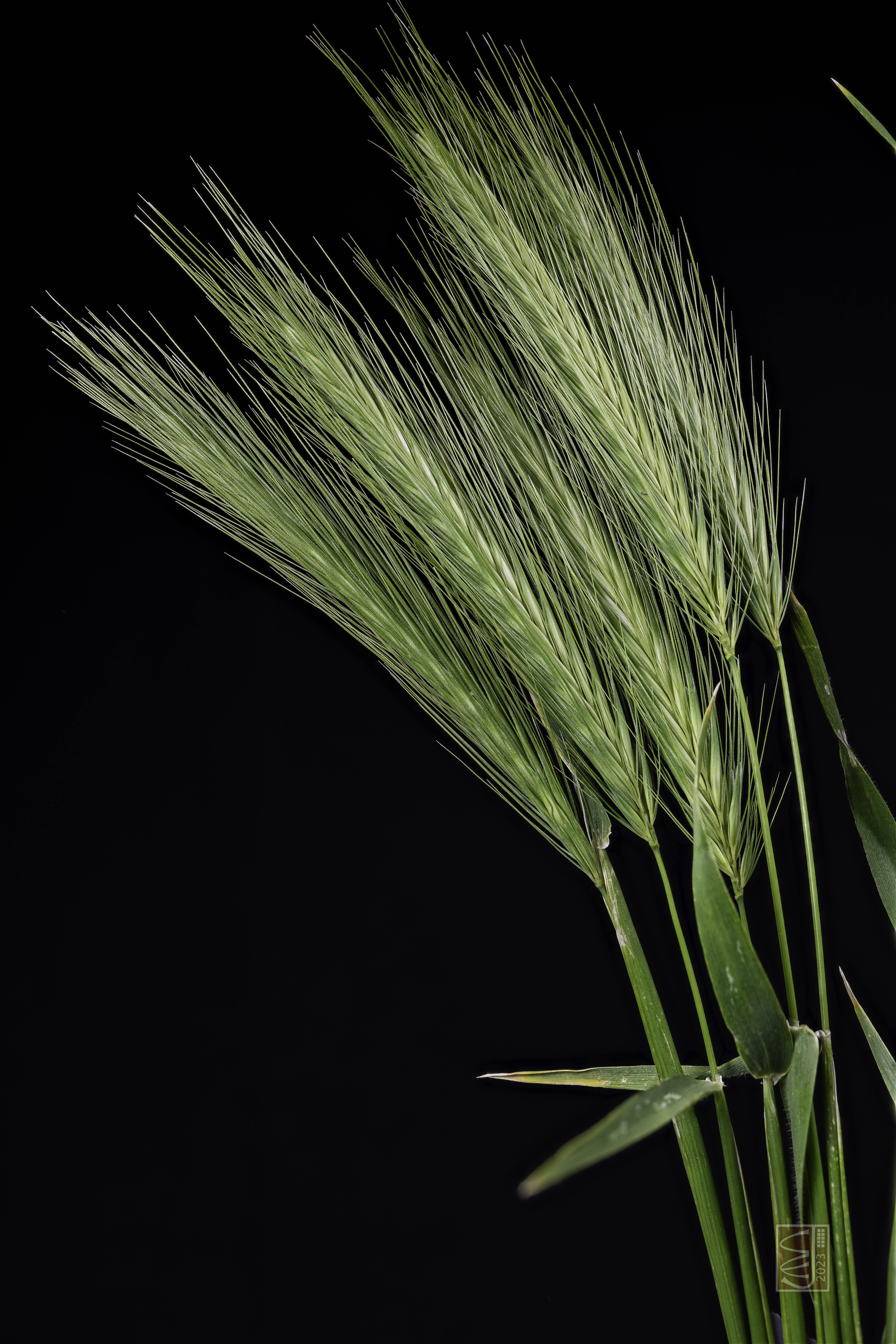
H. murinum, flowering spikes. They are fairly stiff, and usually leaning to one side. Photo: Chris Jeffree.
It is easy to recognise any Hordeums as they have long bristles (awns) and the spikelets are organised along the main stem in a dart-like and orderly two-rowed fashion. There are three spikelets at every node, but in H. murinum only the central one is bisexual and the two lateral ones are sterile males (see on the image below).
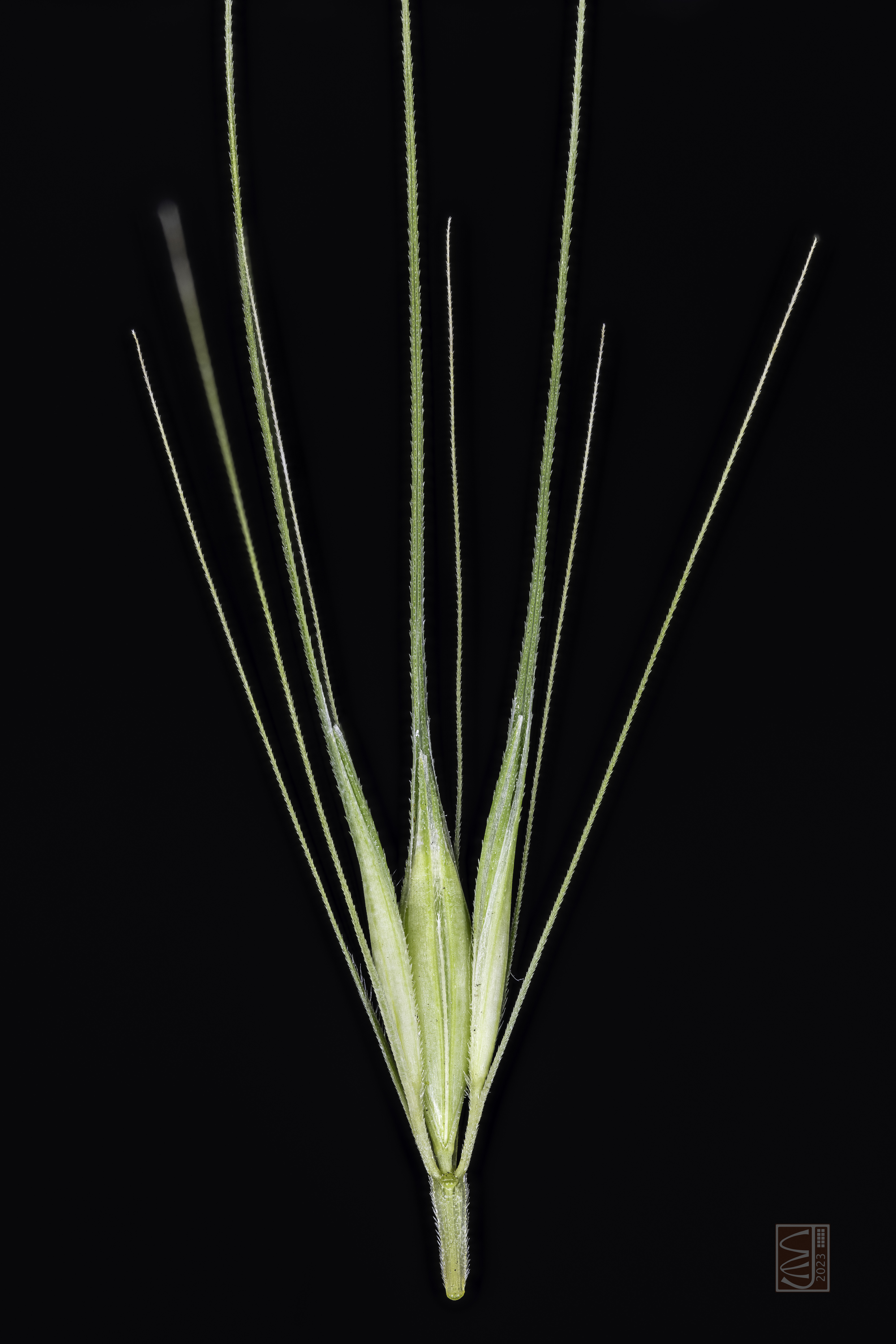
H. murinum. Three spikelets taken from near the midpoint of the flowering spike. The central one is bisexual and will form the grain. All parts have awns. Photo: Chris Jeffree.
About this time of year (August), the grain ripens and the structure turns brown (some might say ‘golden’). The grain is shed mechanically as the stem is shaken in the wind, and falls to the ground. Dart-like, the structure shown above is likely to penetrate the soil; germination occurs within a few days if conditions happen to be right (warm and moist).
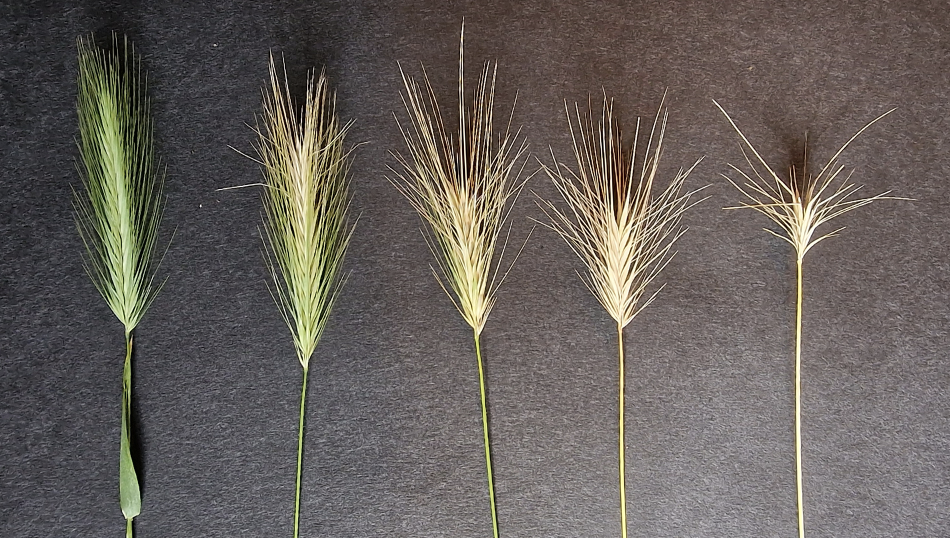
H. murinum. Stages of grain-ripening and shedding. Photo: John Grace.
I was intrigued to read in one of Alan Davison’s papers that there is no dormancy, and germination is almost immediate. So I poked about at the base of one group of plants growing outside my house. It was easy to find a newly-emerged plant, with the spikelets still attached (see below). This tendency for the plant to occur in clumps is related to its close-to-home dispersal. It looks as if the clumps are perennial but actually they are collections of annual plants.
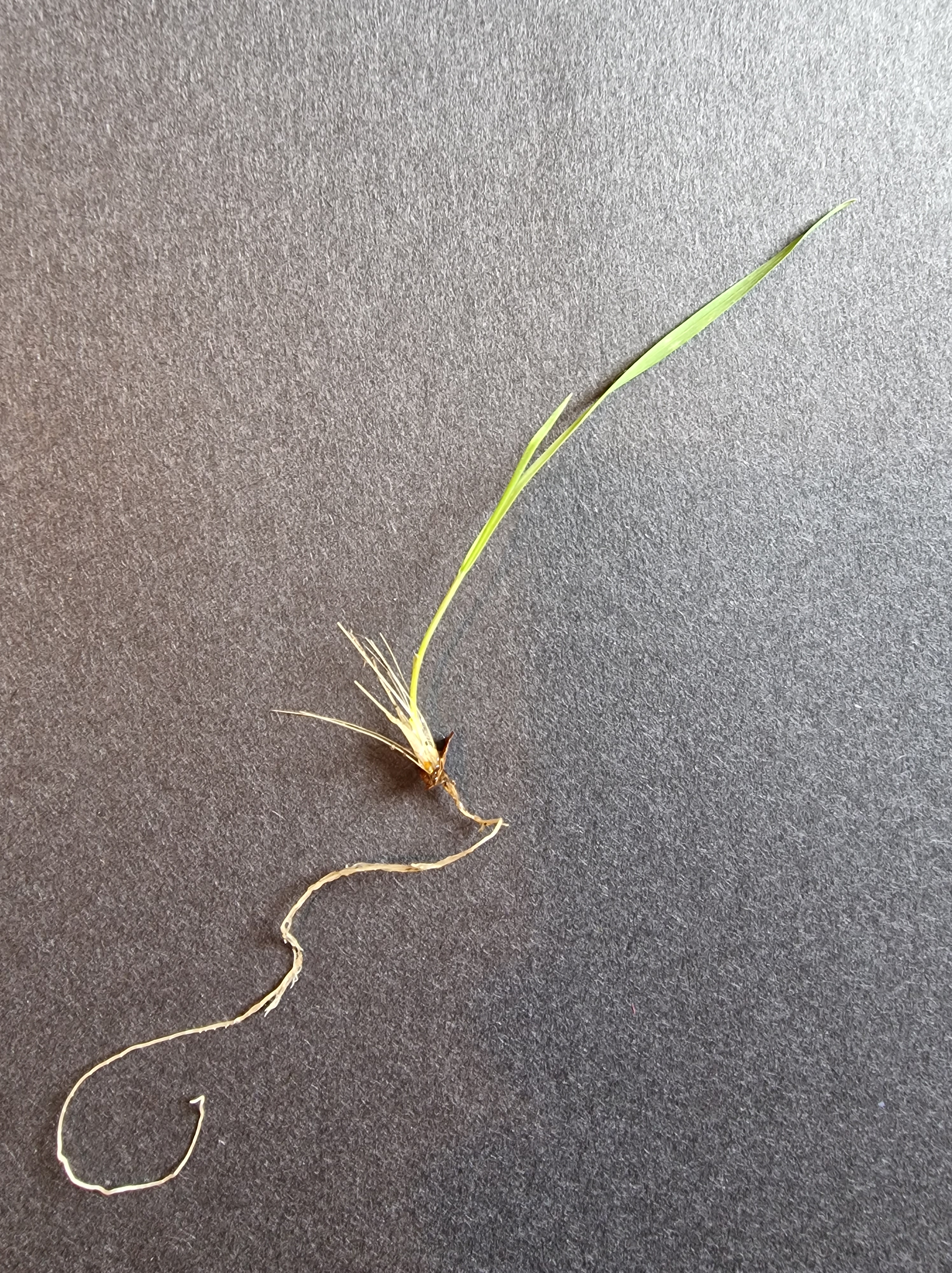
H. murinum seedling, extracted in late August from the loose soil at the base of a clump of plants. Photo: John Grace.
It seems that seedlings like the one above can survive the Scottish winter and may even grow a little in mild spells. The conditions found in Edinburgh may suit the plant, where it co-exists in the cracks between walls and pavements with species including Dandelion (Taraxacum), Sow thistle (Sonchus oleraceus), Willow herbs (Epilobium) and Wall Lettuce (Mycelis muralis). Possibly it has some resistance to salt (pavements are liberally sprinkled with salt in icy weather) and may have evolved some resistance to the herbicide glyphosate (Vázquez-García et al. 2020).
There are other species of Hordeum but I am not familiar with them. So to make sure of my identification I looked at the ligule (the point where the leaves meet the stem). The ligule in this case is membranous and has clasping appendages (auricles). Just right for H. murinum.

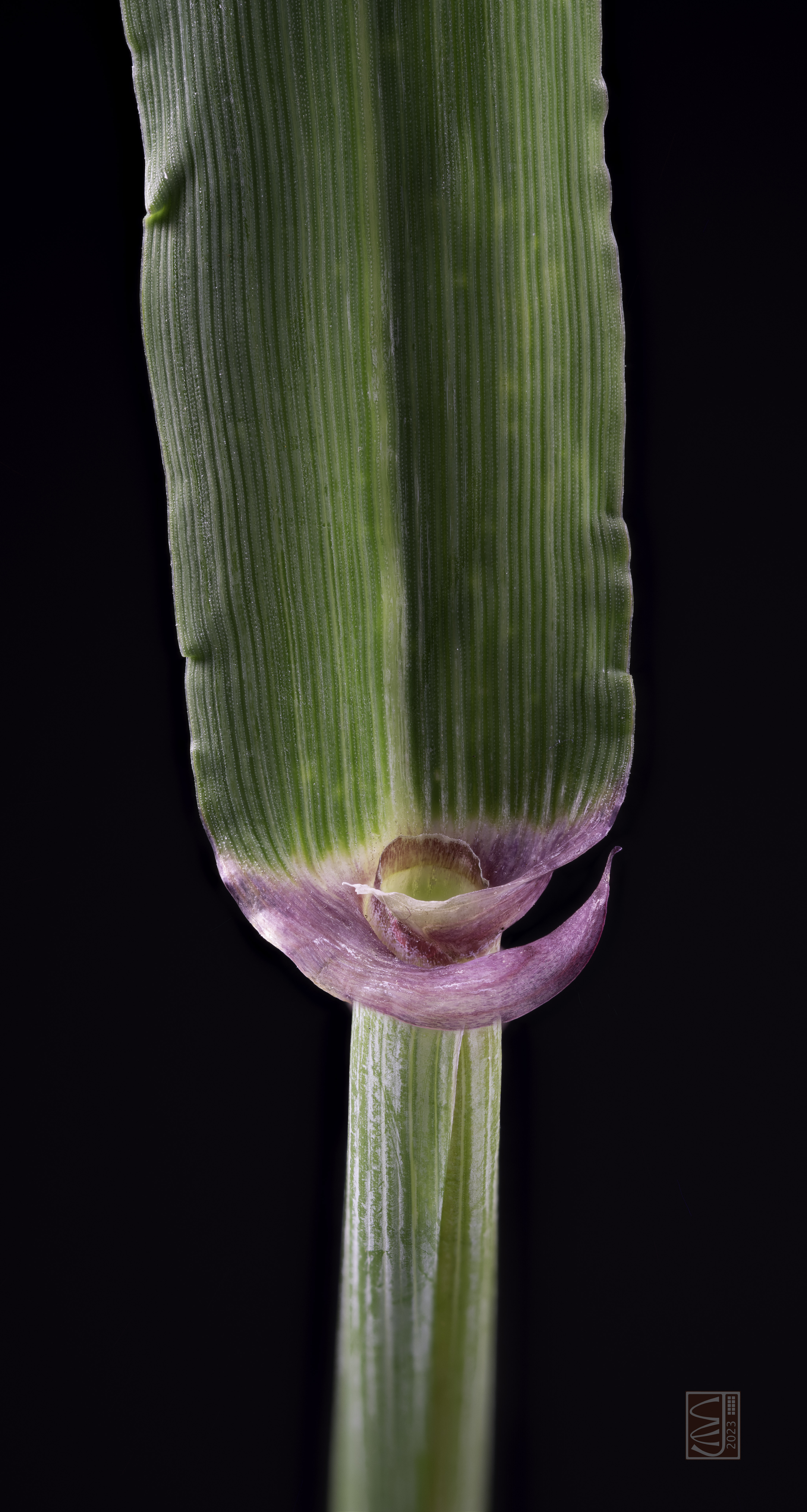
These images show the well-developed auricles that clasp the stem. Left, Hordeum murinum; right, the cultivated Barley Hordeum vulgare. Images: Chris Jeffree.
Wall Barley closely resembles cultivated Barley (Hordeum vulgare), but it isn’t the wild ancestor. Barley was first cultivated some 10,000 years ago and was developed from a similar-looking wild barley Hordeum spontaneum, that grows in the Fertile Crescent in the Middle-East (Iraq, Syria, Lebanon, Israel, Palestine and Jordon).

Most readers will be familiar with Barley, a common arable crop in Scotland, used for making whisky, beer, making soup and feeding to animals. It’s ripening now (mid-August) at about the same time as Wall Barley (see my photo on the left). The grains are much bigger but unlike wild barley they are retained on the stalk, a feature required for efficient harvesting (whether by scythe or machine). Here in Scotland the main crop is known as Spring Barley; it is sown in early spring and harvested in late August (weather permitting). There are various varieties of cultivated varieties, some of which are described here. New ones are continuously being introduced and some of the older ones are being withdrawn because their yield is poor or because they do not stand up to the strong winds and rain.
H. murinum (left) and cultivated Barley Hordeum vulgare. Photo: John Grace
The cultivated barley shown above is Two-rowed Barley. As in Wall Barley, it has three spikelets at each node and only the central spikelet develops a grain. Another form of cultivated barley is Six-rowed Barley, where all three spikelets form grain. The Six-rowed is Hordeum vulgare f. hexastichon or Hordeum vulgare subsp. vulgare.

Six-rowed Barley known as Hordeum vulgare f. hexastichon or Hordeum vulgare subsp. vulgare, which we have found growing wild in Aviemore and Biggar. Photo: David Chamberlain
You may be somewhat confused by the forms of the cultivated barleys, the two-rowed, six-rowed and there are even four-rowed.
So let us return to the wild species. Here we find further challenges because several Hordeums are superficially alike. Note the similarity in Latin names between H. murinum and the Sea Barley H. marinum. I don’t think I’ve ever seen H. marinum, but perhaps I should have looked more carefully. They are rare in Scotland, but locally abundant in various parts of southern England. Richard Milne has kindly supplied an image (see below). It is very similar to H. murinum but the angles of the spiklets are set much larger, so the spike looks bushier.

Hordeum marinum. Photo: Richard Milne, edited by Chris Jeffree
Stace’s New British Flora of the British Isles recognise three subspecies: murinum, glaucum and leporinum. Of these, murimum is the most common. But in Australia leporinum is more common and murinum is restricted to sites near Hobart in Tasmania (Cocks et al. 1976). H. murinum in the various forms has travelled far from its native Eurasia, perhaps on/in the clothing or bedding of humans, or as a contaminant in shipments of seeds. In North America, where one of the names of H. murinum is Mouse Barley, the species is widespread and recognised as a weed, but I have been unable to find any reference to the date of introduction.
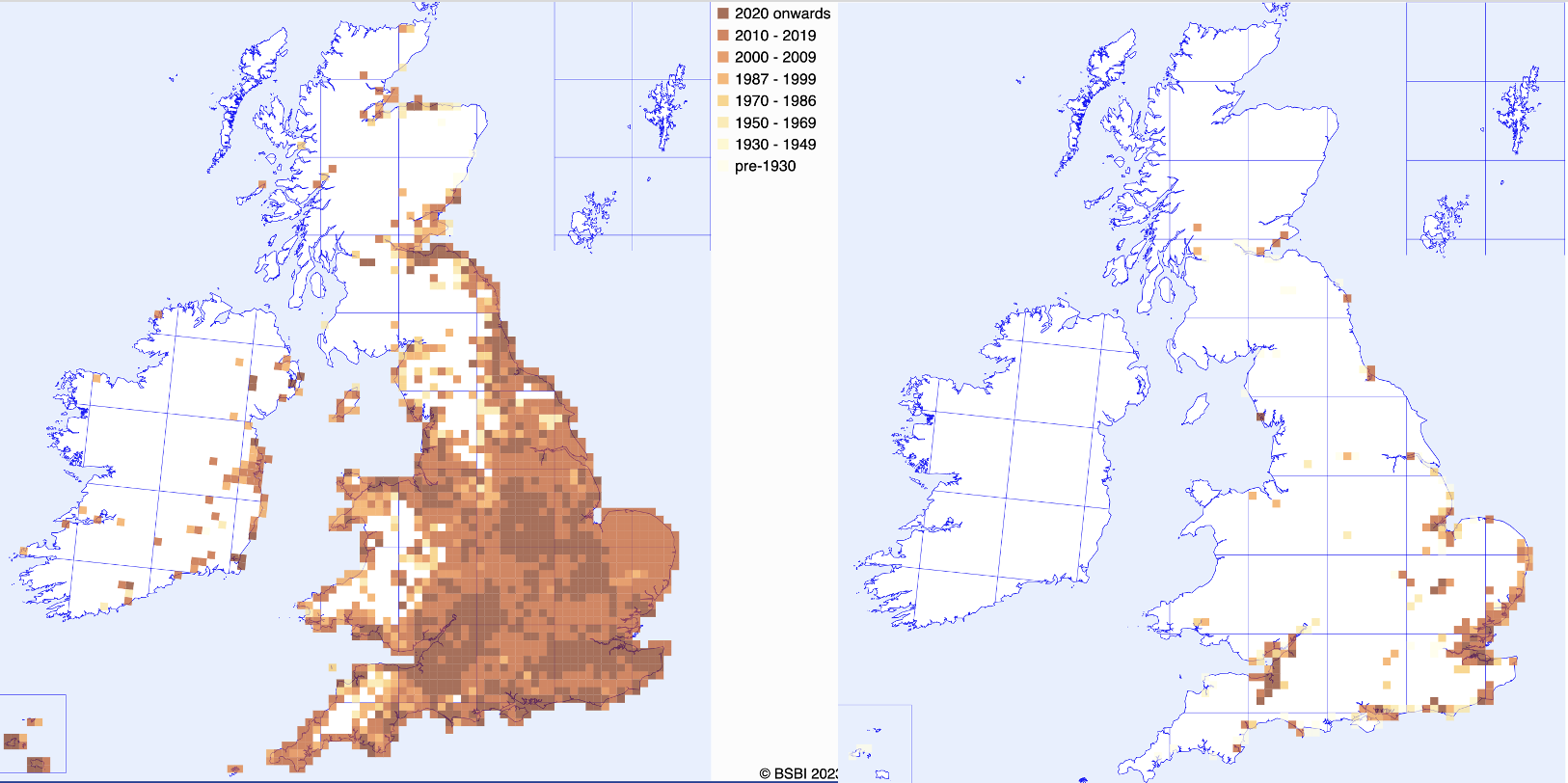
Distribution maps from BSBI/Maps. Left: Hordeum murinum the Wall Barley; Right: Hordeum marinum the Sea Barley.
I suspect that, worldwide, the species is more variable than the taxonomy implies. Although the British distribution (and Alan Davison’s work) suggests it is limited by summer temperatures, its global distribution shows that its northern limit far exceeds the north of Scotland, and in the Southern Hemisphere it does have records from the cold of Patagonia as well as the salt-spray of the Falklands (Islas Malvinas) and the warmth and wetness of Queensland in Australia.
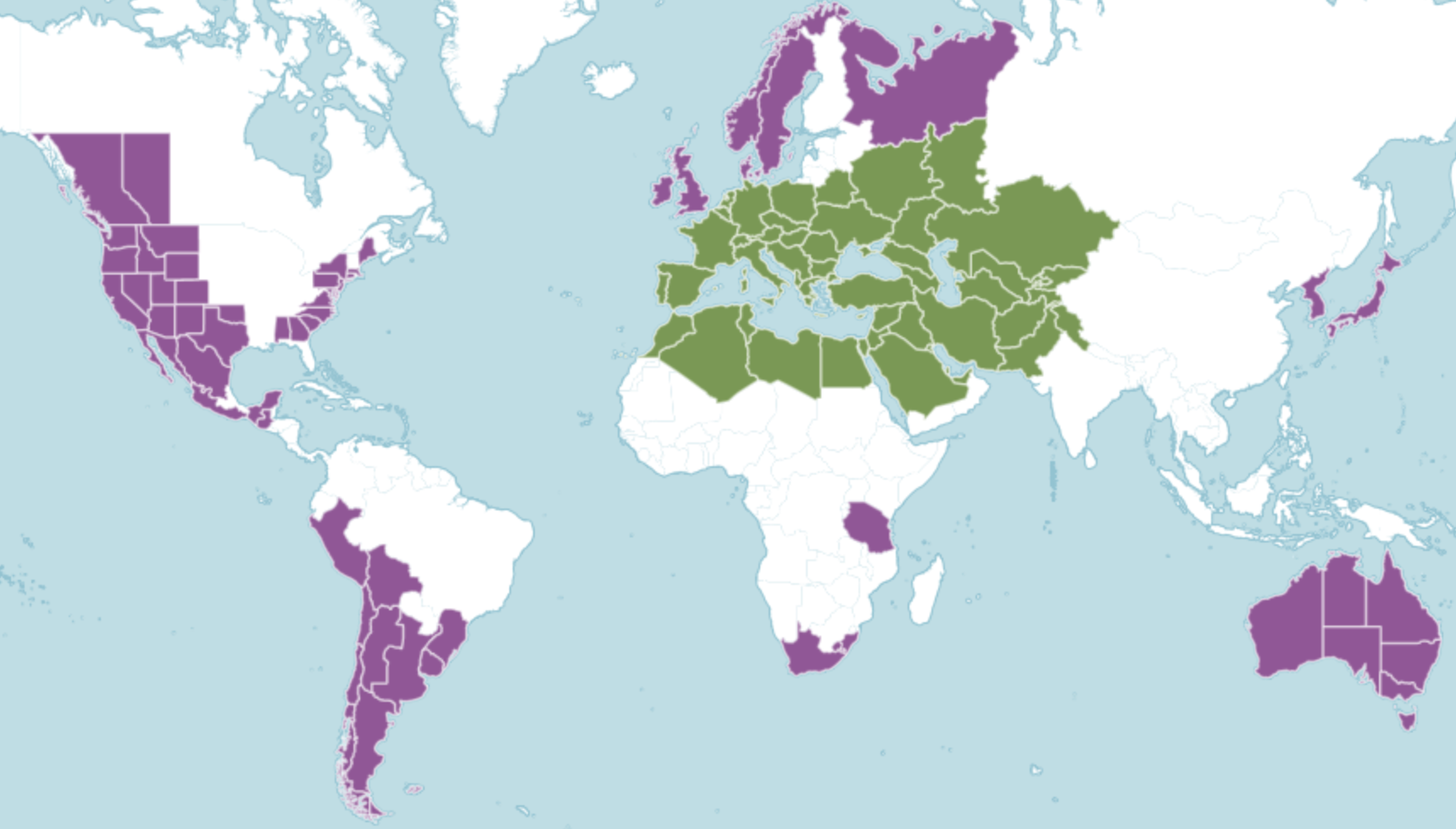
Hordeum murinum. Global distribution according to Kew’s Plants of the World Online. Green shows the presumed native distribution, purple is where the species is introduced and naturalised.
References
Cocks PS et al. (1976) The Hordeum murinum Complex in Australia. Australian Journal of Botany 24, 651-662. https://doi.org/10.1071/BT9760651
Cope T and Gray A (2009) Grasses of the British Isles. BSBI.
Davison AW (1971) The ecology of Hordeum murinum L. ii The Ruderal habit. Journal of Ecology 59, 493-506.
Davison AW (1977) The ecology of Hordeum murinum L. iii Some effects of adverse climate. Journal of Applied Ecology 65, 525-530. https://doi.org/10.2307/2259498.
Pearman D (2017) The Discovery of the Native Flora of Britain and Ireland. BSBI.
Vázquez-García JG et al. (2020) Resistance Evolution to EPSPS Inhibiting Herbicides in False Barley (Hordeum murinum) Harvested in Southern Spain. Agronomy 10, 992. https://doi.org/10.3390/agronomy10070992
©John Grace