Botanical Travelogue: Aberlady Bay
Aberlady Bay is a local gem, a site full or interesting plants, including combinations that one would struggle to see at a single site in many other places. And all within under an hour’s bus ride from the capital.
Located just a little way east of the small town of Aberlady, the nature reserve is in fact an area of sand dunes, visible across the bay itself from the corner of the town. The starting point is a fabulous rickety wooden bridge crossing the small river that makes its estuary here. A small car park exists between this and the main road, but if it’s full, you can park by the road near Aberlady. Below the car park is a fine area of saltmarsh, dappled with salty pools, where classic saltmarsh species like Glaux maritima, Salicornia, Suaeda maritima and Tripolium marinum may be seen, with large stands of Bolboschoenus tabernaemontani just upstream.
Once across the bridge, the substrate immediately becomes sandy. One plant of Bryonia dioica has been established on the east side of the track for many years, and the flora on both sides of the path is diverse. However, the interest greatly increases when a thin path branches off on the left, forming a small equilateral triangle with another connecting back to the main path just beyond it. Here, the ground is slightly damp and the turf shorter, allowing a dense population of butterworts (Pinguicula vulgaris) to grow luxuriantly. These are common enough in the highlands but a rare sight down at sea level in the southern half of Scotland. So Aberlady is a superb place for children to come face to face with a wild plant that eats insects, looking at the black spots on the sticky leaves and, if they’re lucky, finding one that’s still alive, struggling futilely to escape.
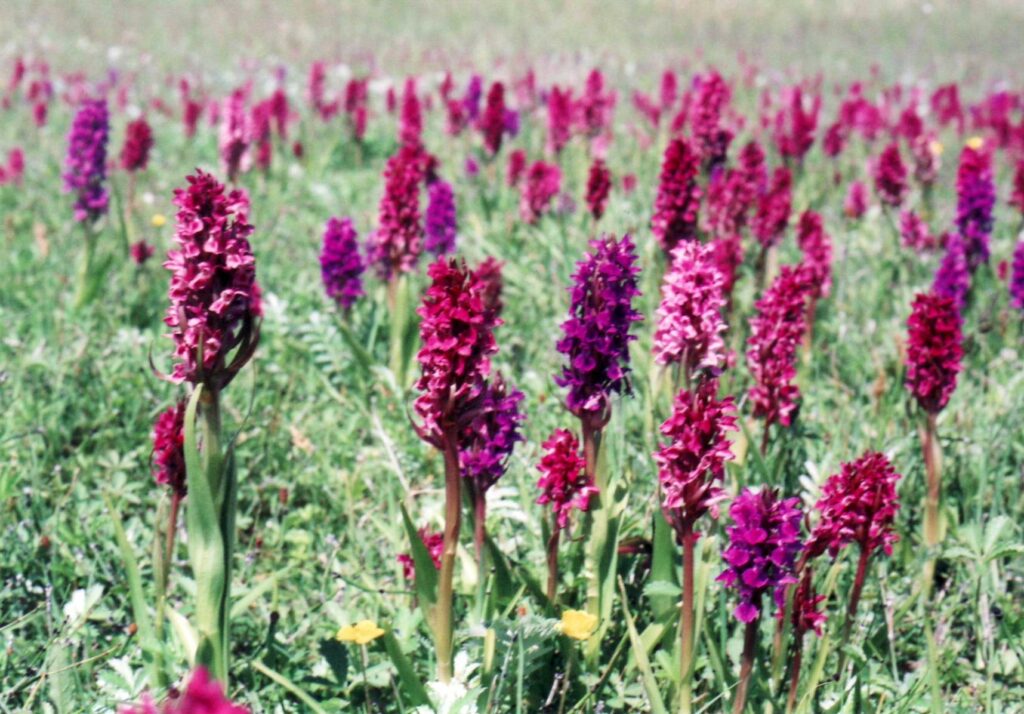
In this triangle, several orchids are also to be seen. Three marsh orchids occur here, and elsewhere in the wetter parts of the reserve. The northern marsh orchid Dactylorhiza purpurella plus two subspecies of the early marsh, D. incarnata: the pale orange-pink ssp incarnata and the orange-red ssp coccinea, the last endemic to dune slacks around the British Isles, and a true treasure. Being marsh orchids, all three hybridise with one another, so it is wise to examine a lot of individuals to get a sense of what is going on. Also around this triangle grows the twayblade Listera ovata. In spring a few plants of Viola hirsuta are present (but good luck finding them) whereas cowslips are abundant.
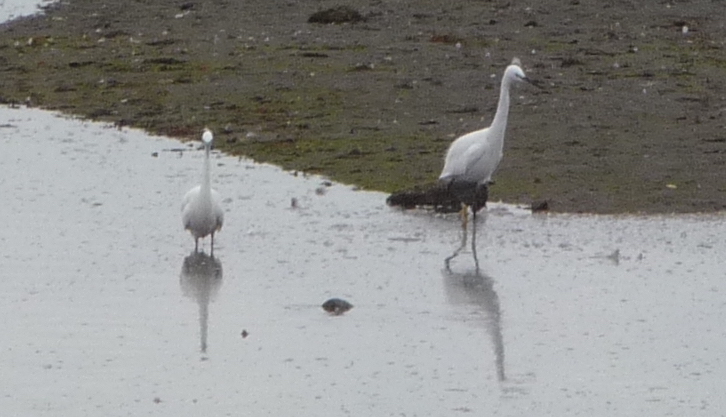
Further on, the main path passes through a tunnel formed by thickets of sea buckthorn, Hippophae rhamnoides. This species fixes nitrogen via bacteria, in much the same way as legumes, and this may explain the dramatic change in flora as one enters this tunnel, with species of rich soils suddenly taking over. Emerging from the tunnel, we return just as suddenly to the diverse flora of calcareous fixed sand dunes. Almost immediately there is a patch of short grass perfect for a sit-down snack, overlooking a pond where various waterfowl may be seen. A few plants of houndstongue Cynoglossum officinale are usually to be seen here, while various water plants line the pondside. Resuming along the main path, scattered flowers of Cerastium arvense occur along the right side of the path, by the fence.
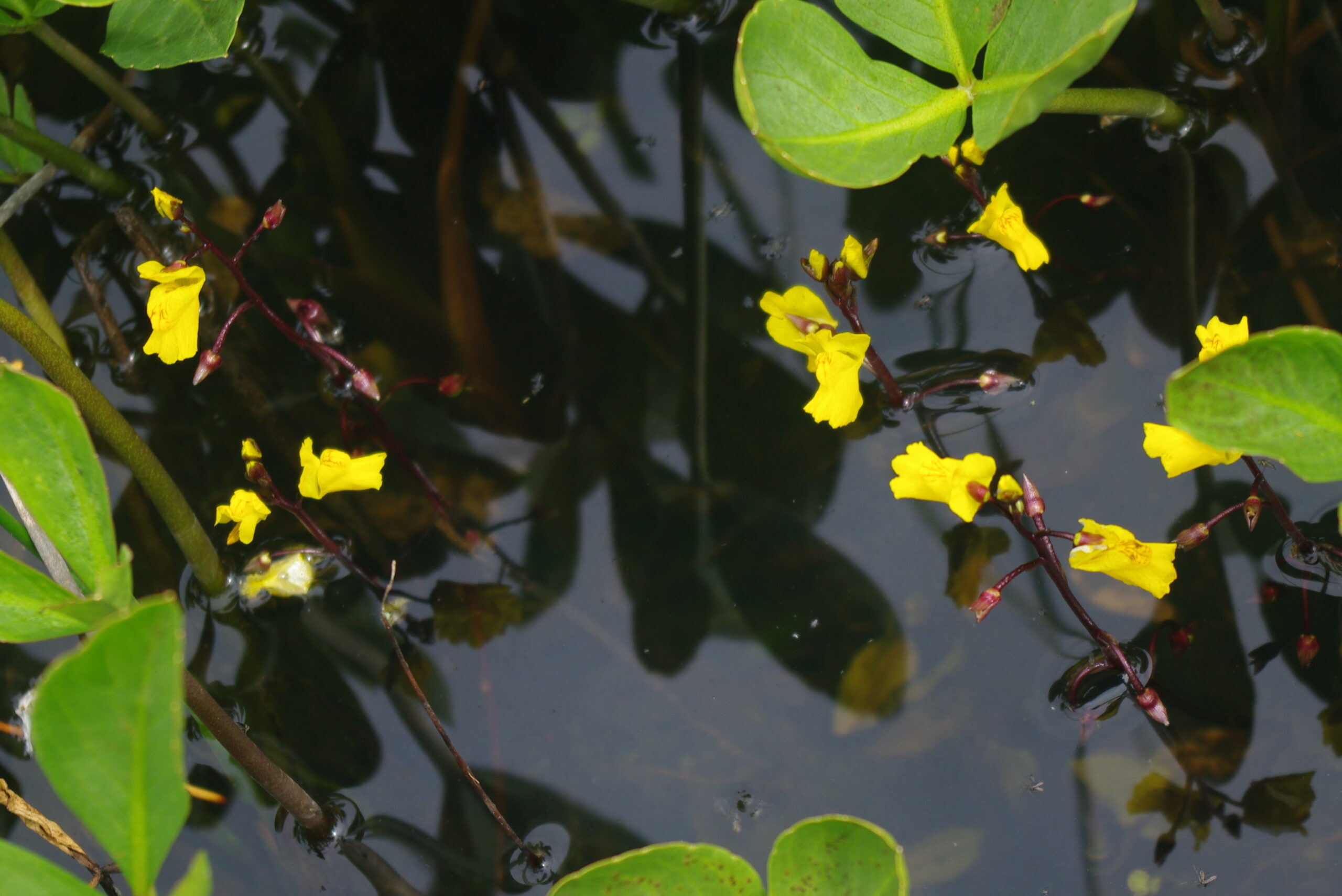
Now, we come to a long area full of interest. Parallel to the path runs a line of ponds, with rich marshy vegetation in between. In the marsh, one finds more butterworts and marsh orchids, red rattle, bogbean, marsh pennywort and, with more searching, bog pimpernel, flea sedge and very occasional lesser clubmoss. The ponds themselves are full of bogbean, but the special glory here is bladderwort, Utricularia vulgaris, whose yellow flowers often make a good show here in June. Be very careful of wading here though, as the bottom of the ponds is a mass of bogbean roots over soft mud, and if your foot goes through the roots you may sink a long way.
Continuing along the path past the boggy area, the ground becomes very dry, favouring plants like Astragalus danicus and, further up the slope on the right, occasional plants of Carduus nutans. Recently, there has been a part of deliberately disturbed sand to the left of the path, which makes a home for more C. nutans and Sisymbrium altissimum. So after this, the path divides, with the straight-on path continuing behind a gold course and eventually to the rocky headland beyond. If one is very lucky, one can find frog orchids on the headland or by another minor path through the golf course. I also once encountered a sea of hybridising marsh orchids in a hollow amidst the fairways, but have never refound it.
The left fork heads towards the sea, and the flora gradually transitions to species of more mobile sand dunes, culminating in the wall of high dunes that separates the fixed dunes from the beach beyond. The path climbs over a dune much higher than any other, which I think must be because constant erosion by human footfall releases sand which blows back onto the dune hill to be fixed by marram, letting it grow taller. Otherwise, why would anyone choose to send a path across the very highest point in the line of dunes? The whole line of dunes is actually eroding here, and the uncovered marram stems can be seen growing new green shoots in places.
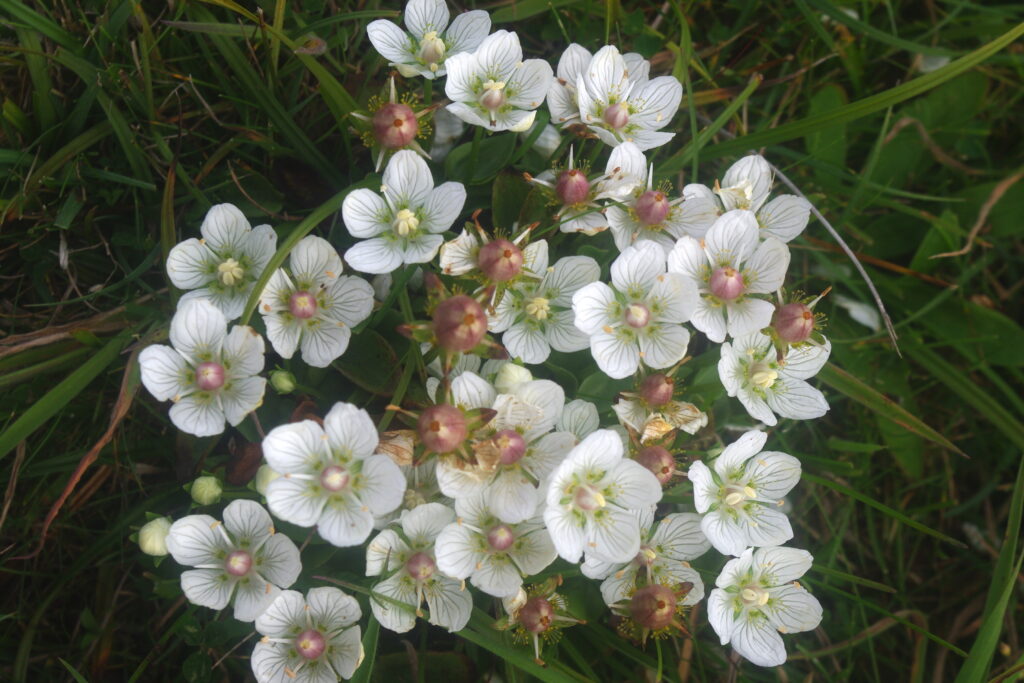
In late summer, there is one last flourish before one reaches the dune wall. Coming off the path to the left, there is a broad dune slack with around September is full of dense masses of Grass-of-Parnassus and swathes of autumn gentian, some of them seemingly turned into a mass of galls.
This is by no means a complete list of the interesting plants in the reserve, but it should give you a fair indication that it is a site not to be missed. A low tide, there is a mass of beach to explore beyond the dunes, including the rusting corpses of two skittled submarines. Children who are getting fed up with all the plants can be rewarded with some bucket-and-spade time, or a game of beach cricket.