Amanita muscaria – December 30th 2024 – Fly agaric
Amanita muscaria, the iconic fairytale mushroom (or should we call it toadstool?) has shaped cultures, religious practices and may even be implicated in the myth of Santa, but for an ardent forager like me, the sight of it brings an almost visceral joy, for it means that there might be a Boletus edulis nearby.

A forager’s basket: Amanita muscaria and Boletus edulis caps showing. Photo © Chris Jeffree
In the UK Amanita muscaria var muscaria is the variety most often encountered. It has a red cap with white flaky warts, a rough white stipe with a white membranous ring and a bulbous base. The gills are white, free and the spore print is white. The baby basidiocarp (fruit body) is egg shaped, white and completely covered with the veil. As the stipe (stem) elongates, the red cap emerges, hemispherical at first, and then flattening in mature specimens, the breaking volva (veil) leaving vestiges on the cap, stipe and bulbous base.

Amanita muscaria in Rothiemurcus forest Photo © Chris Jeffree
The fungus is an ectomycorrhizal member of Basidiomycota (Phylum) and Agaricales (Order). As in all agarics, the basidiocarp (fruit body) is merely a multistorey spore-dispersal unit. The hard work of using/abusing/caring/sharing goes on underground, as I will describe shortly. The spores are produced on gill surfaces in club shaped cells (basidia) by a very special cell division called meiosis resulting in 4 spores on each basidium. This is just like the cell division that gives rise to our ova and sperm. The million or so sibling spores that each fruit body releases into the air current are thus all different from one another, so there is a chance that a few will find a suitable substrate to grow on. When one does, it will germinate, send out a hyphal cell, which will grow, divide and branch to form a mycelium. This mycelium, which will have nuclei derived from that one spore only, must now seek a mate – another mycelium, derived from a different spore, but one of the same species. How likely is that? Well – there were lots of spores to start with, but it might have to grow in all directions before it finds a compatible mate. When that happens the hyphae of the two mycelia will fuse and afterwards the cells will have two nuclei, one from each parent with a neat little clamp between the cells to facilitate regular cell division. Until now the mycelium will probably have been making use of the scant foodstuffs in the soil. To grow vigorously it will need to engage in an association with the roots of a tree.
The trees in question may be birch, oak, pine, spruce, fir. It does not appear to be fussy, though in my experience here in Scotland the trees of choice are mostly birch. The mycelium forms a mantle round the root (see image below) and the innermost hyphae fill the intercellular spaces between the cortical cells, forming a lattice-like network called the ‘Hartig Net’. It is here that plant and the fungus engage in a mutually beneficial trade- off, the plant delivering carbohydrates to the fungus and the fungus delivering nutrients such as nitrates and phosphates to the plant.

Root-tip mycelium of the Amanita type. From Nilsson et al. 2005. Licenced under Creative Commons Attribution 2.5. The figure shows the tree roots encased in the mantle. Clearly, there are no fine root hairs. It is the fungal hyphae that provide the nutrients for the tree.
The world distribution map appears to mimic that of its host trees. A. muscaria varies in its morphology, the different clades distinguishable by colour. Whether the clades are varieties, subspecies or even separate species within the A. muscaria complex is a matter that taxonomists frequently debate. Molecular studies by Geml et al. (2006) indicate a Siberian-Beringian origin with the red and white form Amanita muscaria var muscaria predominating in the boreal regions. Then a couple of years later, Geml (2008) distinguished three clades within the species representing, roughly, Eurasian, Eurasian “subalpine”, and North American populations. He considers that all merit to be elevated to the level of species.
Interestingly, the Southern hemisphere occurrences in the map below are ‘weedy’ imports on foreign trees, but the fungus is spreading, having successfully adapted to make associations with Nothofagus (Southern Beech) and Eucalyptus. We will see if any new subspecies or varieties evolve in these new conditions.

World Distribution map of Amanita muscaria (source: iNaturalist)
The fruit bodies contain several toxins and psychoactive drugs. Three primary active ingredients are responsible for its strange psychoactive effects: muscimol, ibotenic acid, and muscarine. Approximately 6 mg of muscimol is the active dose for adults, and that is roughly the amount found in one cap (Rubel and Arora, 2008). Dried caps are apparently more potent. Happily, the distinctive nature of its morphology protects foragers from inadvertently confusing it with edible species, but young children and pets may not be so wise. Fatal poisonings have been reported but are very rare.
According to the North American Mycological Association there were no reliably documented cases of death from toxins in these mushrooms in the past 100 years (https://namyco.org/interests/toxicology/mushroom-poisoning-syndromes/).
While human deaths may be rare, the mushroom is known to be effective in killing flies as is reflected in its common name: Fly-Agaric (English), Fliegenpilz (German), Muchomor (Polish), Tue-Mouche (French). Traditionally, the caps were soaked in milk, but a recent study of different extraction recipes showed that heat and mechanical processing was more important than the solvent used (Lumpert and Kreft, 2016).
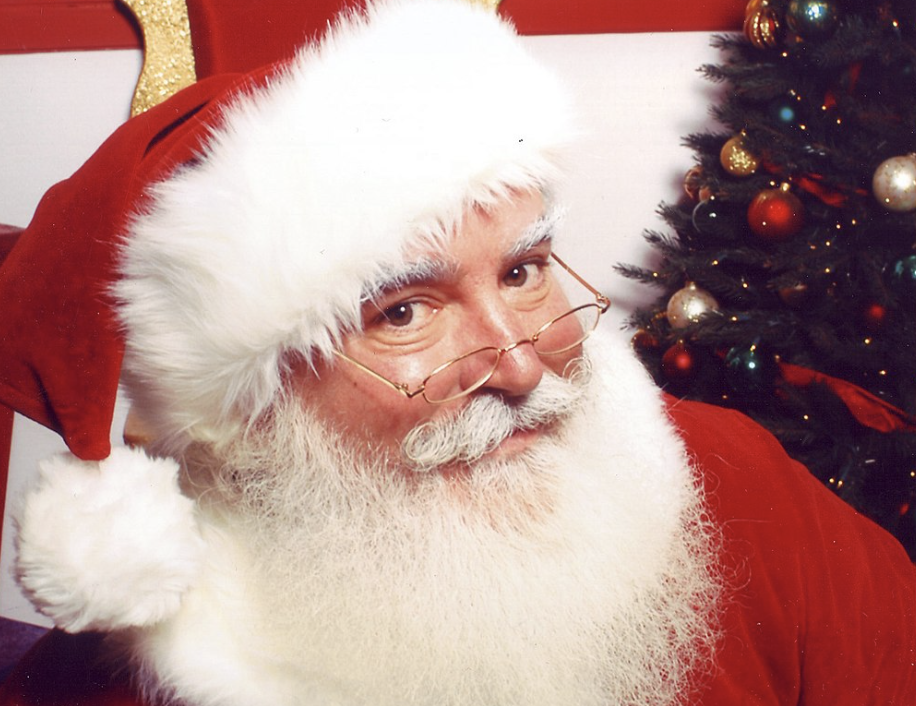
Deliberate recreational use of the species to elicit a hallucinogenic response is well documented. It’s been used by the indigenous tribes of Siberia and Sámi shamans in Finland. Apparently filtering the drug through the kidneys purifies the active ingredients, so drinking the urine of users (either human or reindeer) improves the hallucinogenic experience. Yuk. Of course, one has to remember that in these cold regions, fermentation is slow, so alcohol is replaced by hallucinogenic mushrooms to cheer up a cold dark winter. And what better way to cheer up a dark winter than the festivity of Christmas. An excellent YouTube video by Patrick Harding (https://www.youtube.com/watch?v=GIB5umwbJwE) explains how the nomadic deer herders in Lapland high on dried Amanita caps gave rise to the myth of Santa Claus. He is after all clothed in an Amanita-like coat, he is at the North Pole, he flies with his reindeer, to deliver gifts down a chimney (easier in a yurt) to place them by a fir tree (with which the Amanita has a symbiotic relationship). Well…it fits…sort of, except that the Sámi scholars and the Sámi peoples themselves refute any connection between Santa Claus and Sámi history or culture. Heyho, or should I say Ho Ho.
References
Geml J., Laursen G.A, O’Neill K., Nusbaum H.C., Taylor D.L. (2006). Beringian origins and cryptic speciation events in the fly agaric (Amanita muscaria). Molecular Ecology. 15 (1): 225–39
Geml, J. Tulloss, R. E. Laursen, G. A. et al. (2008). Evidence for strong inter- and intracontinental phylogeographic structure in Amanita muscaria, a wind-dispersed ectomycorrhizal basidiomycete. Molecular Phylogenetics and Evolution. 48 (2): 694–701.
Henrik Nilsson R, Erik Kristiansson, Martin Ryberg, Karl-Henrik Larsson (2005). Approaching the taxonomic affiliation of unidentified sequences in public databases – an example from the mycorrhizal fungi. BMC Bioinformatics 6: 178. DOI:10.1186/1471-2105-6-178.
Lumpert, M. and Kreft, S. (2016). Catching flies with Amanita muscaria: Traditional recipes from Slovenia and their efficacy in the extraction of ibotenic acid. Journal of Ethnopharmacology, 187: 1-8.
Rubel, W. and Arora, D. (2008). A study of cultural bias in field guide determinations of mushroom edibility using the iconic mushroom, Amanita muscaria as an example. Economic Botany. 62 (3): 223–43.
©Maria Chamberlain