Myrrhis odorata – 11th April 2022 – Sweet Cicely
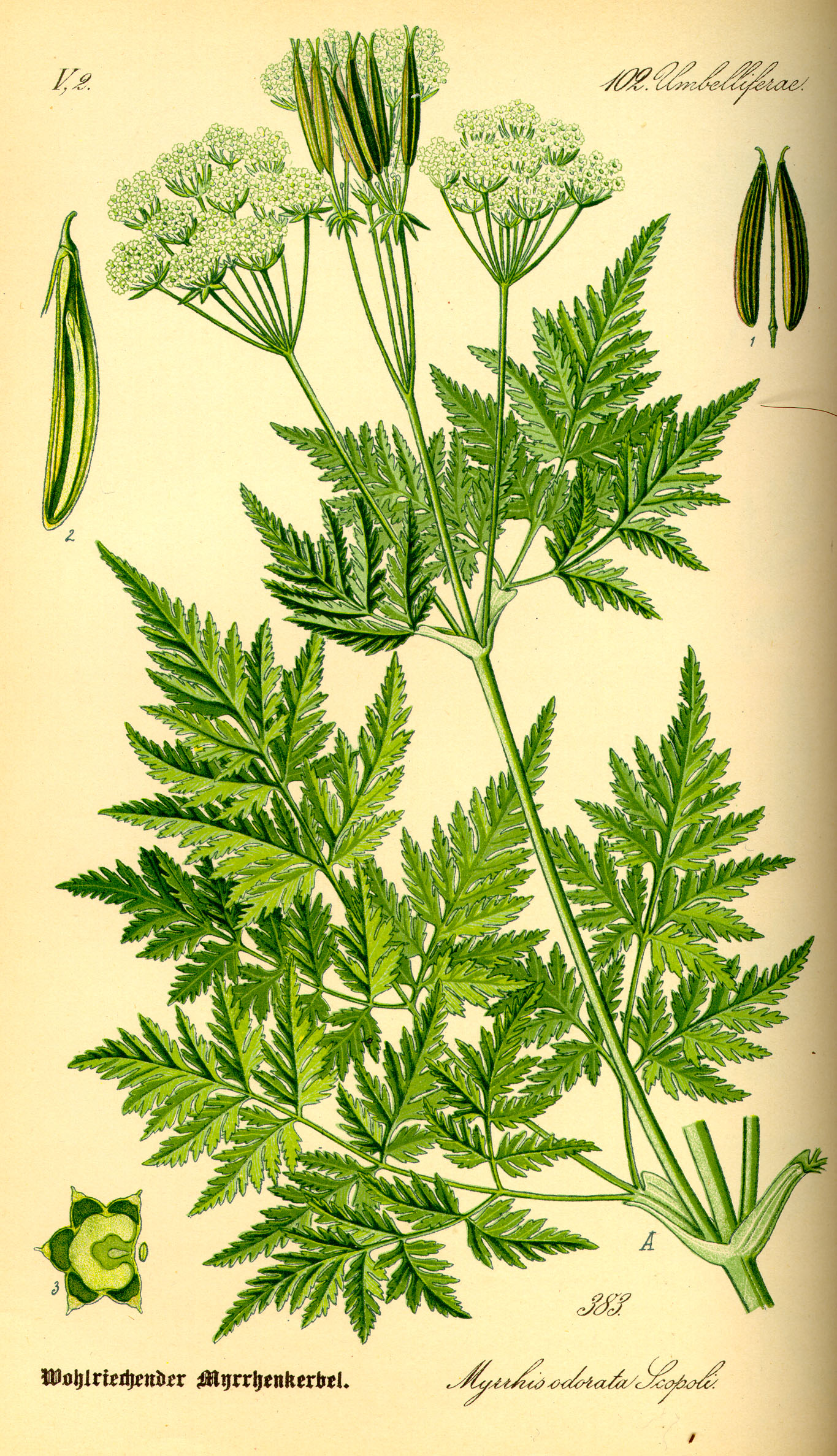
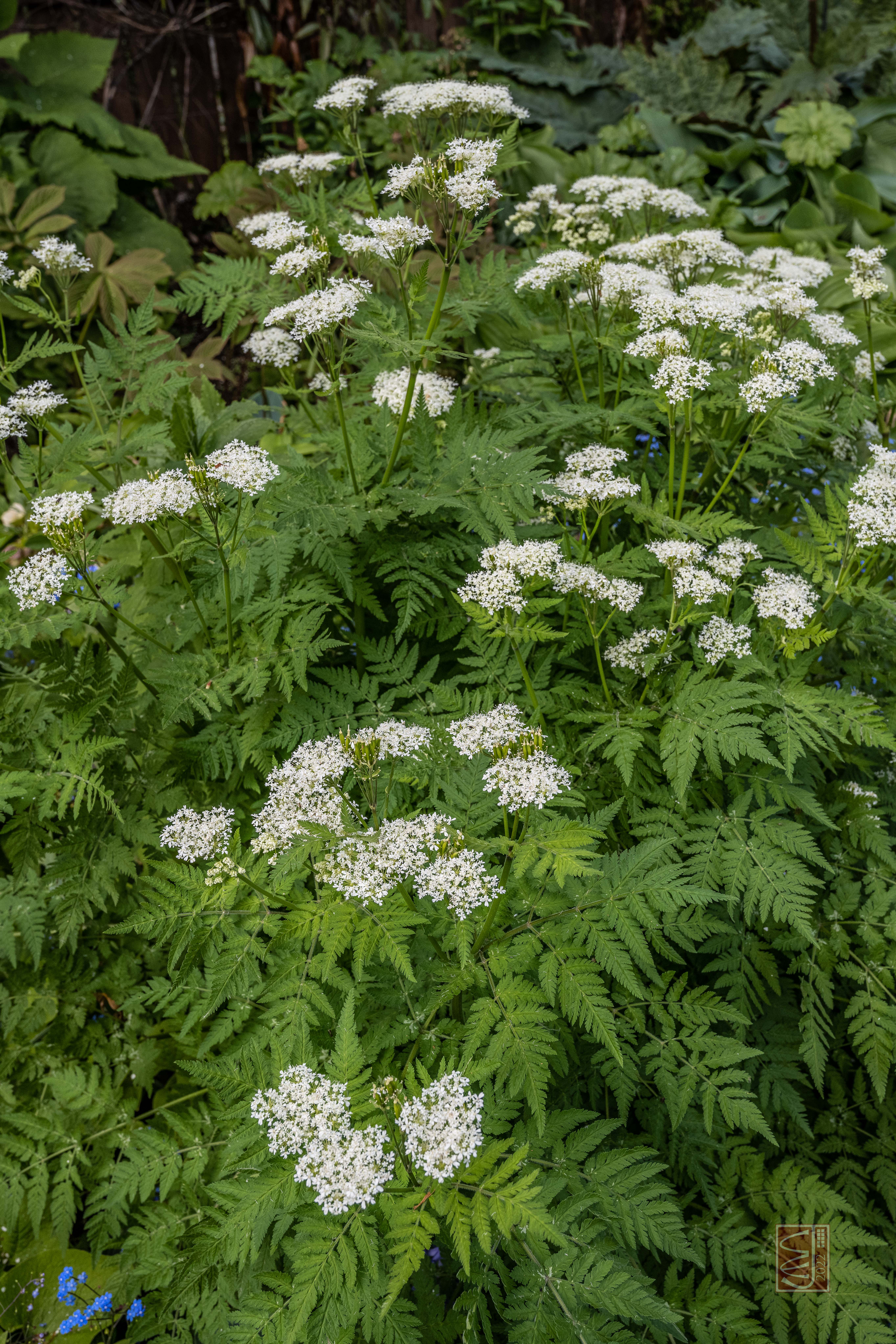
This is another member of the Family Apiaceae, the family of carrots, parsnips, caraway, angelica and many flavoursome culinary species. Members of this family nearly all bear their flowers and fruits on longish stalks which radiate upwards from the main stem to form an umbrella-like inflorescence called an umbel. Most of them are perennials, with a tap root that stores carbohydrates over winter, ready for a rapid burst of growth in the spring. Of all the Apiaceae, Myrrhis odorata is usually the earliest to bloom. I saw my first flowers two weeks ago.
This one is not a British native plant; it comes from southern and central Europe where it grows in mountain pastures. However, it has been here with us from ancient times. Ancient introductions are not frequent in the British flora and often they are relics of cultivation; Preston et al (2004) reckoned there were around 150 of these ancient aliens, from a total number of a few thousand species in the British flora. They are given the name ‘archaeophyte’.
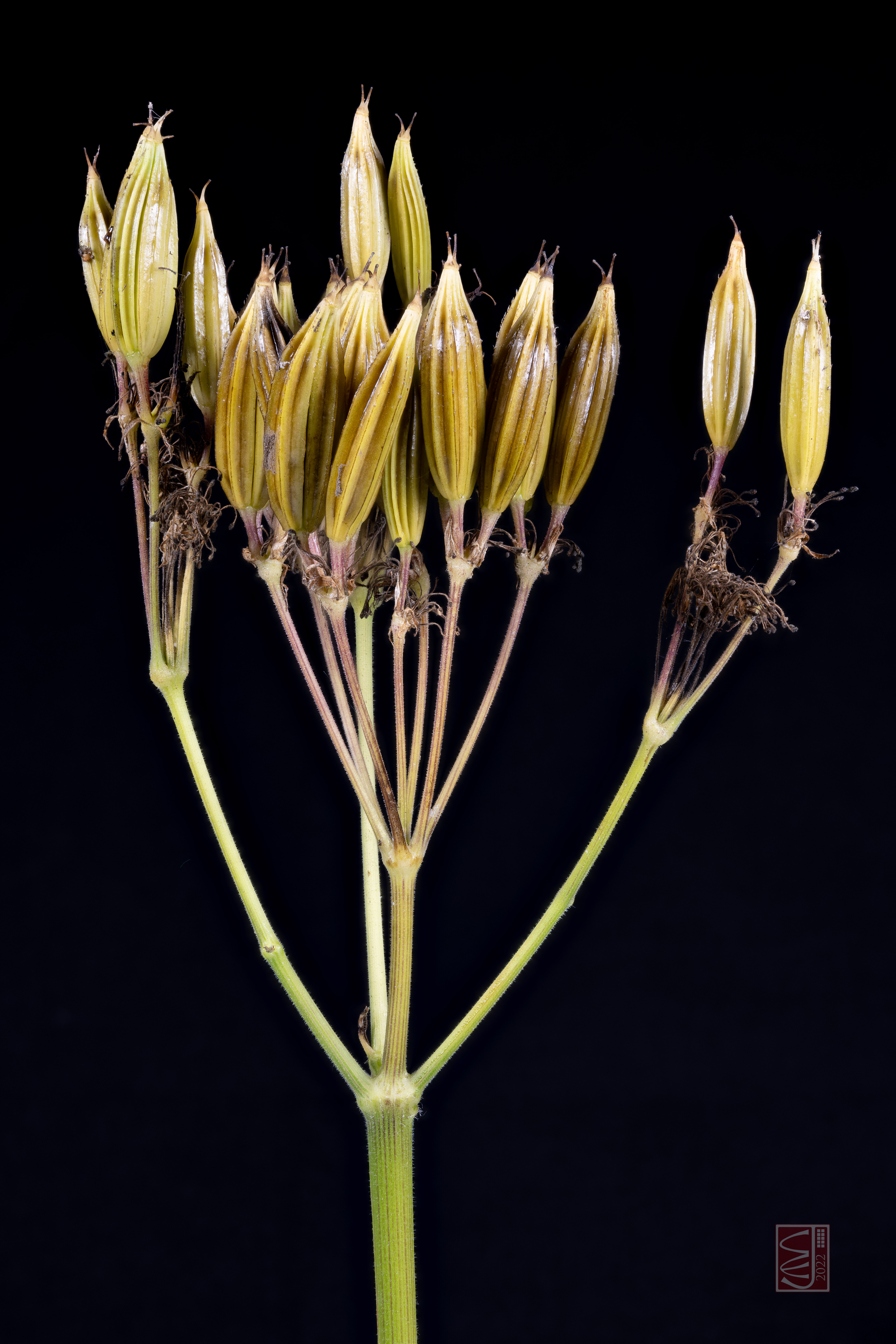
How can we tell whether any species is an archaeophyte? We know that Myrrhis odorata was used by monks in early Christian times, and traces of it are found in archaeological excavations. Crackles (1986) describes the many species found at mediaeval gardens in Hull. At one place, known as ‘Sewer Lane’, the ‘finds’ include coriander, carrot, cress, parsley and Myrrhis odorata. Preston et al (2004) discuss in some detail the concept of archaeophytes. They are the alien species which became established very early on, before the modern period. Opinion varies on the date when the modern period started; in Britain it is assumed by most botanists as 1492, the year when Europeans discovered the American continent. If, on the other hand, a species is present in a country as a sub-fossil or fossil in deposits that are several thousands of years old, it qualifies as ‘native’, whilst the many species showing up after 1492 are the modern aliens called ‘neophytes’.
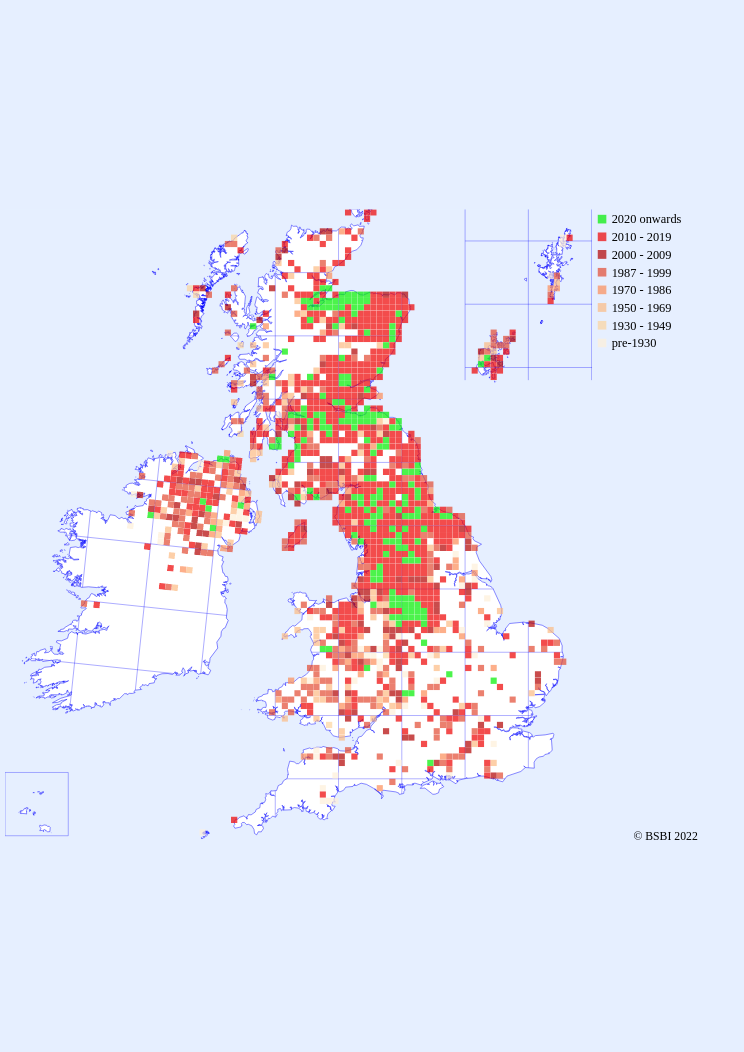
The plant is rather rare in the south of England and in the north-west of Scotland. Elsewhere it is moderately common. It grows in fertile soils, usually in the open or with light shade. I have mostly found it on hedgebanks, by old walls, in abandoned fields; Stace’s Flora says ‘waste and grassy places’. Grime et al. (1988) say it occurs also on ‘riverbanks and floodplains’. I have also seen it in a deciduous woodland. It is a long-lived perennial and it may persist in some areas from earlier cultivation; thus you may find it around old habitations, allotments and monastic buildings. It is sometimes available at Garden Centres and may be undergoing a horticultural renaissance.
North American readers should note that Sweet Cicely is also the common name for their Osmorhiza, a somewhat similar plant to Myrrhis, but with ten recognised species.
In ancient times people grew Myrrhis odorata as a pot-herb (some people think that word means a herb grown in a pot, but no; it means a herb grown ‘for the pot’ to make pottage, a stew of vegetable with meat when available). It added much-needed flavour and sweetness. It was also used in salads.

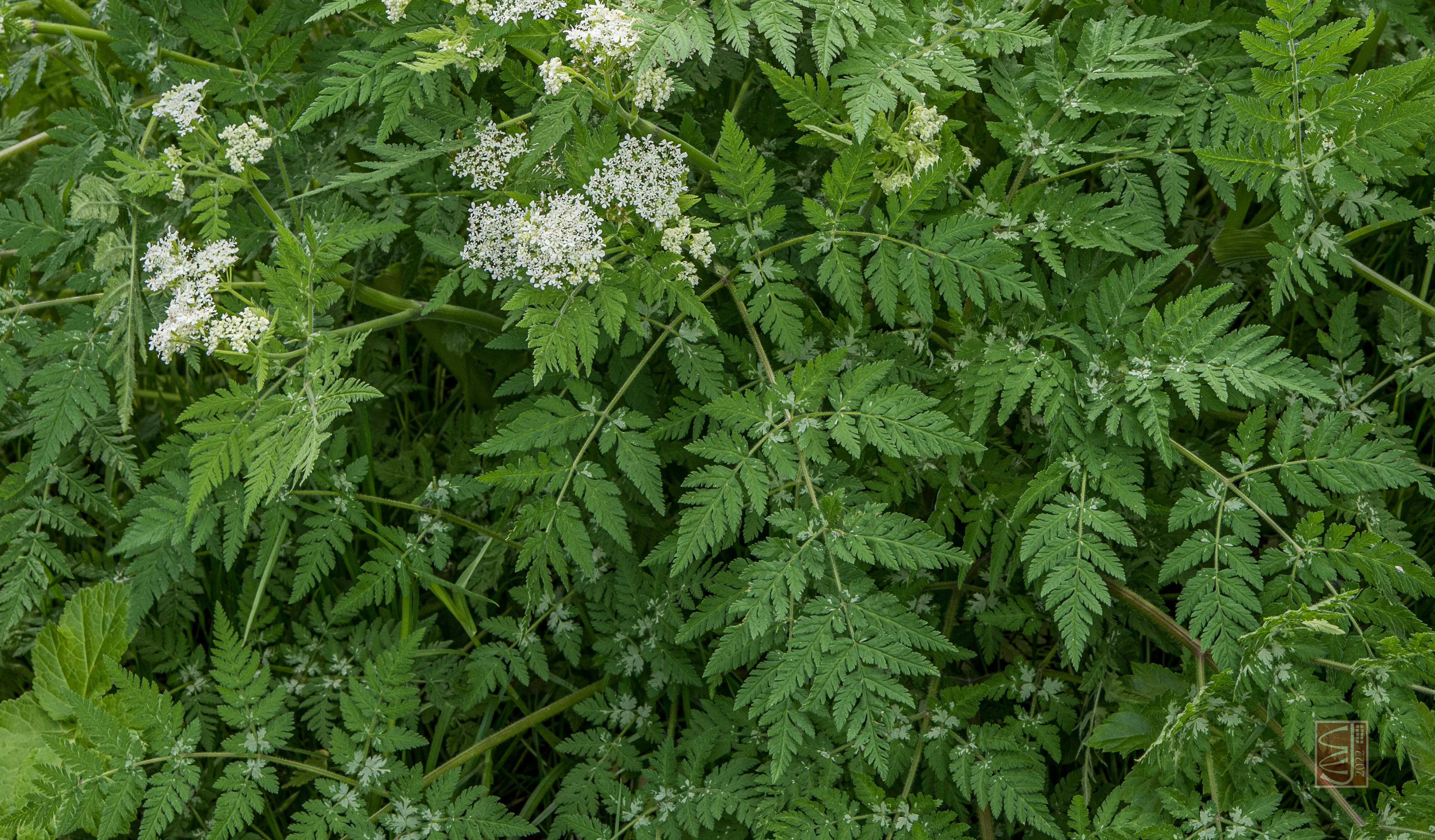
Myrrhis odorata is distinguished from other Apiaceae rather easily. It flowers early and its soft-to-touch feathery leaves have whitish patches; see the photos by Chris Jeffree. Also it smells of aniseed when crushed, or even when not crushed.
The fragrant smell of Myrrhis odorata is produced by essential oils, and the main ingredient is anethole, the flavour of aniseed. Several members of the Apiaceae have anethole, especially Anise Pimpinella anisum and Fennel (Foeniculum vulgare). These days most anethole used in flavourings comes from Star Anise which is an unrelated species from China. I believe there are also microbial species that will be the anethole-producers of the future. In the Western world, anethole is used to flavour several alcoholic beverages, including Ouzo (Greece), Sambuca (Italy) and Absinthe (France). My favourite liquor at present is Galliano (Italy) which has a delicate aniseed sweetness, not harsh like Ouzo. I suspect Fennel was originally used to flavour it; but this Italian drink (invented in Tuscany 1896 but now owned by a Dutch distiller) is probably flavoured with Star Anise and Anise. Pure anethole is not just the flavour of aniseed, it is also very sweet, many times sweeter than sugar.

The medicinal uses of the plant were elaborated by the herbalist Culpeper in 1653. The boiled roots “do much to please and warm old and cold stomachs oppressed with wind or phlegm” for example. I haven’t tried it, or any of the many other ‘cures’ he proposes. He concludes with the re-assurance “it is so harmless, you cannot use it amiss” He failed to warn his readers that it could be confused with several other poisonous members of the same family.
Myrrhis has the same etymology as Myrrh which is the dried sap of the tree Commiphora myrrha, and the Greek Myth of Myrrha. Neither the tree nor the myth have anything to do with the Apiaceae. The word comes from Semitic languages where it means ‘bitter’ but in ancient Greek it is a general term for ‘perfume’ (my source here is Wikipedia). The plant was properly described and named by Philip Miller, plant collector and Chief Botanist at the Chelsea Physic Garden from 1722, hence the plant’s full name is written Myrrhis odorata Mill. His choice of the name Myrrhis may not seem particularly apt, but he was following Gerard’s Herbal of 1597 (https://www.exclassics.com/herbal/herbalv40084.htm), and Gerard was probably following Pliny’s writings.
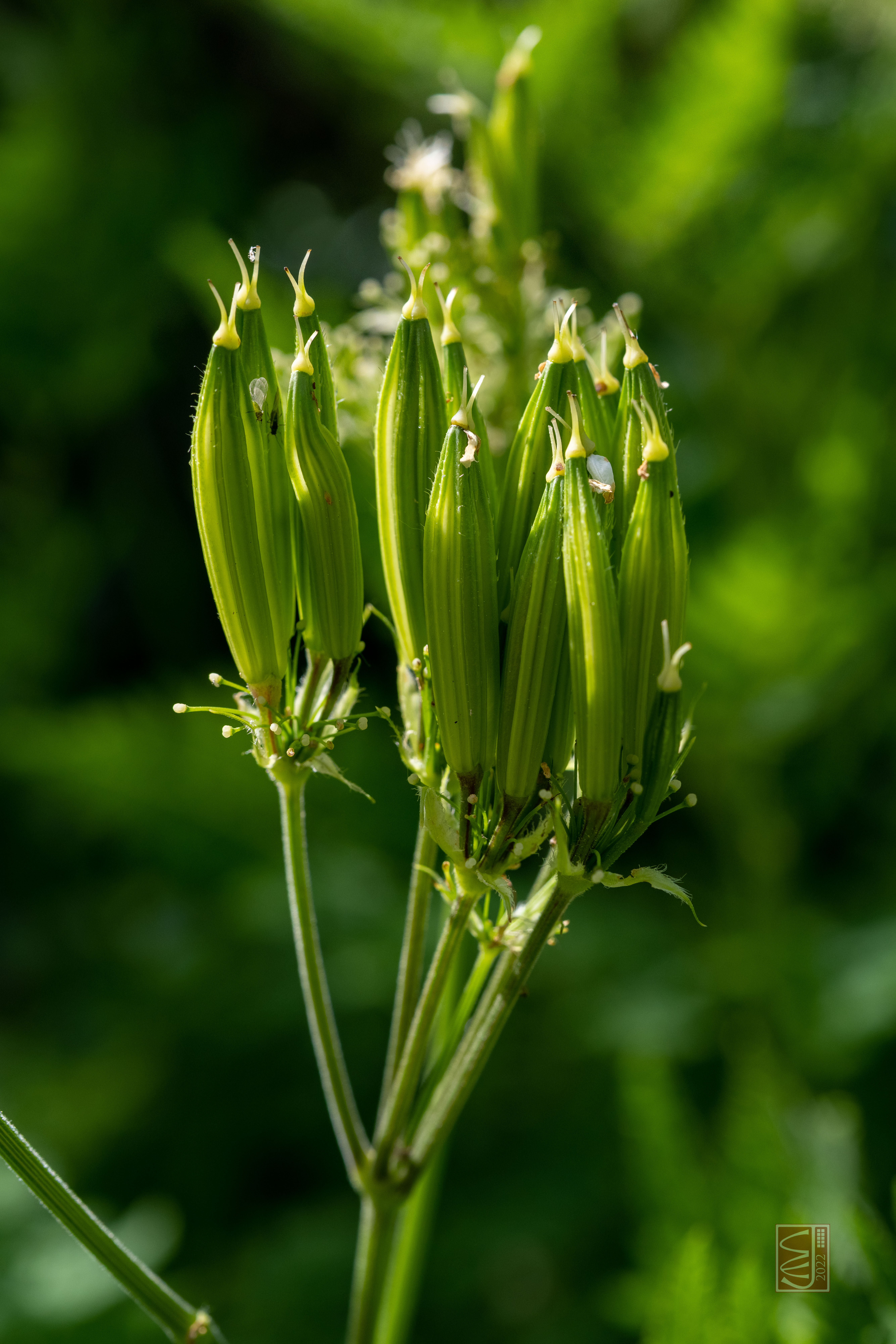
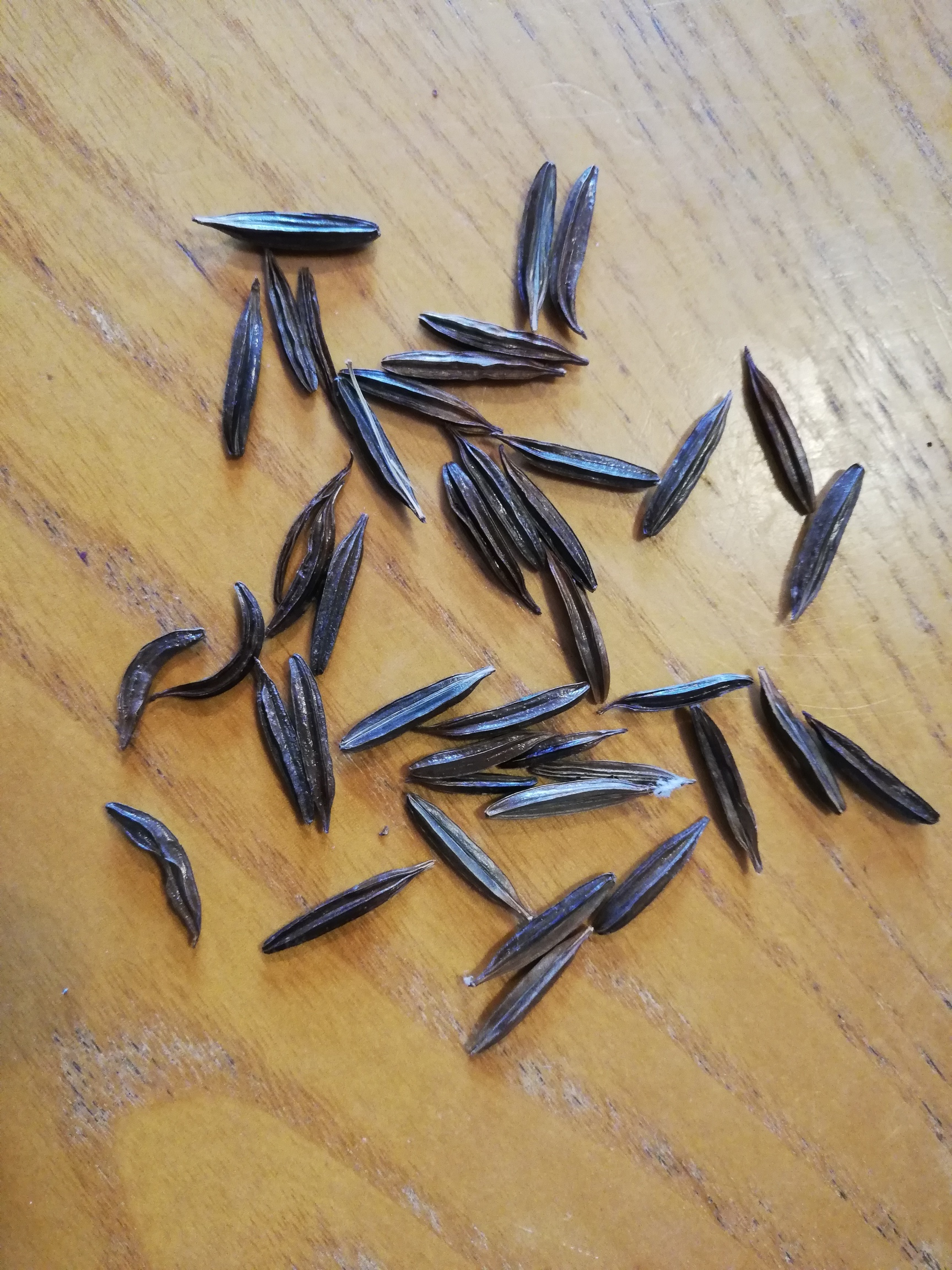
I have a supply of saved seeds which I am trying to germinate. I’ve read that the germination time is long: 90 days has been reported. In storage, the seeds assume a glossy, metallic appearance (see my photo below). I can find no detailed reports on germination requirements: I read that chilling is required and perhaps there are inhibitors that need to be leached out first. We will see, in due course.
The distribution map is unusual and it suggests a rather narrow range of climatic tolerance – the plant seems to avoid the driest and wettest parts of our Islands. Information on the ecology/physiology of this species is rather hard-to-find. My search on the Web-of-Science reveals only eight science publications, mostly concerning anethole. Grime et al (1988) provide a thorough summary of what was known of the ecology around 30 years ago, and conclude that Myrrhis odorata is quite a good competitor, with similar habitats to Alliaria petiolata (Hedge Garlic), Galium aparine (Cleavers), Petasites hybridus (Butterbur), Galeopsis tetrahit (Common Hemp-Nettle) and Impatiens glandulifera (Himalayan Balsam). It is not, however, invasive. Nor does it travel much: there are a few North American records and elsewhere in the world, just two records in New Zealand (gbif.org/species/3034681).
References
Crackles FE (1986) Medieval Gardens in Hull: Archaeological Evidence. Garden History 14, 1-5.
Grime JP, Hodgson JG & Hunt R (1988) Comparative Plant Ecology. Unwin Hyman. London.
Preston CD, Pearman DA & Hall AR (2004) Archaeophytes in Britain. Botanical Journal of the Linnean Society 145, 257-294.
©John Grace