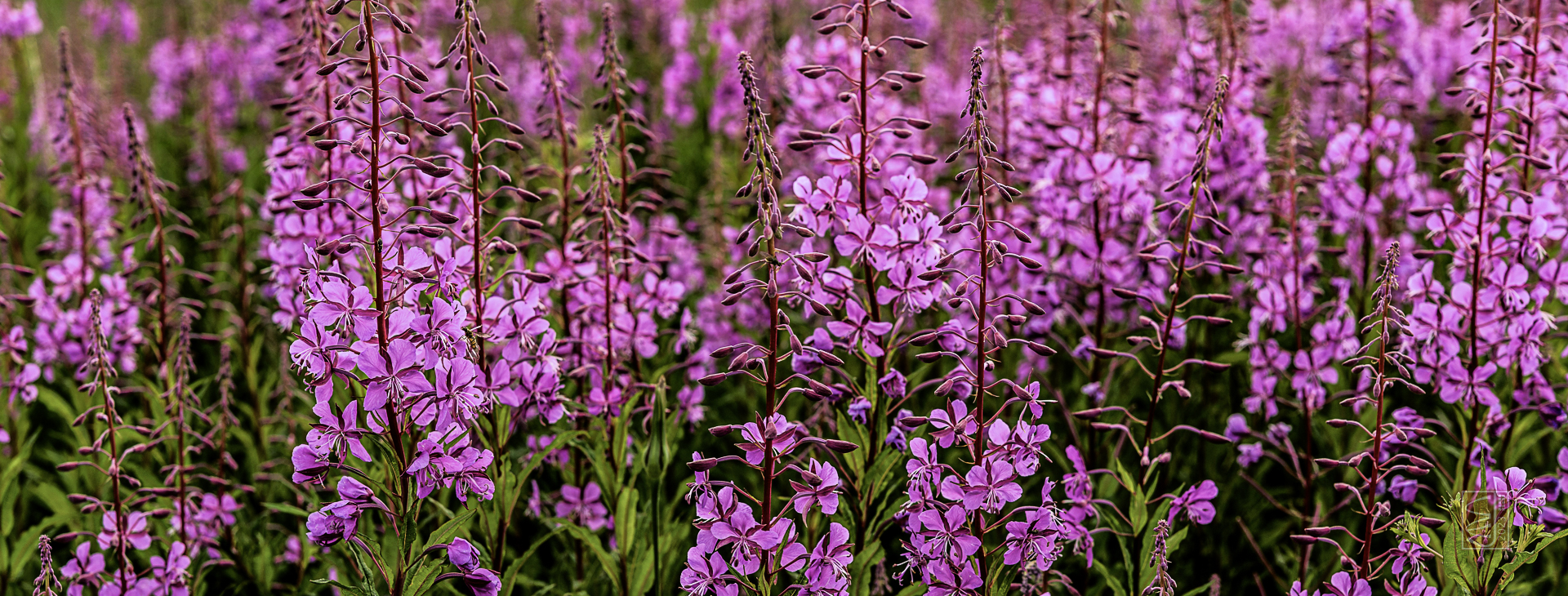
Chamaenerion angustifolium – 12th Sept. 2022 – Rosebay Willow-herb
Once upon a time there lived a rather uncommon herb, considered ‘stately’ and sometimes grown as an ‘ornamental’ in people’s gardens. It had beautiful spikes of purplish-red flowers in the summer and produced copious wind-borne seeds in the Autumn. Gerard’s Herbal (1597) described it as having “brave flowers of great beauty”. Some 200 years later, when Curtis wrote his monumental Flora Londinensis (1775-98), he noted that it grew in the wild but thought it was a garden escape. By the year 1920, it was “not common, and in many places introduced” (Bentham and Hooker 1920).
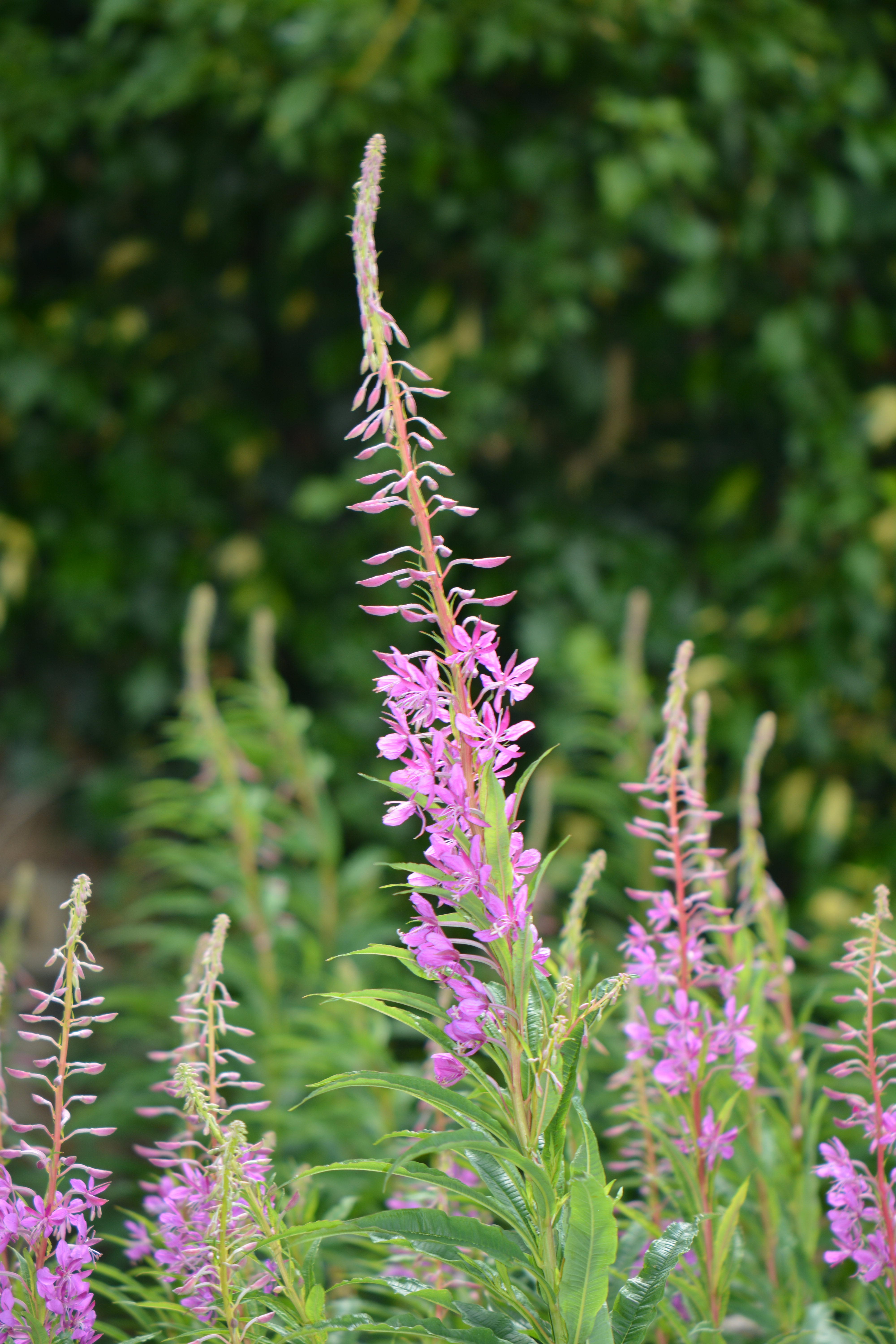
Flower spikes. Individual flowers open first at the base of each spike. Flowering starts in early summer and is mostly complete by September. Photo: John Grace.
Yes, we are talking about the native plant, Rosebay Willow-herb, in the family Onagraceae (willow-herbs, evening primroses and fuschias). It’s very common now. At this time of year, in towns and cities, you will see its plumed seeds floating in the air, following every breeze and eddy. The September ‘seed rain’ is probably enough to supply at least one seed to every square metre of our urban landscape. Plants have been recorded throughout the whole of England, Wales and Scotland. It is found in almost all European countries and it has a circumpolar distribution. What is the secret of its success: how did it go from being ‘uncommon’ to ‘very common’?
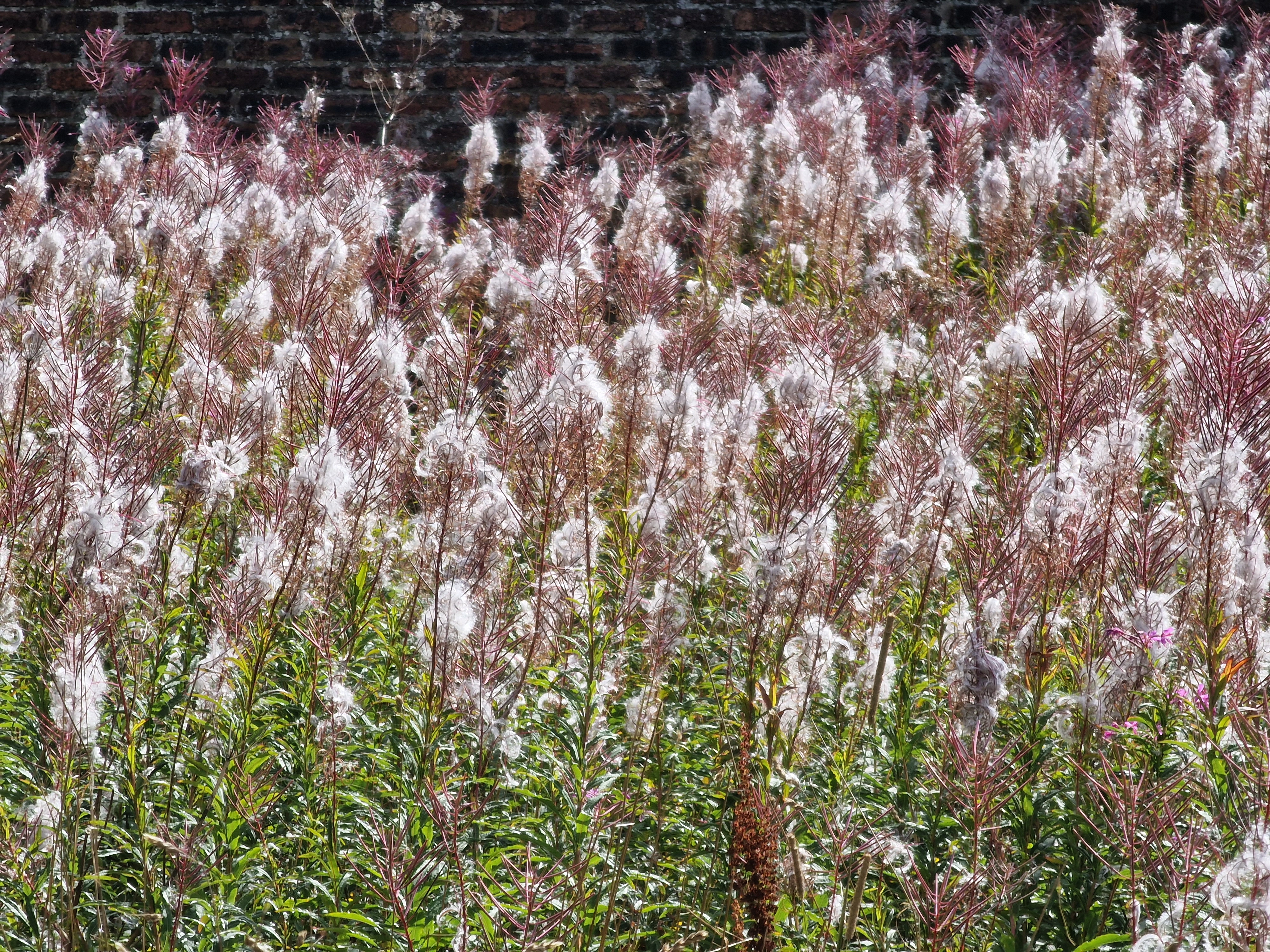
Clump of Chamaenerion angustifolium on the edge of a public park (Fairmilehead Park, Edinburgh) pictured in June (left) and later, when seeds are being released in early September (right). Photos: John Grace.
To find the answer I went to Sir Edward Salisbury’s book, Weeds and Aliens, published in 1961. At this time it was already becoming common. Salisbury cites the motor car and the habit of lighting fires during picnicking as a source of heath fires, combined with ‘the contemporaneous growth of cigarette smoking’. The plant has the American name of ‘Fireweed’ and is one of the first to colonise burnt ground. He also stresses the significance of the bombing of London and other cities during the Second World War, which created many derelict sites on which this species establishes itself.

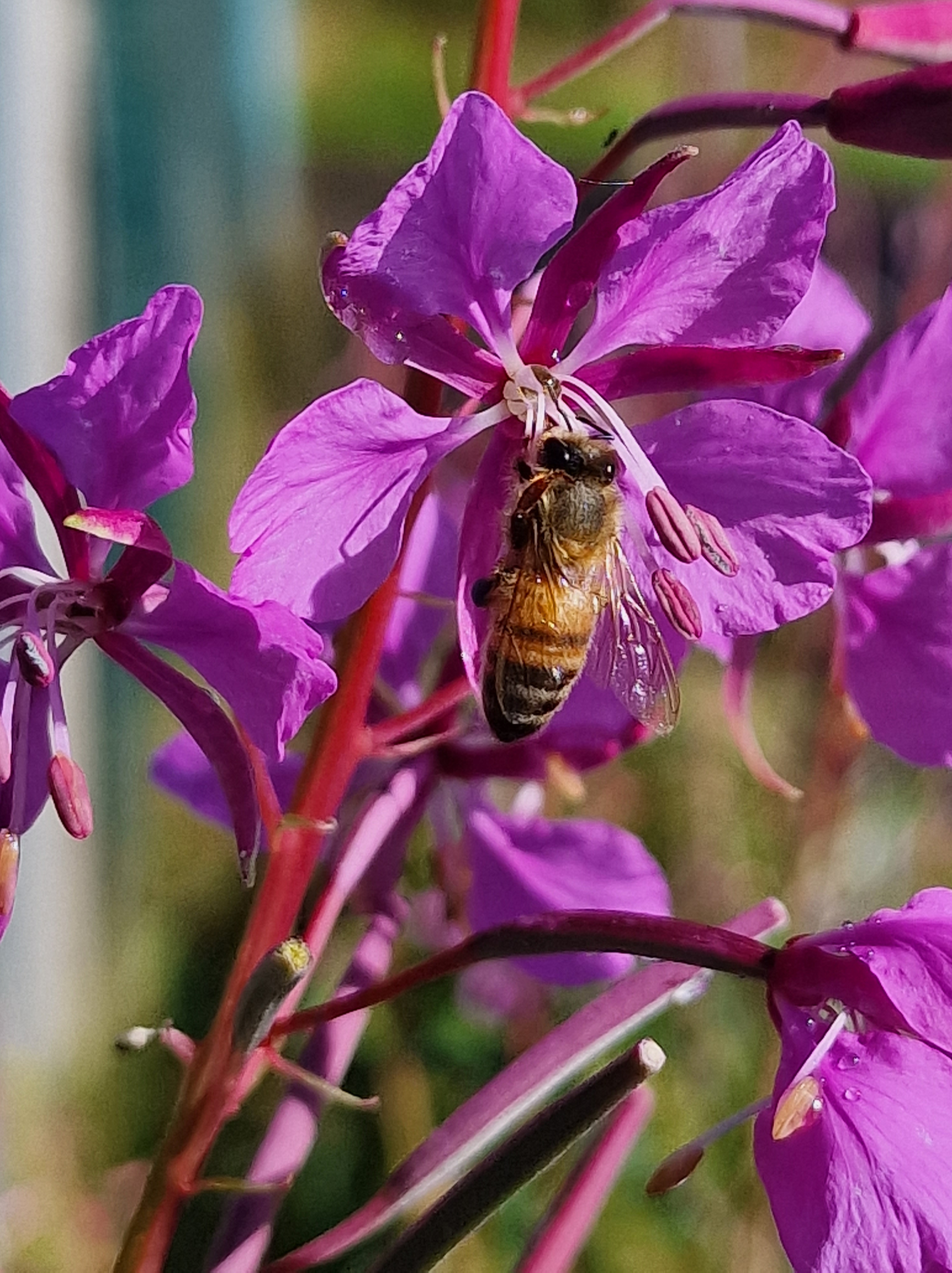
Floral biology to show 4 petals, 8 stamens and 4-lobed stigma. On the right, the same flower is being visited by a bee. Early September, Aviemore. Photos: John Grace.
This cannot be the full answer. The habitat is “waste ground, woodland clearings, embankments, rocky places”. The plant sometimes occurs on scree at mountain sites, and on the top of walls. More generally, it is one of a few species occurring in the early stages of plant succession on disturbed ground. Before the 19th Century there was rather little disturbed ground. But soon, in the 20th Century disturbed ground became widespread, due to the power of the internal combustion engine to assist widespread industrialisation, along with the creation of roads, railways and building sites, all for economic development and the well-being of an ever-expanding human population.
Some clues may lie in the biology of the plant. Salisbury reckoned that one plant produces around 80,000 seeds, each with a parachute of numerous long silky hairs. He assessed the efficacy of seed dispersal by timing the fall of seeds dropped from a height of about 3 metres in still air. He compared nine species (I expect he ended up with many seeds on the carpet of his living room). Buddleja took 5.4 seconds to fall, whereas Rosebay Willow-herb was the slowest of all, requiring 43 seconds on average. Coltsfoot came second but it took twice as long. (In the spirit of scientific inquiry I tried this myself, and verified his data for Rosebay.) This means that the drag forces exerted by air on the seeds are very high indeed, and thus they are easily carried far in the wind.
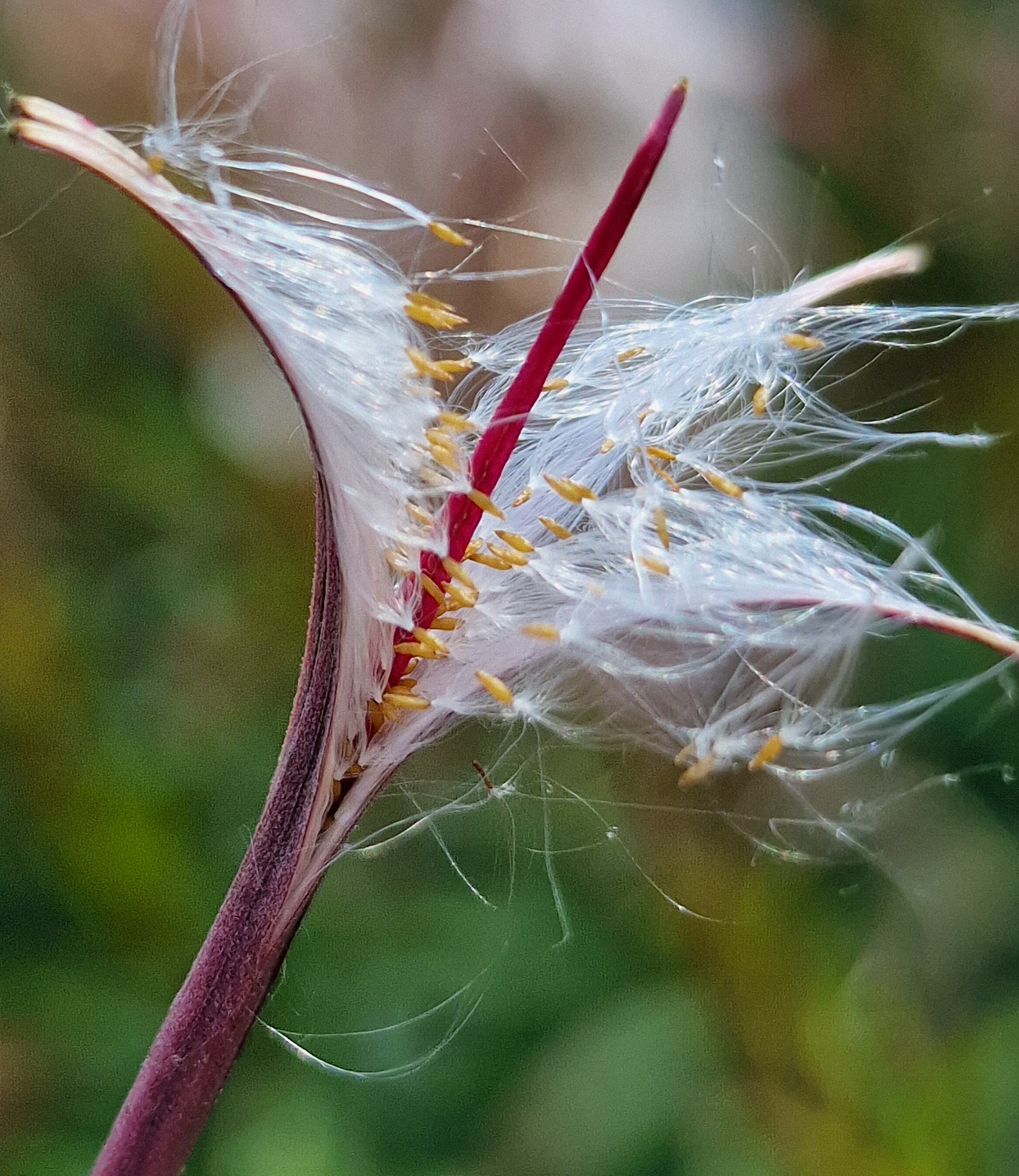
Seeds being released from their capsule. They adhere to each other and to the mother tissues (by entanglement or electrostatic charge?) until tossed by wind. Photo: John Grace.
There was a view, advanced by JW Heslop-Harrison, that the rapid expansion was the result of an ‘invasion’ of North American genotypes, but this idea is not supported by modern data.
We often see clumps of the plant, sometimes extensive, many metres wide. This is because it has a vegetative means of reproduction – it possesses rhizomes which creep in the soil and form shoots in the spring. Thus, a clonal patch is formed from a single pioneer seedling. Dunnett and Willis (2000) report annual observations on a single clump of the plant over a 39-year period. There was an initial rise in the size of the clump, then a decline followed by a partial recovery. The authors looked at meteorological data: they found that shoot biomass and flowering were promoted by warm summers and mild winters. We are of course getting more warmth these days, and that should increase the production of seed by the plant.
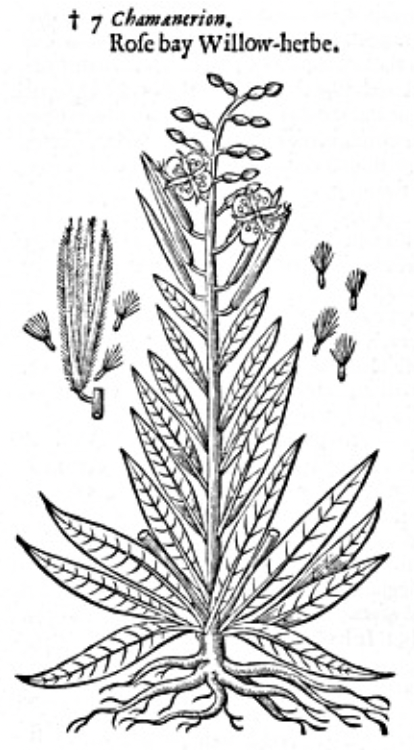
Gerard’s illustration, published in 1597. He said: “This being thought by some to be a bastard kind, is (as I do esteem it) of all the rest the most goodly and stately plant, having leaves like the greater Willow or Osier. The branches come out of the ground in great numbers, growing to the height of six foot, garnished with brave flowers of great beauty, consisting of four leaves apiece, of an orient purple colour, having some threads in the middle of a yellow colour. The cod is long like the last spoken of; and full of downy matter, which flieth away with the wind when the cod is opened”.
Information on the floral biology is provided by Myerscough (1980). Each flower has four petals and eight stamens. Flowers make abundant nectar (3.3 mg for a single flower, 200 flowers in a raceme). They are protandrous and pollinated by bees, flies and beetles. Fruit is a linear capsule containing many seeds, each 2 mm long. Seed set is generally very high, and seeds remain viable for about 18 months. A few seeds germinate in autumn and form over-wintering seedlings but most germinate in spring and grow rapidly.
Grime et al. (1988) include the species in their huge survey of the ecology of British vascular plants. They found it to be rare in grasslands and wetlands but abundant on wastelands, spoil heaps and woodlands. It was found on soil pH that ranged very widely from acid to alkaline. The growth rate was high when measured in optimal conditions, and in Grime’s analysis it emerged as a strong competitor.
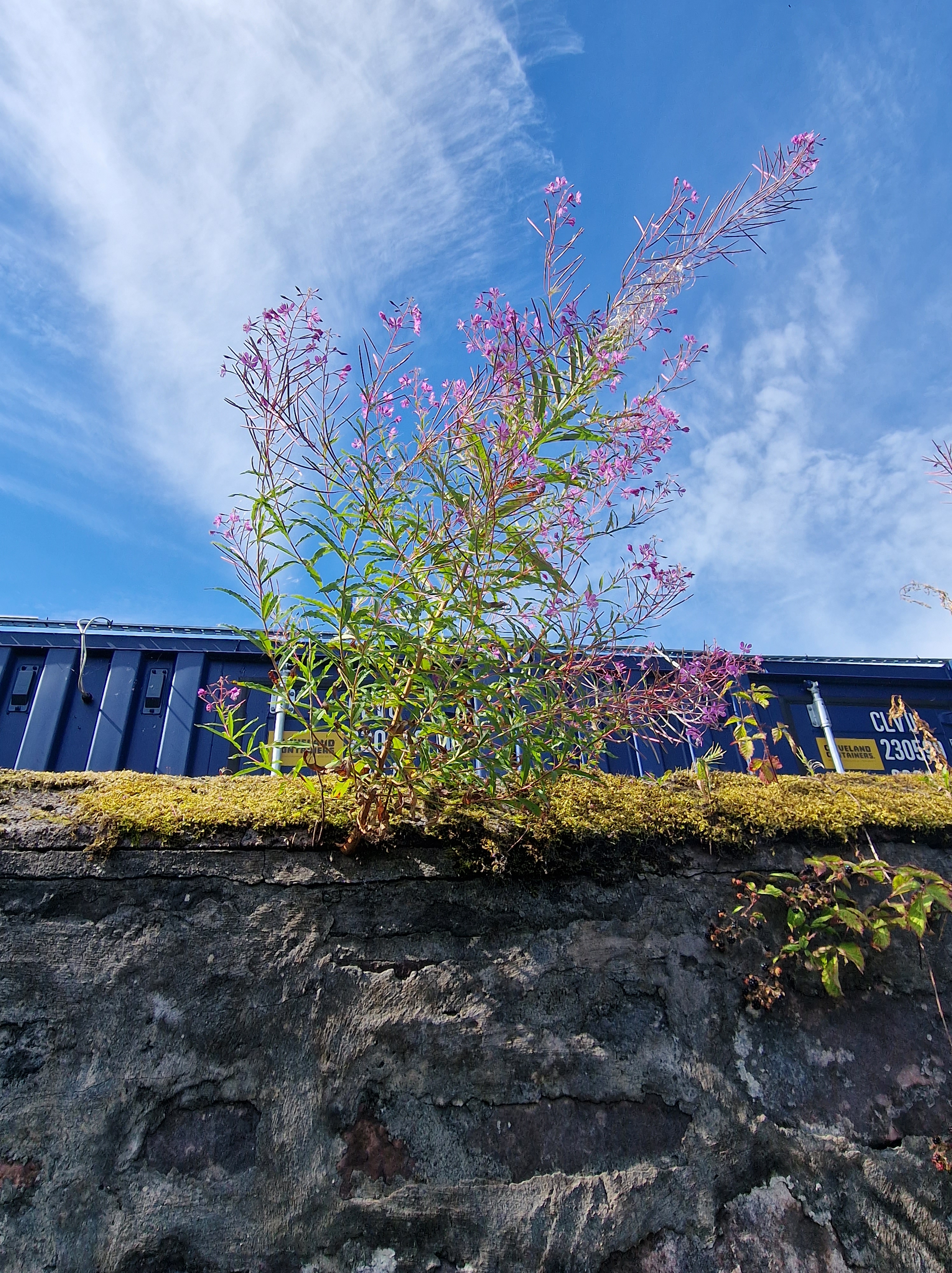
Lone plant growing on the wall around a whisky storage facility at Alexandria, West Dunbartonshire, Scotland. Note that it is much-branched, quite unlike the typical form shown in the images above. Photo: John Grace.
The plant is edible, and can be prepared as described in the web site www.eatweeds.co.uk. Some say it tastes like asparagus; and the leaves may be used like spinach. In Russia it was used for centuries to make a kind of tea. It is appreciated by beekeepers as a source of nectar.
It has changed its name from Epilobium angustifolium to Chamaenerion angustifolium then to Chamerion angustifolium and more recently back to Chamaenerion angustifolium. We were explaining to an 8-year old that plants change their name sometimes. She screwed up her face and loudly said “That’s silly”. Quite so.
The species does occasionally occur in a literary context. My favourite in is the book Flower Fairies by CB Barker. She writes “On the breeze my fluff is blown; so my airy seeds are sown. Where the earth is burnt and sad, I will come to make it glad. All forlorn and ruined places, all neglected empty spaces, I can cover, only think, with a mass of rosy pink”.
References
Bentham G and Hooker JD (1920) Handbook of The British Flora: A Description of the Flowering Plants and Ferns Indigenous to, or Naturalised in The British Isles. Lovell Reeve & Co., Ltd., London.
Dunnett N and Willis A (2000) Dynamics of Chamerion angustifolium in grassland vegetation over a thirty-nine-year period. Plant Ecology 148, 43–50
Grime JP et al. (1988) Comparative Plant Ecology. Unwin Hyman, London.
Myerscough P.J (1980). Biological flora of the British Isles.:Epilobium angustifolium L. (Chamaenerion angustifolium (L.) Scop.) Journal of Ecology 68, 1047-1074.
Salisbury E (1961) Weeds and Aliens. Collins, London.
©John Grace