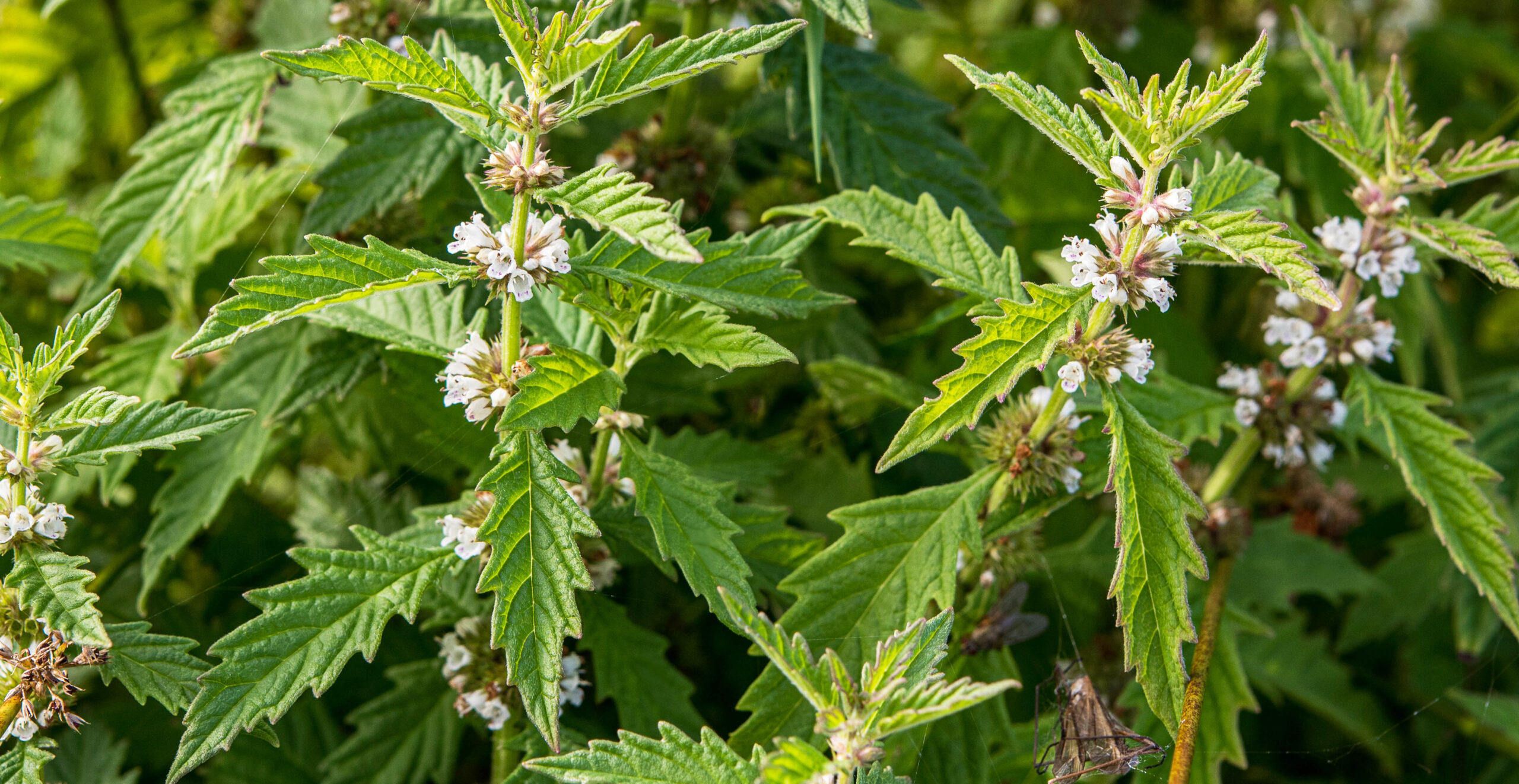
Lycopus europaeus – 19th Sept. 2022 – Gypsywort or Water Horehound
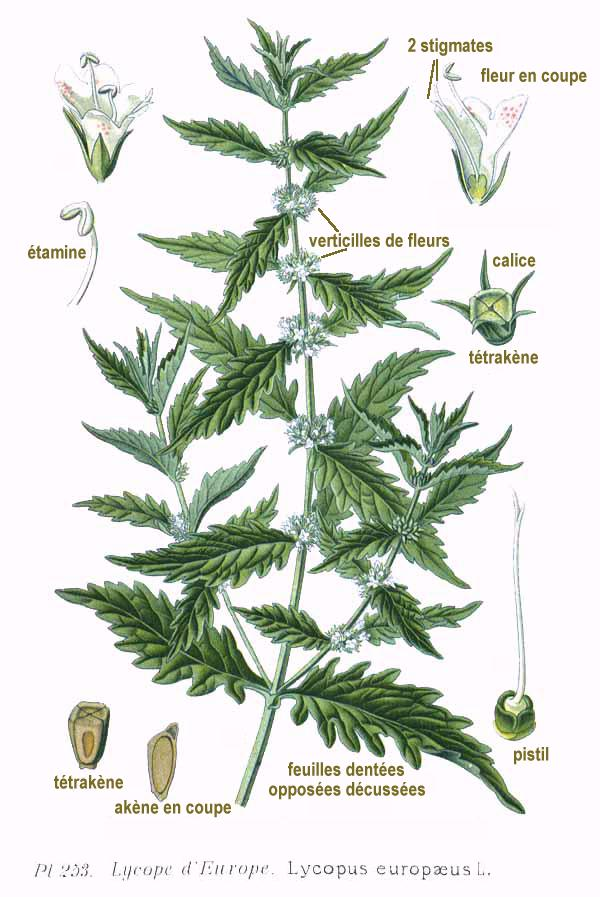
Painting by Amédée Masclef (1858-1916). He was a French priest and botanist who wrote and illustrated a three-volume work , Atlas des plantes de France published in 1891. Image is in the public domain, via Wikimedia Commons.
Last week we visited Elgin, a town of 25,000 inhabitants in NE Scotland, known for the ruins of its historic cathedral and the fine modern church of St Giles. The River Lossie flows through the north of the town, and we spent two happy hours identifying plants growing on its south bank. We were forced to shelter from a severe rainstorm, crouched like hoboes under a convenient bridge; however, this period was fruitfully spent as the shaded stretch yielded several new species for our notebooks. Briefly, as we fumbled through our rain-soaked notes, we shared the refuge with a party of playgroup children, neatly roped together for safety and swaddled in colourful plastic-wear, contrasting with our garbs of grey and green. We must have seemed just as strange to them and they did to us: beings from another world.
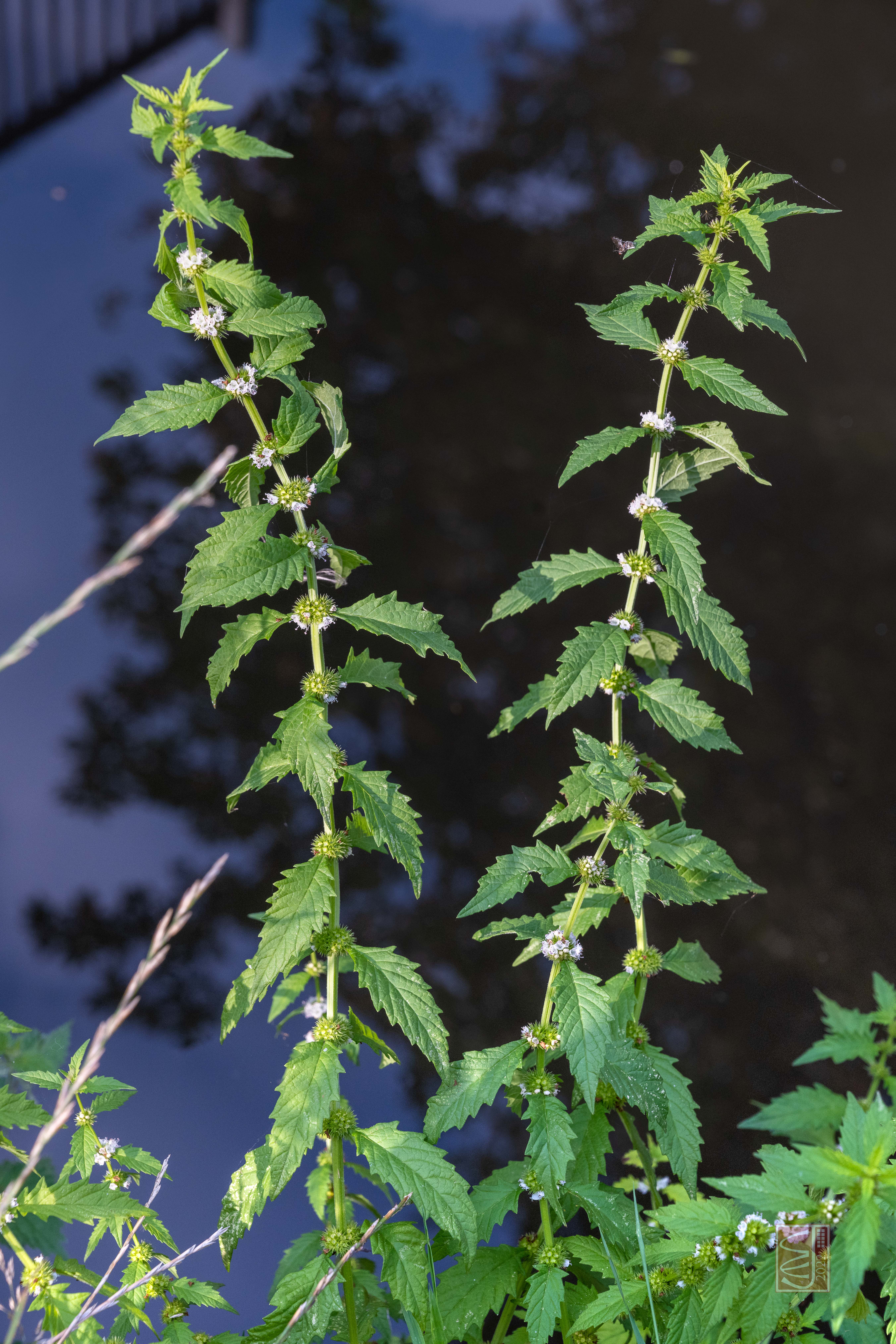
Lycopus europaeus, Photo: Chris Jeffree.
One of the species we saw was Lycopus europaeus, known as Gypsywort. This is fairly common in England and Wales, but in Scotland it is mostly found on the West coast. On the East it is ‘local’ (you have to know where to look). Records from Midlothian show it to be a ‘regular’ along the Union Canal and Cobbinshaw Reservoir, and there is a single record from Hunter’s Bog, a site in the middle of Holyrood Park, Edinburgh, where once there was a military rifle range.
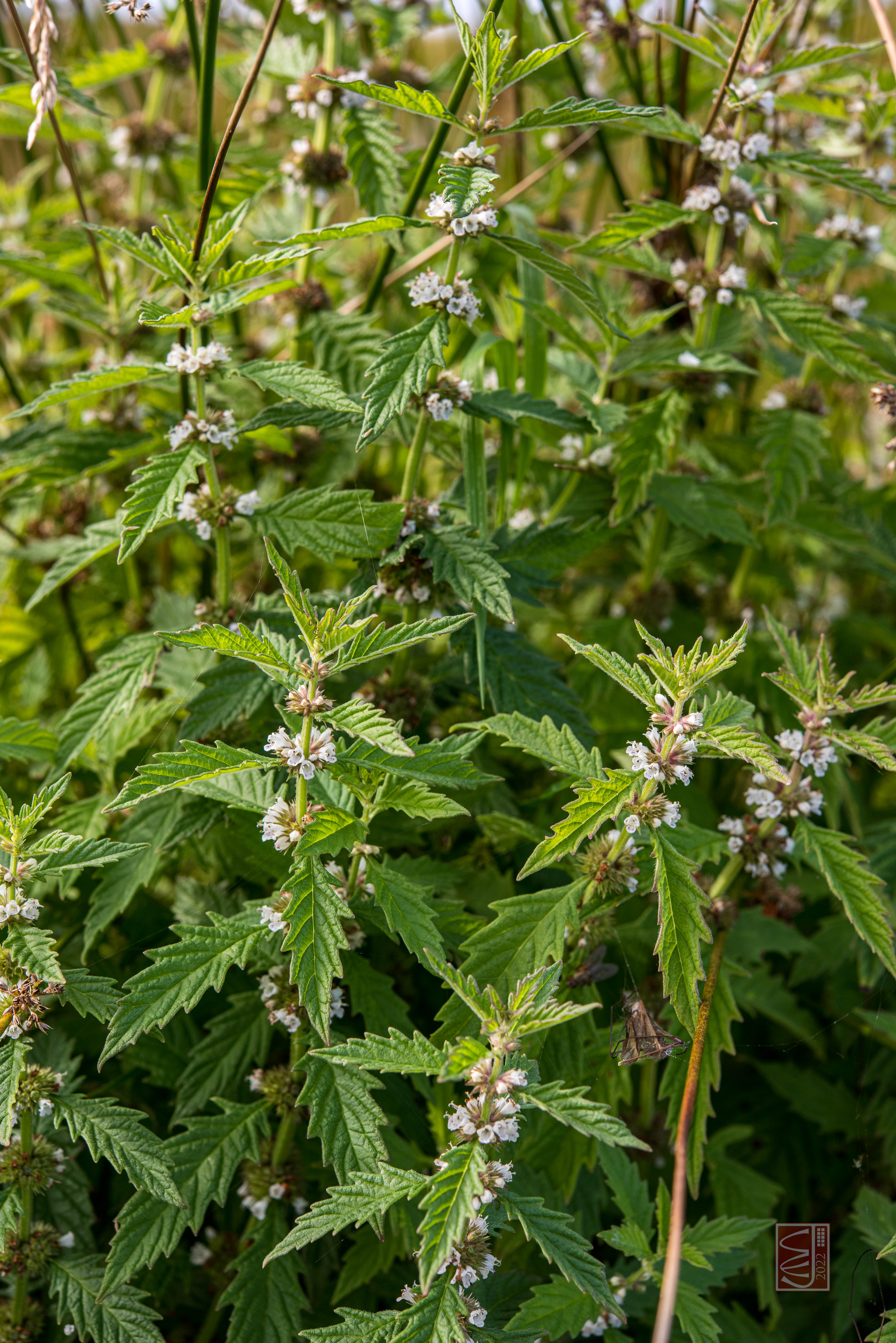
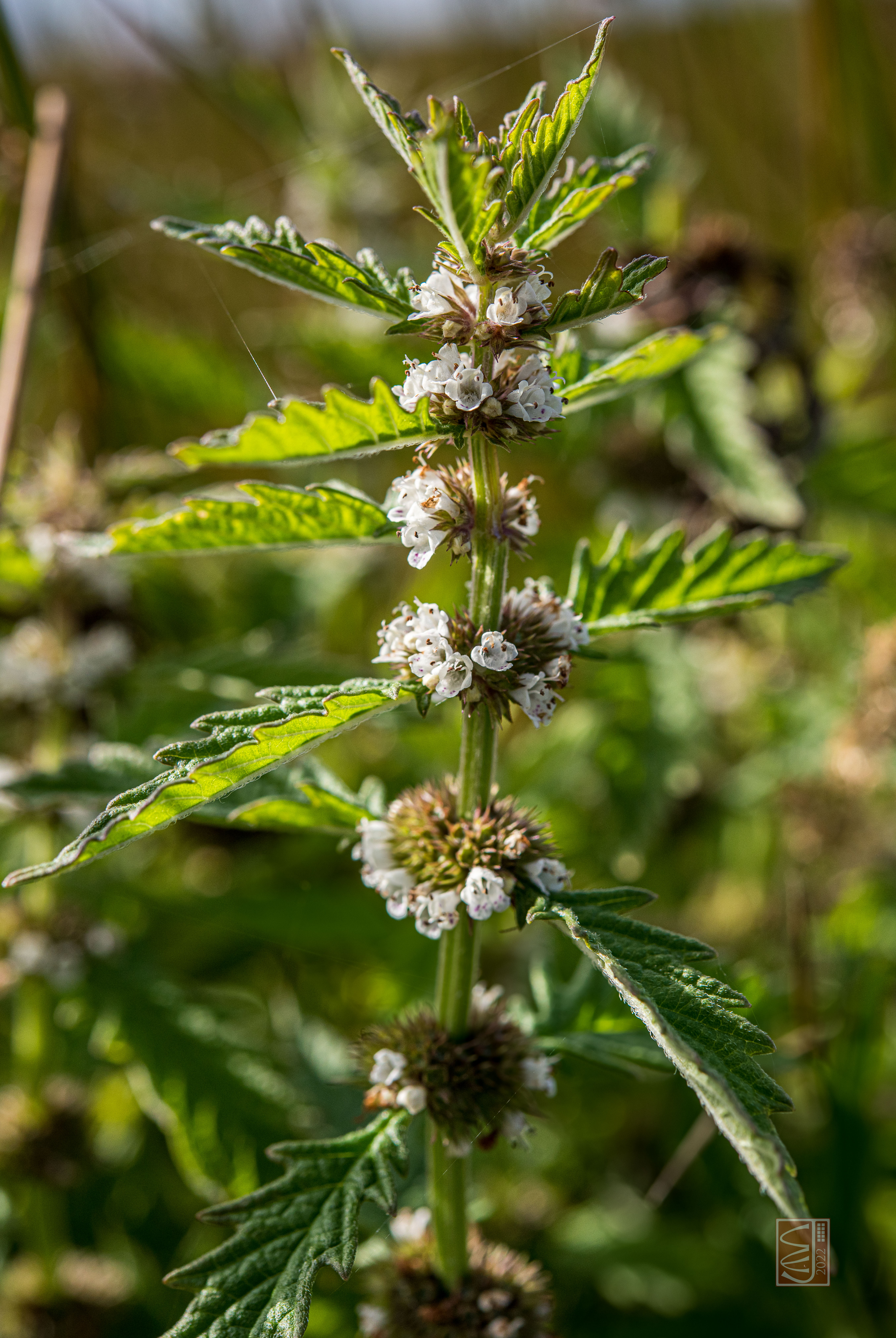
Lycopus europaeus, Firemore Beach, Loch Awe, Scottish Highlands. Photos : Chris Jeffree.
Gypsywort is a native wetland species (probably first recorded by Henry Lyte in his book A Niewe Herball, 1578); it is a rhizomatous perennial belonging to the Lamiaceae. It has the usual characters of the family: square stem, opposite leaves, hairy, upright stem (up to 1 metre); but its flowers are almost actinomorphic, quite small in comparison with its cousins the Dead-nettles, Sages and Mints. Unlike most of the Family, it is not scented.
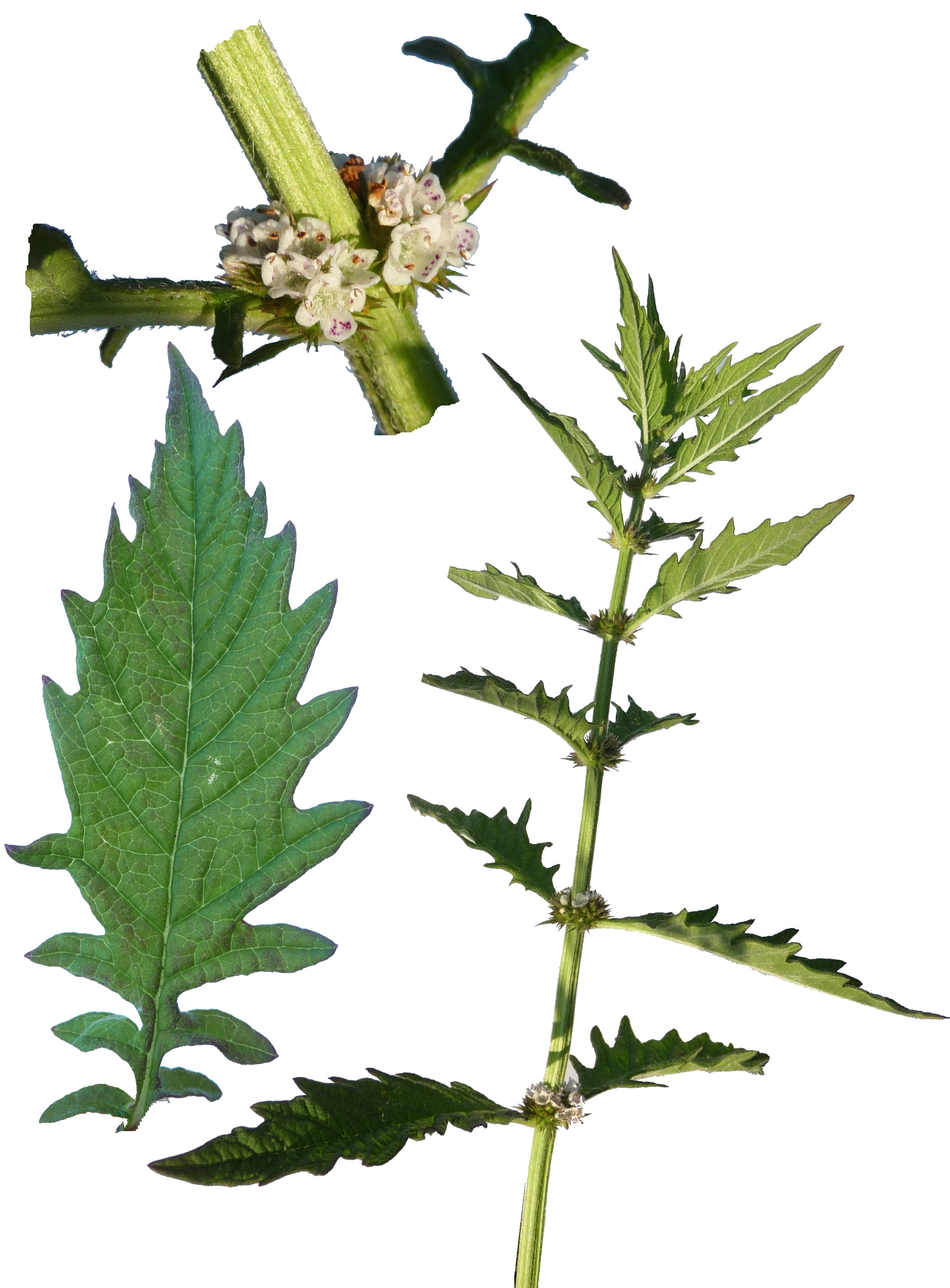
Key features of Gypsywort: square stem, red-spotted flowers tending towards radially symmetrical, leaves indented and in opposite pairs, generally hairy. Photo: Richard Milne.
Its habitats include fens, wet fields, lakes, canals and rivers. The ecological characteristics of the species are as follows. It thrives in open conditions, requires a wet substrate, can tolerate a wide range of pH, prefers a moderate supply of nitrogen and does not tolerate salinity (these assessments are based the plant attribute data base provided by Mark Hill’s PLANTATT data base). The species thrives on soft-bottomed shores, where there is rotting plant litter to provide nutrients.
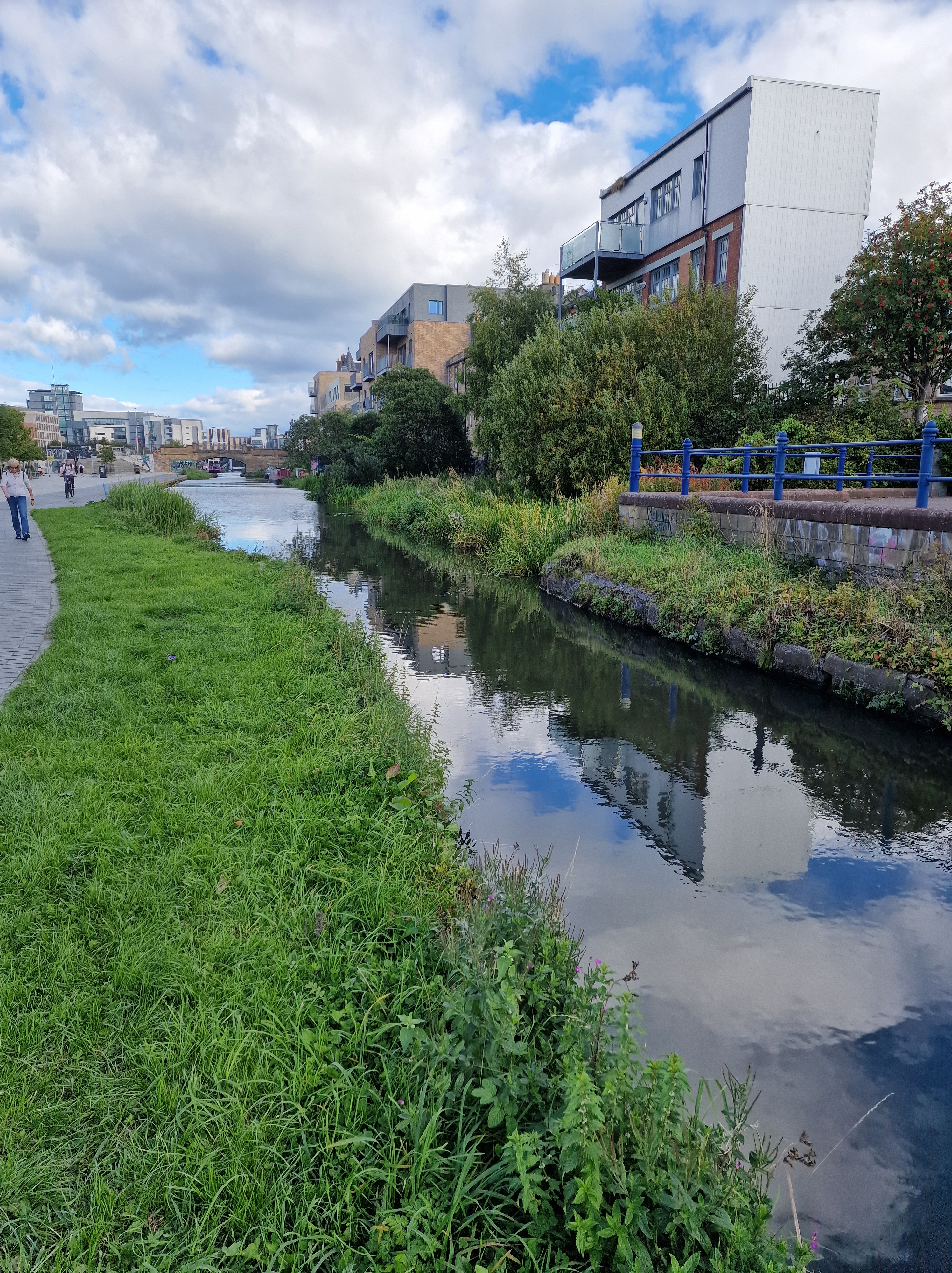
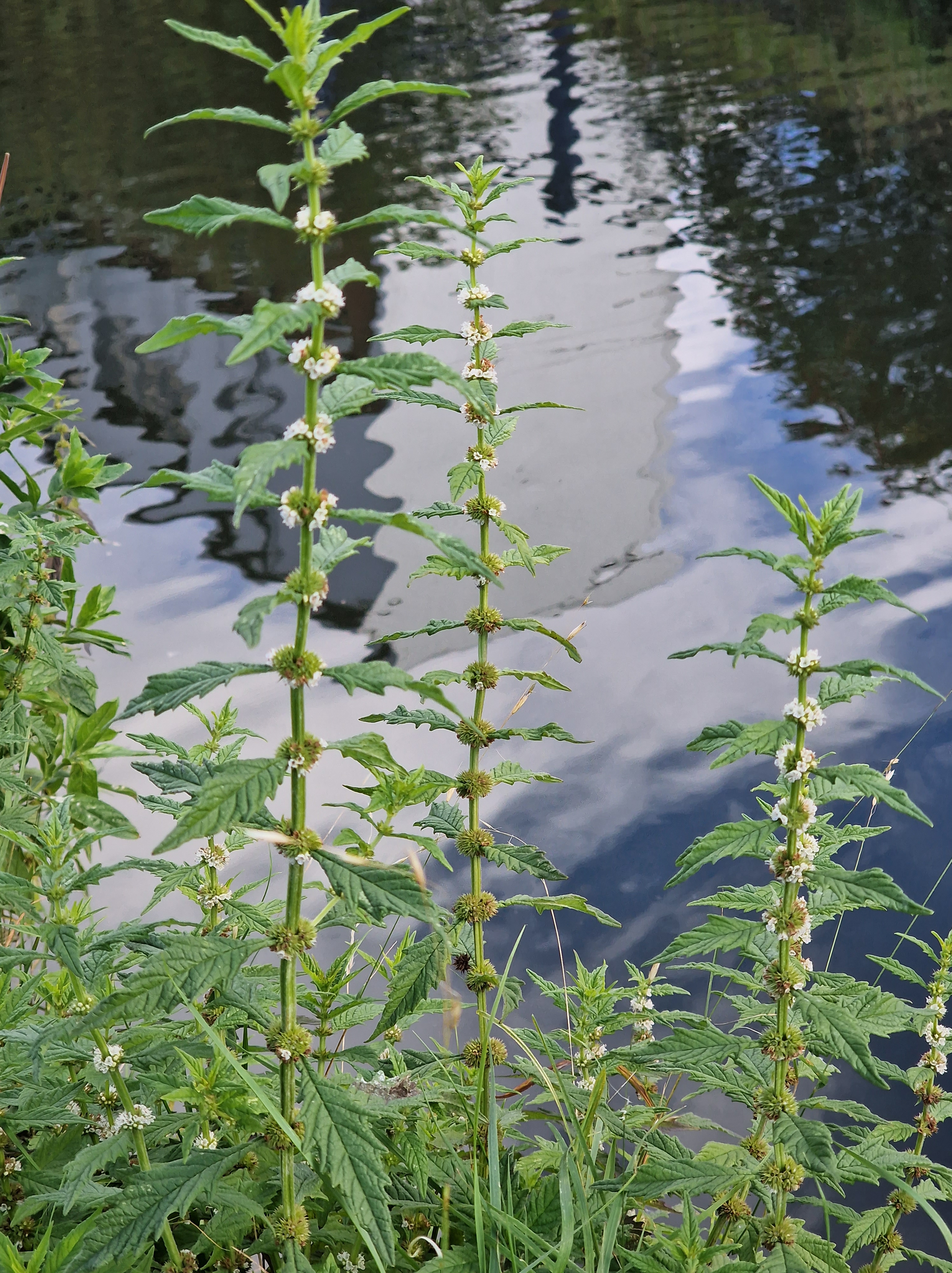
Gypsywort in Edinburgh, by the Union Canal, about 200 metres west of Boroughmuir School in Bruntsfield. Left: the canal; right, the plant in full flower. Both images were made on 15 September 2022. Photos: John Grace.
Wetlands have diminished over the last century with the extensive ‘improvement’ of land for use in agriculture. This trend poses a threat for many species. Wetlands in an urban setting have escaped quite lightly, as lakes and rivers are conserved for recreation, but often they are highly manicured. Many of the ponds, streams and rivers we visit in towns and cities have short mown grass right up to the water’s-edge. In Elgin however there were stretches of river which remained ‘wild’. Perhaps the local authorities realise that riparian vegetation performs several useful functions as discussed in the recent paper by Krivtsov et al. (2022). The riparian zone tends to ‘flatten’ the peak flow from rainstorms and thus reduces flash floods downstream. It also provides habitats for a wide range of species, and offers educational opportunities for students of all ages. These researchers studied a small pond in South Edinburgh. Although far from ‘wild’ the marginal vegetation has been well-managed to give at least the impression of being wild. Biodiversity is maintained at a high level: 95 species of vascular plants were recorded around the pond from several visits. In our stretch of the River Lossie we found 65 (early September, two hours searching).
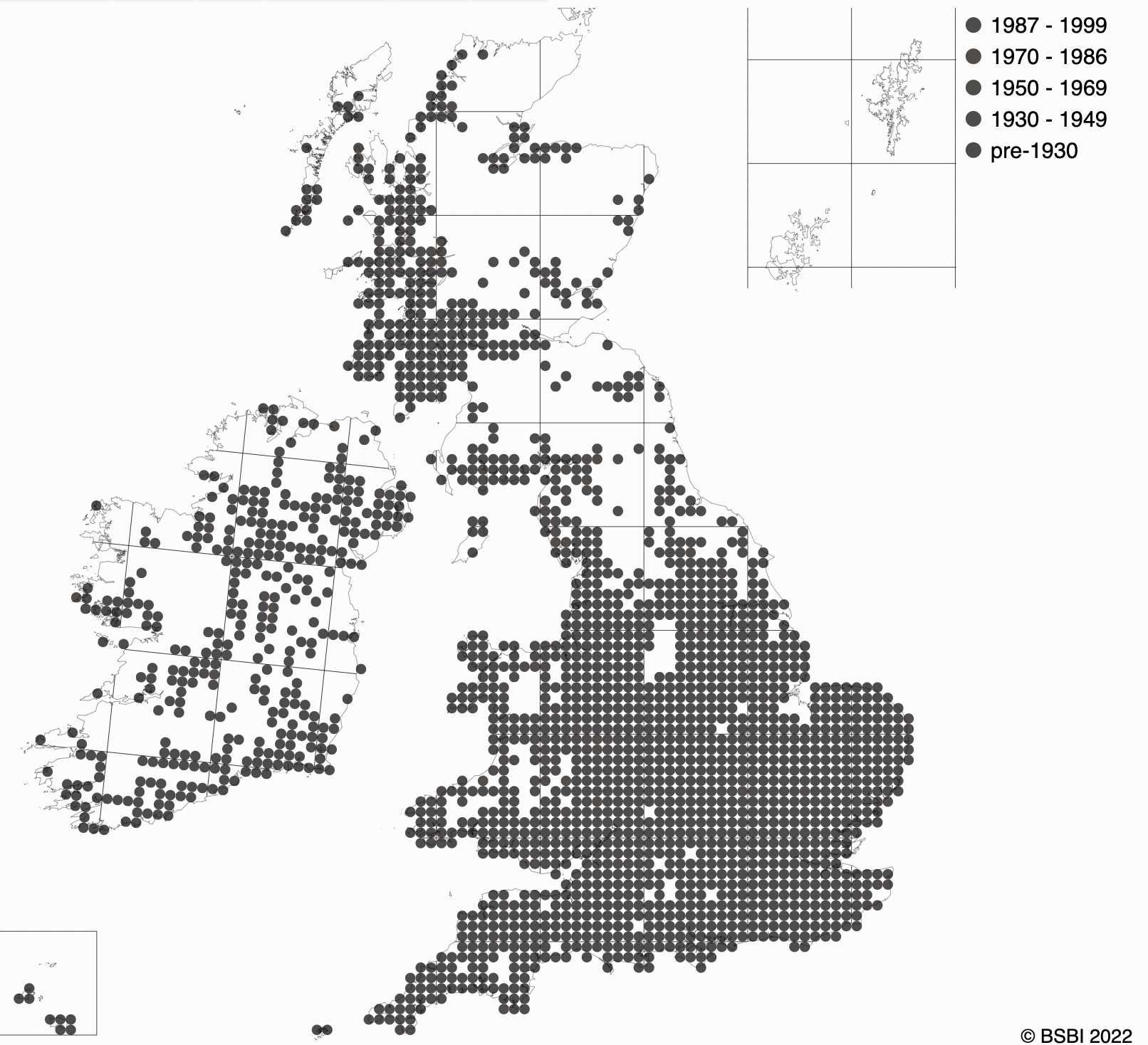
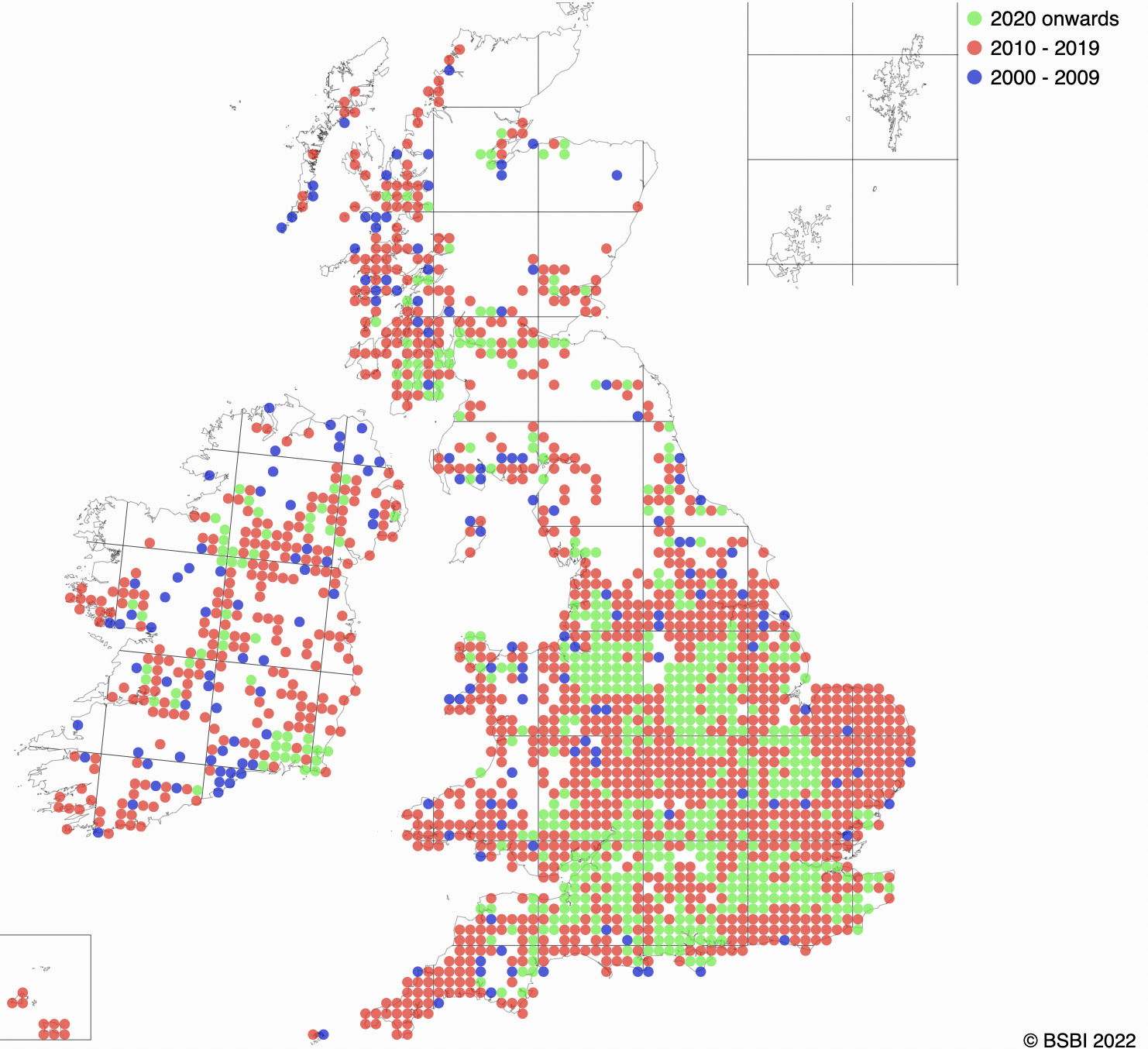
Lycopus europeaeus British and Irish distribution. Left, pre-2000; right, 2000 to the present. Can you see any differences? Data and maps: BSBI.
In view of the nation-wide reduction in wetlands and the trend towards ‘tidy’ water-edges, I thought that Gypsywort might be on the decline in the British Isles. I found it wasn’t, at least over the period where good records are available from the BSBI. When the pre-2000 data are compared with the recent data there is almost no change (see the comparison of distribution maps, above). In contrast, in Canada, where the species was introduced in 1963, it has rapidly expanded its range (Lachance and Lavoie 2002). By careful inspection of herbarium records from Québec the authors were able to record the rate of spread. It appears to have been very fast, 45 km per year. The seeds are washed downstream in floods, and form new populations rather rapidly. So, why isn’t Gypsywort more common in Scotland where there are plenty of water-ways? What about all those hapless fishermen trudging with empty creels, fishing for brown trout; wouldn’t they spread the seed on their muddy footwear?
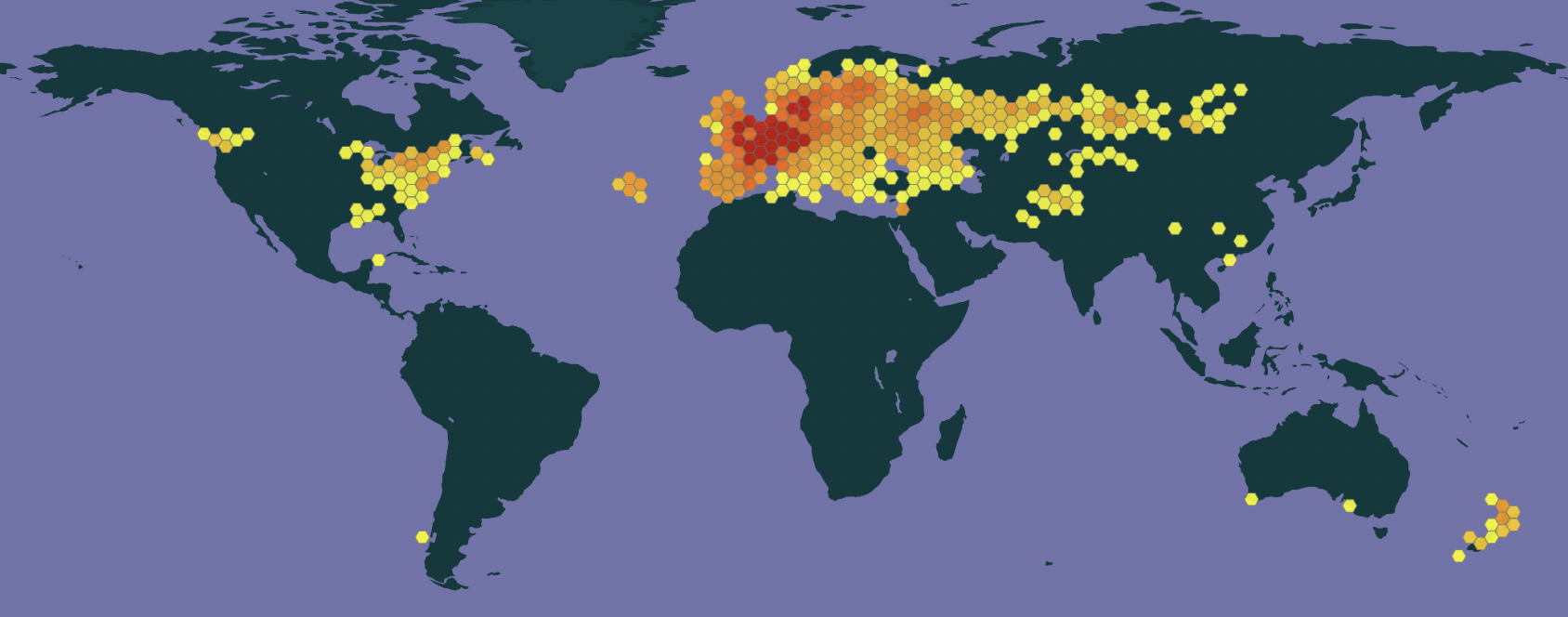
Global distribution of Gypsywort. It is native in Europe but introduced and invasive in North America and New Zealand. In the subtropical north of New Zealand the Northland Council says: “this pest mainly occurs in the margins of lakes, rivers, ponds and other water bodies, in drainage ditches, damp pasture and waste land. Gypsywort is invasive in Waikato and overseas. It can spread rapidly via water movement followed by localised vegetative spread”.
It is well-known that species arriving on a new continent are frequently more vigorous than when they are in their native range. Alongside the River Lossie we spied two common alien ‘invasives’: Giant Hogweed (Heracleum mantegazzianum) and Himalayan Balsam (Impatiens glandulifera). There were only a few of these; they were far from their usual vigour and my impression was that these have been ‘controlled’ by human intervention. They are good examples of aliens that have spread fast in Britain and become a nuisance whereas in their native habitats they are a benign part of the local flora.
The presumption regarding the spread of aliens is that the natural controlling factors (pests and diseases) are missing from the new surroundings and thus growth and reproduction proceeds unchecked for decades or centuries until a new steady-state is reached (the potential enemies adapt and become real enemies and thus agents of control). I looked at the list of phytophagous insects associated with Gypsywort in Britain. There are quite a few but in the hundreds of plants we saw there was no evidence of leaves having been chewed by hungry caterpillars or otherwise infected. In the last few days of completing this blog I searched for the plant in Edinburgh and found Gypsywort rather easily (see images above). There is no sign of herbivory in those plants either.
To my surprise, there is a near-identical species found in North America, Lycopus americanus. It is not a pest, and it occupies the same sort of habitat. I wonder what happens when the two meet?
References
Krivtsov V et al. (2022) Ecosystem services provided by urban ponds and green spaces: a detailed study. Blue-Green Systems 4. doi: 10.2166/bgs.2022.021.
Lachance D and Lavoie CL (2002) Reconstructing the biological invasion of European Water Horehound Lycopus europaeus along the St Lawrence River, Québec. Rhodora 104, 151-160.
©John Grace