-
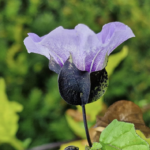
Lathraea squamaria – 31st August – Toothwort
The native toothwort remains a rare treasure, and seldom grows in the most accessible places, but when life here gets back to normal I’ll be…Continue reading »
-
Botanical Walk – Bennane Head, Ayrshire
This walk is as easy or hard as you want to make it, depending on the detours. You'll see a lot of species, you'll love…Continue reading »
-
Cephalaria gigantea – 24th August – Giant Scabious
Roger West discovered a giant near his home. It is an alien that was introduced as a garden plant. It thrives in the wild, given…Continue reading »
-
SOME INSECT/PLANT RELATIONSHIPS IN THE BRAIDS AREA OF EDINBURGH.
Barbara and Mike Richardson have been spending the lockdown observing the relationships between insects and plants. Here they describe insects which are pollinators and ones…Continue reading »
-
Angelica sylvestris – 17th August – Wild Angelica
Angelica is one of the most beautiful members of the Apiaceae. But take care, the family has many poisonous relatives including Hemlock and Hemlock Water…Continue reading »
-
Papaver cambricum (Meconopsis cambrica)
by Chris Jeffree: Botanical nomenclature rarely remains static for very long. Most people are probably familiar with the colourful bright yellow or orange Welsh poppy…Continue reading »
-
SCARCE PLANTS IN TOWNS AND CITIES IN SCOTLAND
By Brian Ballinger Many people with an interest in plants are attracted by the concept of rarity. Native plants are usually regarded as being rare…Continue reading »
-
Heracleum sphondylium ssp. sphondylium – August 3rd – Hogweed
Perhaps one of the best botanical drawings of Heracleum sphondylium (image is in the public domain, artist unknown) By Roger West This is a member…Continue reading »
-
Dipsacus fullonum and Dipsacus sativus – July 27th – Teasel
Teasel plants in an urban setting (July, an Edinburgh allotment). Flowers have not yet opened. Compare with the drawing below by Dioscorides. by John Grace,…Continue reading »
-
Introduction to recording for the Urban Flora
introductiontonewcomerscompressevenmoreDownload If you press the Download button, a powerpoint presentation should go into the download area of your device. It contains nearly all you need…Continue reading »
-
Papaver somniferum – July 20 – Opium Poppy
by John Grace, the University of Edinburgh Papaver somniferum growing semi-wild in garden conditions (Photo: Julia Wilson). The Opium Poppy was cultivated from Neolithic times…Continue reading »
-
FINDING BROOMRAPES (OROBANCHE) IN SCOTLAND
by Brian Ballinger Brooomrapes in the genus Orobanche are in the Orobanchaceae family. Broomrapes are totally parasitic, lacking any chlorophyll. They have erect stems with…Continue reading »
-
Sonchus species: how to tell them apart
Our region has two common native annual, winter annual or biennial sow-thistles that are almost ubiquitous as garden weeds, in areas of cultivated and waste…Continue reading »
-
Digitalis purpurea – 13th July 2020
Digitalis purpurea - the foxglove - in flower is an unmistakable plant, with its tall spikes of magenta flowers rising from the green of woodland…Continue reading »
-
Common plants – lawns and parks
These plant species are commonly found growing in grass on lawns and public places like parks. Keep an eye out in other places, though, because…Continue reading »
-
Urticaceae – 6th July 2020 – the Nettle family
Urtica, Parietaria and Soleirolia Urtica dioica (Stinging nettle) The stinging nettle, Urtica dioica, is a perennial native flowering plant that can grow to two metres…Continue reading »
-
25 streets in Dundee – 19 years on
When this year’s lockdown came into force, I was faced with having to content myself with botanical exploration near home. In fact, for this project…Continue reading »
-
Campanula portenschlagiana and Campanula poscharskyana – June 29th, 2020 – The Dalmatian Bellflower (and its relative, the Trailing Bellflower)
Campanula portenschlagiana and Campanula poscharskyana. by John Grace, the University of Edinburgh Dalmatian Bellflower, Campanula portenschlagiana (left) and Trailing bellflower, Campanula poscharskyana (right) At this…Continue reading »
-
Lesser trefoil and black medick – how to tell them apart
Distinguishing Trifolium dubium from Medicago lupulina. The lesser trefoil, T. dubium and black medick, M. lupulina are both sprawling clover-like plants with bright yellow heads…Continue reading »
-
Common plants – kerbs and cracks
These plant species are commonly found growing at the side of kerbs, in paving and in cracks in pavements. Look for them along your street…Continue reading »